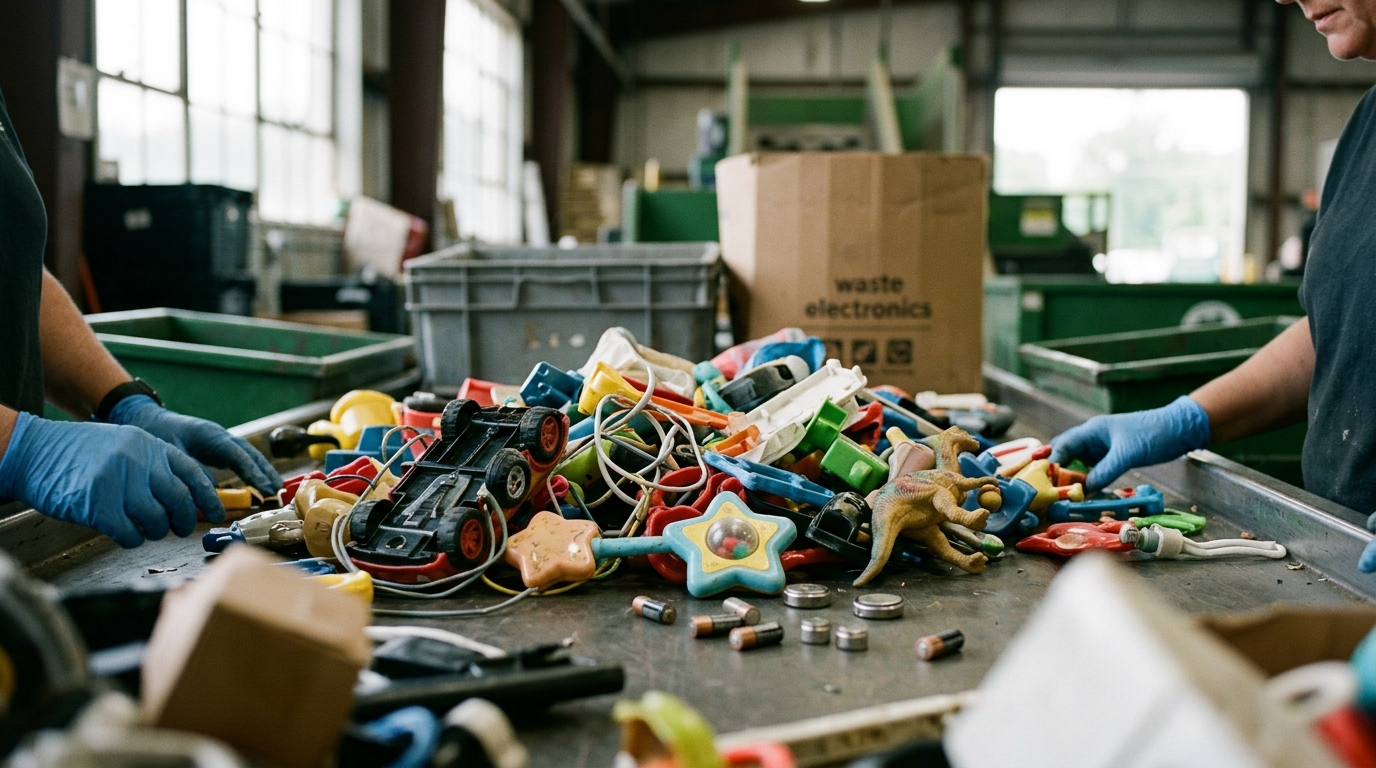
The ZMC Group has expanded a recall of light-up children's toys, affecting millions of units sold across multiple countries. This expansion is due to the risk of serious injury or death from battery ingestion by children. The recalled toys violate mandatory safety standards because they contain easily accessible button cell batteries that can cause severe injuries if ingested.
Last reviewed by Samantha Holloway on 12 September 2026
What Does This Mean for Electronics Recycling?
This recall highlights the importance of proper electronics recycling and disposal, especially concerning items with small parts like batteries. Incorrect handling can pose significant risks to public health and safety.
Electronics recycling must adhere strictly to regulations and safety standards to prevent such hazards. For instance, under EU's
[WEEE Directive](/regulations/weee-directive-eu), manufacturers are responsible for safe disposal pathways.
The expanded recall by ZMC Group highlights the critical need for stringent quality control measures throughout a product's lifecycle. The risk of injury or death from improperly designed toys is unacceptable. Regulatory bodies like the CPSC in the US and similar agencies worldwide ensure that products meet safety standards before reaching consumers.
According to the World Economic Forum, e-waste is the fastest-growing waste stream globally.
In September 2026, this expanded recall affects millions of units sold across various regions, including North America, Europe, and Australia. The recalled toys include models with battery compartments that can be opened by children. Posing a serious risk of button cell battery ingestion. This incident highlights the ongoing challenge in ensuring consumer safety amid rising e-waste volumes.
How Can Consumers Stay Informed About Such Recalls?
Consumers should regularly check government websites for product recalls and sign up for alerts from trusted sources like the CPSC or equivalent bodies in their region.
staying informed about local regulations on
electronic waste is important. For example, under EU's WEEE Directive, consumers have rights to free take-back services for old electronics.
The expanded recall by ZMC Group serves as a reminder for parents and caregivers to check product safety databases regularly. In the US alone, over 6 million toy-related injuries occur each year according to CPSC data from 2024. By staying vigilant about recalls and safe disposal practices, consumers can protect children's health.
According to the Apple Environmental Report 2024, apple recovered over 1 tonne of gold from recycled devices in 2023.
What Are the Environmental Impacts of Such Recalls?
Recalling millions of units has substantial environmental impacts due to increased waste generation and resource consumption.
However, proper recycling minimizes these effects by recovering valuable materials instead of landfilling or incinerating them. For instance, a million recycled smartphones can yield 35kg of gold, illustrating the potential for
urban mining.
In September 2026, the recall involves millions of units sold globally, leading to significant environmental concerns if not managed correctly. Proper electronics recycling practices are vital in this context. Recycling centres play a important role by ensuring that hazardous materials like button cell batteries are disposed of safely and responsibly.
How Can Manufacturers Improve Safety Standards?
Manufacturers must invest in rigorous testing protocols for products with small parts or potential ingestion hazards.
Designing safer toys means using child-resistant battery compartments and employing non-toxic materials. For instance, the EU's RoHS directive aims to restrict hazardous substances commonly found in electronics, promoting safer manufacturing practices.
In September 2026, ZMC Group's expanded recall signals a need for stricter pre-market testing by manufacturers. Implementing strong safety standards is critical to preventing such incidents from occurring. By adhering to international guidelines like the EU's WEEE Directive and RoHS regulations, companies can ensure better product safety while promoting sustainable practices.
What Are Consumers' Rights in Dealing with E-Waste?
Consumers have rights under various national and regional laws regarding electronic waste management.
For example, the US has a
right-to-repair movement advocating for consumer access to repair information and spare parts. Similarly, EU's WEEE Directive mandates that manufacturers provide free take-back services for old electronics.
In September 2026, consumers can assert their rights by demanding safer products and proper disposal options from retailers and manufacturers. By using regulations like the right-to-repair movement or EU's WEEE Directive, individuals can push for more sustainable and responsible practices in e-waste management.
According to the BankMyCell 2024, iPhones retain trade-in value better than Android phones, losing ~40% in year 1 vs ~55%.
What Should You Do Now?
Stay informed about product recalls through trusted sources such as government websites.
Ensure you dispose of old electronics responsibly by checking local recycling centres that adhere to safety standards. For instance, many regions offer free take-back services under WEEE directives or similar regulations.
By taking proactive steps now-like signing up for recall alerts and learning more about your rights-you can help protect both public health and the environment. Proper disposal through certified recycling facilities ensures hazardous materials are managed safely while recovering valuable resources.
For more information on how to recycle electronics responsibly, visit our guides or explore topics like right-to-repair.
Sources
- World Economic Forum
- Apple Environmental Report 2024
- BankMyCell 2024