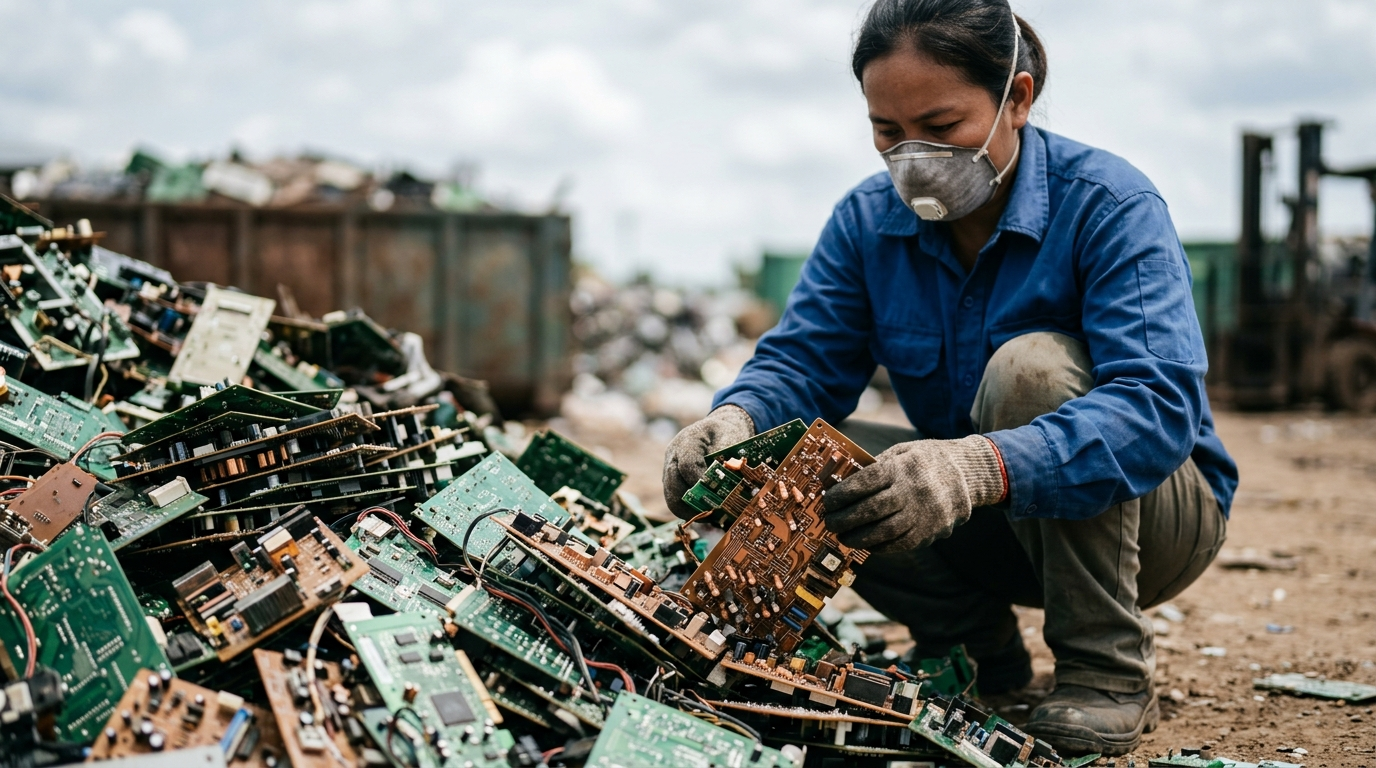
Discarded printed circuit boards contain up to 26 times more copper than natural ore, making them a valuable resource for tech sustainability efforts. This concentration of metals highlights the importance of proper e-waste recycling practices.
Last reviewed by Samantha Holloway on 23 August 2026
As of August 2026, electronics recyclers and environmental advocates worldwide are increasingly focused on the recovery of precious metals from electronic waste due to their high value and scarcity. According to Space Daily, one tonne of discarded printed circuit boards can hold approximately 10 to 26 times more copper than a tonne of natural ore. This data highlights why tech sustainability initiatives must prioritize e-waste recycling not just as an environmental necessity but also as an economic opportunity.
How Does This Affect Electronics Recycling?
This discovery significantly impacts the economics and practices of electronics recycling by making it economically viable to recover precious metals from electronic waste. The high concentration of valuable elements like copper in discarded PCBs means that recycling these materials can yield significant financial returns, incentivizing more thorough and efficient e-waste processing.
Tech sustainability efforts are boosted as companies see a business case for investing in better recycling technologies and processes. For instance, the recovery of gold from mobile phones-an average of 35 kilograms of gold per million units-highlights how tech waste contains precious metals that can be reused rather than lost to disposal.
What Are the Environmental Benefits?
The environmental benefits are substantial as well. By reducing the need for mining new copper and other valuable elements, recycling e-waste helps conserve natural resources and reduce carbon emissions associated with primary metal extraction. For example, extracting gold from ore is an energy-intensive process that releases large amounts of CO2; in contrast, recycling tech waste can be far more efficient.
proper disposal through certified facilities prevents hazardous substances within electronics from entering the environment and harming ecosystems. The EU's WEEE Directive aims to ensure that 65% of electrical equipment placed on the market is collected for recycling by 2030, indicating a growing commitment to these practices across Europe.
What About Legal Requirements?
Regulations such as the WEEE Directive in the European Union and similar laws elsewhere mandate responsible disposal methods. In the EU alone, the directive requires member states to achieve specific collection targets based on the amount of electronic equipment put into circulation. Compliance with such regulations is important for businesses dealing with e-waste.
The Basel Convention also plays a role by regulating transboundary movements of hazardous wastes, ensuring that waste doesn't end up in countries ill-equipped to handle it safely. This international treaty helps prevent improper disposal and ensures that tech sustainability efforts are both ethical and effective.
What Steps Can Consumers Take?
Consumers play a critical part in supporting tech sustainability through their choices and actions. By opting for repair services over replacements, adhering to the principles of circular economy, and properly disposing of obsolete devices, individuals can significantly contribute to reducing e-waste.
supporting companies that champion initiatives like right-to-repair can encourage manufacturers to design products with longevity in mind rather than planned obsolescence. This approach not only benefits consumers financially but also reduces environmental impact by extending product lifespans.
What's Next for the Industry?
Looking ahead, the industry must continue innovating recycling techniques and expanding collection networks to keep pace with growing volumes of e-waste. Innovations such as urban mining-recovering valuable materials from discarded electronics-are gaining traction due to their economic viability and environmental benefits.
As lithium-ion battery markets expand rapidly towards 2.5 TWh by 2030, the need for specialized recycling solutions becomes even more urgent. Recycling these batteries safely and efficiently is important not only for resource recovery but also for preventing environmental contamination from hazardous materials like cobalt and nickel.
By embracing tech sustainability practices, both businesses and consumers can contribute to a cleaner, more sustainable future while reaping economic benefits from recovered resources. For more information on how to recycle electronics responsibly, visit our guide or learn about the Basel Convention.
According to the Apple Environmental Report 2024, apple recovered over 1 tonne of gold from recycled devices in 2023.
Sources
- Apple Environmental Report 2024
- BankMyCell 2024
- Royal Society of Chemistry