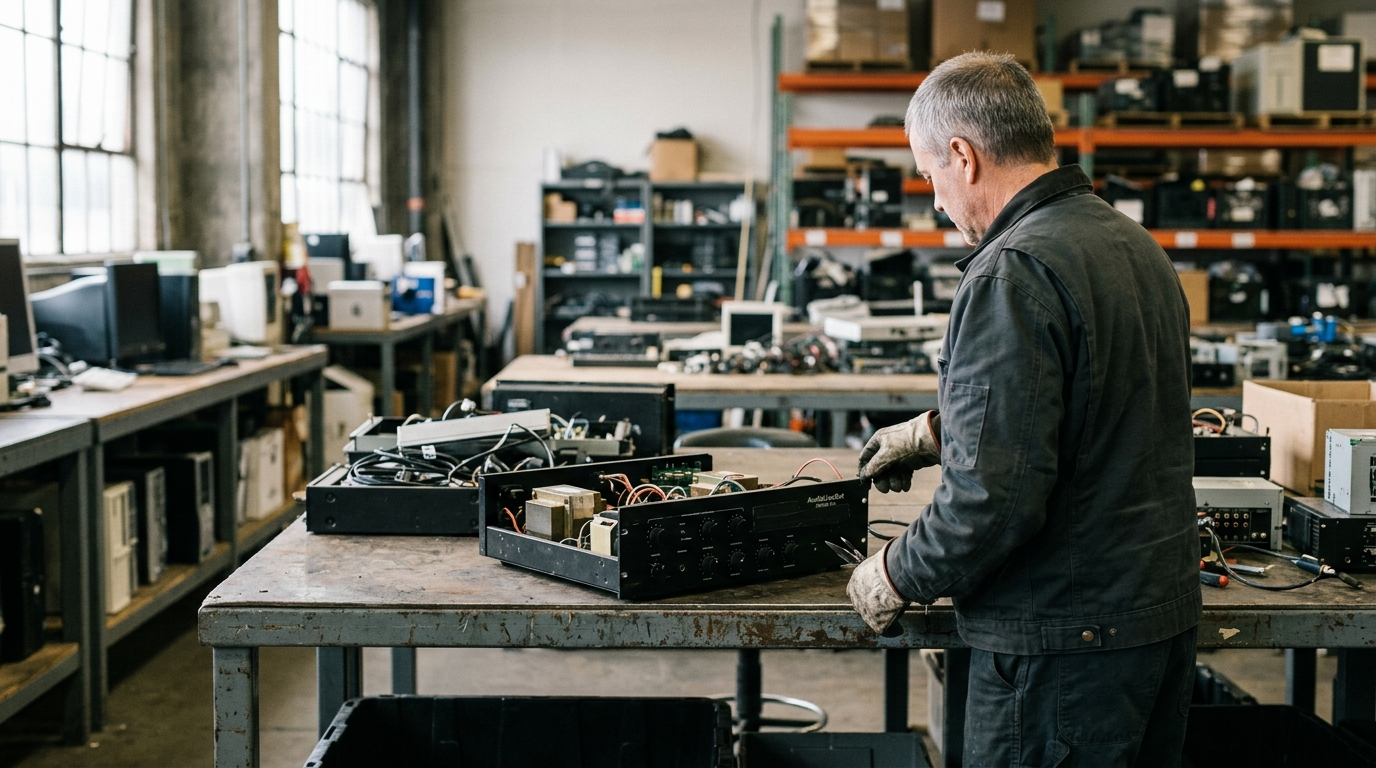
AudioLineOut has recalled its Studio Six headphone amplifiers due to a serious electrocution hazard, highlighting the critical need for proper handling and disposal of potentially dangerous electronics in recycling centers.
Last reviewed by Samantha Holloway on 28 August 2026
As of August 2026, the recall affects around 45,000 units sold since December 2019. The risk arises when users replace original components with aftermarket metal base tubes, causing electrification that can lead to severe injury or death. This incident highlights the importance of manufacturer recalls and consumer awareness in electronics recycling.
Why Was There a Recall?
The recall was issued because the amplifiers become electrified when used with non-original parts, posing an electrocution risk to users. The CPSC investigation found that this defect could result in serious injury or death if not addressed promptly. Users must return their units immediately and avoid using them until repaired.
This situation is particularly important for electronics recycling centers as they need to be aware of such recalls to handle these devices safely during the collection and processing phase. According to the UN Global E-Waste Monitor 2024, over 62 million tonnes of e-waste are generated annually worldwide, with only 22.3% being formally recycled. Proper handling and awareness can prevent accidental injuries or environmental hazards.
How Does This Affect Electronics Recycling?
Recycling centers must ensure that hazardous devices like the Studio Six amplifiers are managed safely to protect workers and the environment. The incident highlights the need for rigorous safety protocols in electronics recycling facilities, where over 60 different elements-such as gold, silver, and palladium-are extracted from discarded smartphones.
this recall emphasizes the importance of educating consumers about the risks associated with modifying or using non-compatible parts on electronic devices. Recycling centers should provide clear guidelines to inform users how to handle potentially dangerous items correctly when they drop them off for recycling.
What Are the Legal Implications?
In the United States and Europe, strict regulations govern electronics waste management and disposal. The [WEEE Directive](/regulations/weee-directive-eu) in the EU mandates a 65% collection target of electrical equipment placed on the market, ensuring that manufacturers take responsibility for proper disposal through safe channels like certified recyclers. In Australia, similar guidelines under state and federal laws promote environmentally sound practices.
The recall also brings attention to the Basel Convention, which regulates the transboundary movements of hazardous wastes including e-waste. Ensuring compliance with these regulations is important for preventing improper handling or dumping of hazardous electronic items that could cause harm.
How Can Consumers Stay Safe?
Consumers should always check for recalls and ensure they use manufacturer-approved parts when repairing or modifying their electronics. They can visit the CPSC website or contact the manufacturer directly to stay informed about any updates related to product safety.
consumers in the US can take advantage of the right-to-repair movement (link to right-to-repair) which encourages transparency and accessibility for repair information. This initiative aims to help users by providing them with the necessary tools and knowledge to safely maintain their devices.
What Should Recycling Centers Do Now?
Recycling centers should review their safety protocols and ensure they have the equipment and training needed to manage hazardous items like recalled amplifiers. They must also educate consumers about safe practices when disposing of electronics, emphasizing the importance of adhering to manufacturer guidelines and checking for recalls before making any modifications.
By staying informed about such incidents and taking proactive measures, recycling centers can help prevent accidents and contribute to more sustainable e-waste management practices. At electronics recycling, this includes adopting circular economy principles (link to circular economy) that prioritize repair, reuse, and responsible disposal of electronics.
, the AudioLineOut Studio Six recall serves as a stark reminder of the critical role that safety plays in electronics recycling. By adhering to strict guidelines and promoting consumer education, we can ensure safer handling practices for all e-waste products globally.
According to the Consumer Technology Association, The average US household has 21 unused electronic devices.
Sources
- Consumer Technology Association
- Counterpoint Research
- UN Global E-Waste Monitor 2024