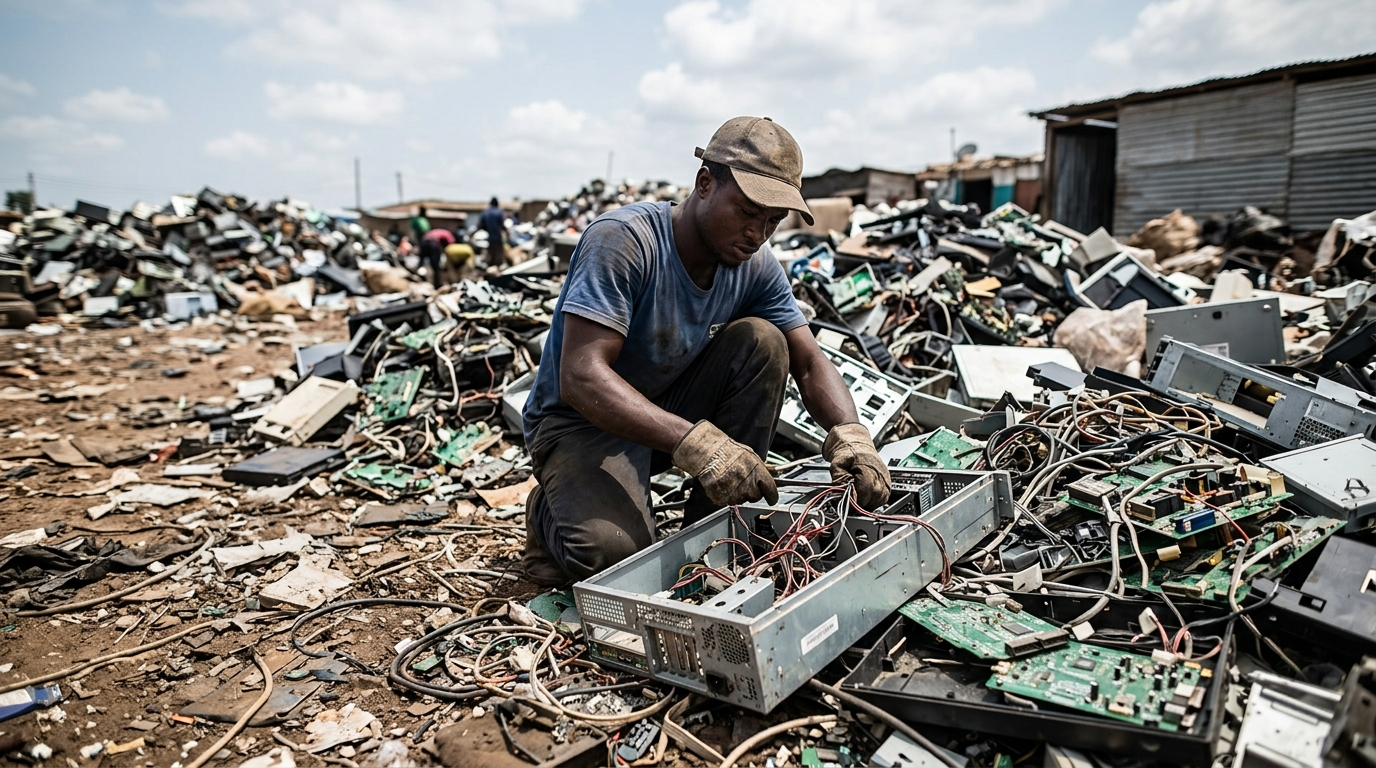
Tech sustainability faces a looming crisis with the prediction that AI systems will generate 23 million shipping containers worth of e-waste by 2050, according to techbuzz.ai's recent report. This alarming projection highlights the urgent need for better recycling practices and policies around electronic waste.
Last reviewed by Samantha Holloway on 17 September 2026
What Is Driving Up E-Waste in Tech Sustainability?
The rapid expansion of AI technology is driving up e-waste levels due to shorter product lifecycles and an increased demand for high-performance devices. According to a UN Global E-Waste Monitor report from 2024, the world currently generates over 62 million tonnes of electronic waste annually.
According to the Royal Society of Chemistry, mobile phones contain up to 60 different elements, including critical raw materials.
With more companies integrating AI into their products, such as smartphones, servers, and smart home gadgets, this trend will likely accelerate e-waste production unless manufacturers adopt eco-friendly designs and recycling initiatives. For instance, one million discarded phones contain about 35kg of gold and 340kg of silver, illustrating the potential for resource recovery through proper recycling methods.
How Does This Affect Electronics Recycling?
This surge in AI-related waste poses significant challenges for electronics recyclers who must develop more efficient processes to handle this influx. Currently, only around 22.3% of global e-waste is recycled formally, leaving a large portion destined for landfill or informal recycling channels that can harm the environment.
According to the BankMyCell depreciation tracker, The average smartphone loses 35-45% of its trade-in value within the first year.
Recyclers need to invest in new technologies and infrastructure capable of extracting valuable materials from AI components effectively. Additionally, they must adhere to regulations like the EU's WEEE Directive, which sets ambitious targets-such as collecting 65% of electronics placed on the market-for responsible waste management practices.
What Role Do Consumers Play in Tech Sustainability?
Consumers have a important role in promoting tech sustainability by choosing products designed for longevity and recyclability. They can support manufacturers that embrace circular economy principles. Such as designing devices with modular components or offering take-back programs to recover used electronics. For example, the right-to-repair movement aims to give consumers greater control over the lifespan of their gadgets.
According to the UNEP, A single tonne of circuit boards contains 40-800 times more gold than a tonne of ore.
By adopting a more mindful approach to tech consumption, individuals can reduce e-waste and encourage companies to adopt sustainable practices. This includes repairing instead of replacing devices when possible and participating in local recycling programs that adhere to environmental standards like those set by the Basel Convention on hazardous waste.
What Are the Implications for Businesses?
Businesses must adapt their operations to address this growing issue. Companies need to implement more rigorous product design strategies that factor in recyclability from the outset, such as using fewer hazardous materials and designing products for disassembly. This shift towards sustainability can also create new business opportunities through urban mining initiatives.
Businesses should explore partnerships with recycling firms capable of handling complex AI equipment efficiently. By doing so, companies not only comply with regulations but also contribute to a cleaner environment by reducing the carbon footprint associated with producing new materials from scratch. For instance, adhering to RoHS (Restriction of Hazardous Substances) guidelines can significantly decrease the environmental impact of e-waste.
What Can We Do Now?
To combat this impending crisis, both businesses and individuals must take immediate action:
- Support Recycling Programs: Engage with certified recycling organizations that adhere to international standards for handling electronic waste safely and responsibly.
- Advocate for Policy Change: Push for stronger regulations like the WEEE Directive in your region to ensure higher collection rates of e-waste.
- Educate Yourself and Others: Stay informed about tech sustainability issues through resources available on ecyclingcentral.com, such as guides on right-to-repair movements or circular economy principles.
By taking these steps now, we can mitigate the environmental impact of AI technology and pave the way for a more sustainable future in electronics.
Sources
- Royal Society of Chemistry
- BankMyCell depreciation tracker
- UNEP