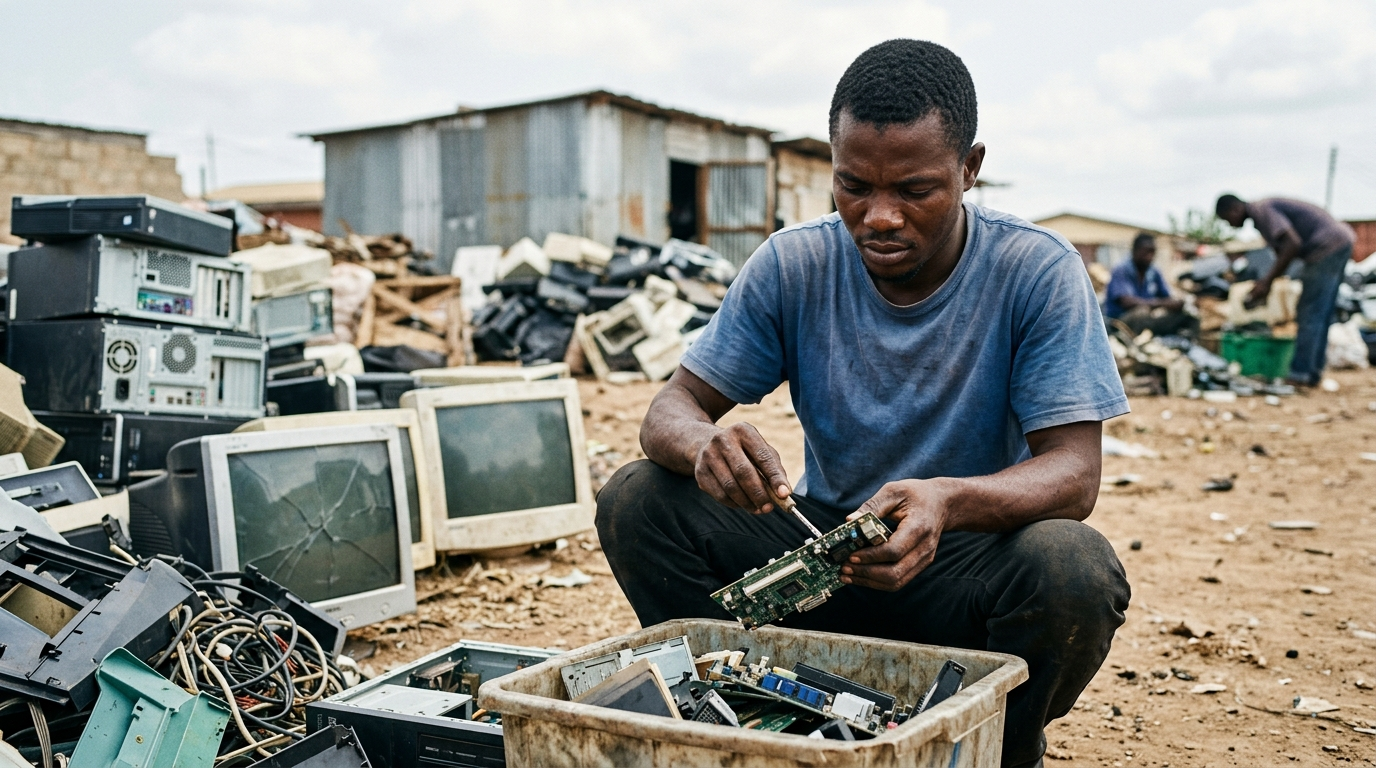
The global tech sustainability situation is facing a critical challenge as Africa's e-waste generation doubles every five years, with an estimated 1 million tonnes expected by the end of 2026 according to the United Nations Global E-Waste Monitor 2024. This surge not only impacts local environments and economies but also challenges global recycling initiatives.
Last reviewed by Samantha Holloway on 09 August 2026
What Is Driving Africa's E-Waste Crisis?
Africa's e-waste crisis is driven primarily by rapid technological adoption, inadequate waste management infrastructure, and a lack of strong regulations to govern the disposal and recycling of electronics. For example, Nigeria alone sees an increase in e-waste volume from 250,000 tonnes in 2018 to an estimated 400,000 tonnes by 2026.
How Does This Affect Electronics Recycling?
This situation significantly complicates efforts to recycle electronics responsibly. Without proper regulation and infrastructure, informal recycling methods often lead to environmental contamination and health risks for workers. For instance, burning cables to extract copper releases toxic fumes, harming both the environment and human health.
Tech sustainability advocates need to focus on establishing formal e-waste management systems that include safe recycling practices and worker protection measures. This includes supporting initiatives like urban mining, where valuable metals are recovered from discarded electronics, thus reducing reliance on virgin materials.
What Are The Environmental Impacts?
The environmental impacts of poor e-waste management in Africa are severe, contributing to soil contamination, water pollution, and air quality issues. For example, lead and mercury released during improper disposal can contaminate groundwater supplies, affecting entire communities downstream.
Tech sustainability requires a shift towards cleaner recycling methods that minimize these negative effects while maximizing the recovery of precious materials. This involves investing in technology that can safely process e-waste without releasing harmful substances into the environment.
According to the BankMyCell 2024, iPhones retain trade-in value better than Android phones, losing ~40% in year 1 vs ~55%.
What Are The Economic Implications?
Economically, the informal recycling sector often provides jobs but at a high cost to worker health and safety. Estimates suggest that formalizing this industry could create more stable and safer employment opportunities for thousands of people while also generating significant economic benefits through the recovery of valuable materials like gold, silver, and copper.
To support tech sustainability, governments must incentivize formal recycling operations by offering subsidies or tax breaks to businesses adopting eco-friendly practices. This approach not only improves working conditions but also boosts local economies by creating a more sustainable and profitable recycling sector.
What Steps Can Be Taken To Address The Issue?
Addressing Africa's e-waste crisis involves multi-pronged strategies such as enhancing regulatory frameworks, investing in infrastructure for safe disposal and recycling, and promoting education about the benefits of proper e-waste management. For example, introducing the
WEEE Directive-like regulations can set clear targets for e-waste collection rates.
Practically speaking, individuals and organizations should look to partner with established tech sustainability programs that provide guidance on responsible electronics disposal and encourage manufacturers to adopt circular economy principles. This includes supporting initiatives like right-to-repair laws which help consumers by allowing them to fix their devices rather than discarding them prematurely.
What To Do Now
To address the growing e-waste crisis in Africa, stakeholders must act immediately:
- Support and advocate for stronger e-waste regulations similar to those found in Europe or California's extended producer responsibility programs.
- Invest in education campaigns that raise awareness about the dangers of improper disposal practices among local communities.
- Encourage manufacturers to design products with recyclability in mind and promote take-back schemes where old devices are returned to producers for recycling.
By taking these steps, we can move closer to a more sustainable future for electronic waste management globally. For detailed guidance on right-to-repair laws or circular economy principles, visit our dedicated guides on right-to-repair and the circular economy.
According to the Royal Society of Chemistry, mobile phones contain up to 60 different elements, including critical raw materials.
Sources
- BankMyCell 2024
- Royal Society of Chemistry
- BankMyCell depreciation tracker