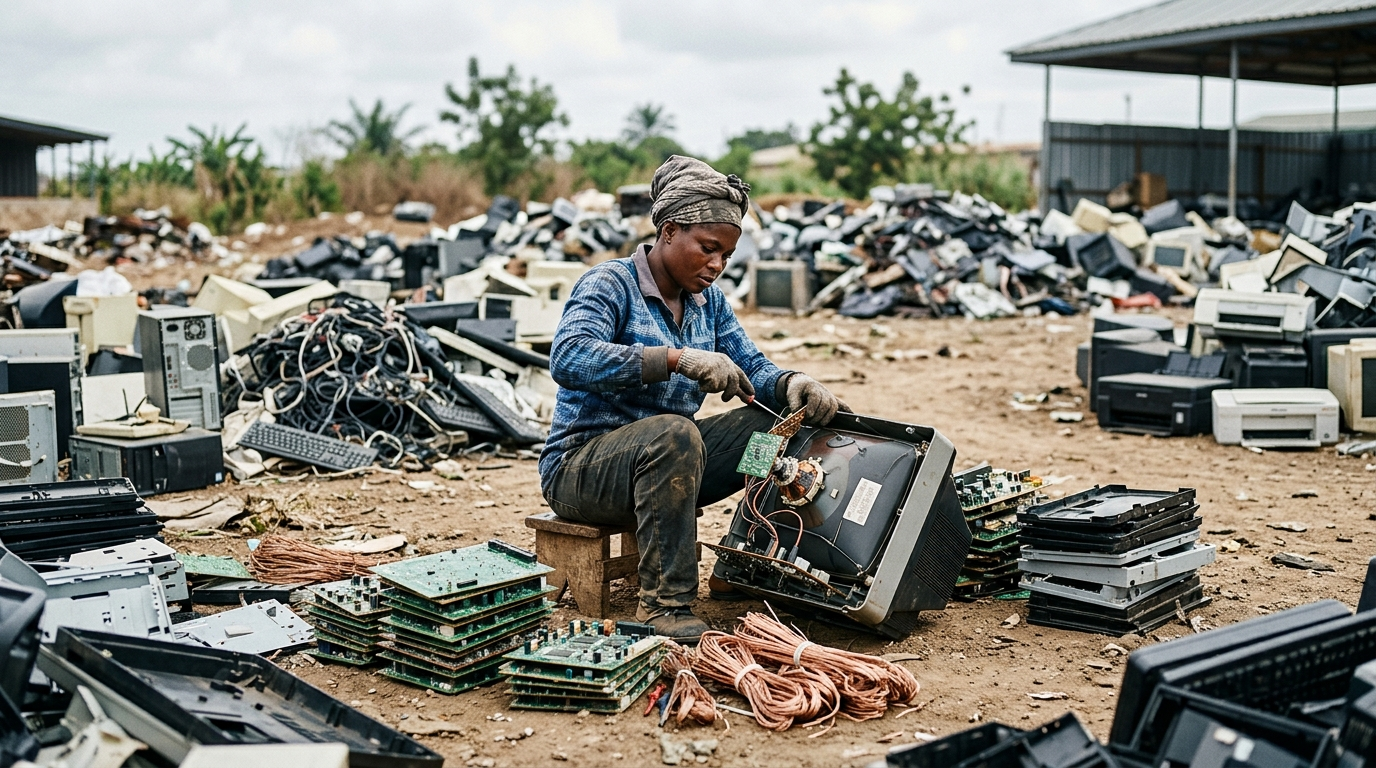
The global e-waste crisis is worsening, with Africa emerging as a hotspot for informal and often unsafe recycling practices that can harm both the environment and human health. According to the latest report from IndexBox in August 2026, tech sustainability in Africa faces significant challenges due to a lack of formal infrastructure and stringent regulations.
Last reviewed by Samantha Holloway on 10 August 2026
How Does This Affect Electronics Recycling?
Tech sustainability efforts are strained by informal e-waste recycling methods that don't adhere to environmental or safety standards. In many African countries, this means hazardous materials like lead, mercury, and cadmium end up in landfills or water sources rather than being recycled properly.
The global generation of electronic waste reached 62 million tonnes annually as of the UN Global E-Waste Monitor 2024, with only a quarter (22.3%) formally recycled worldwide. This trend highlights the urgent need for improved recycling practices and regulations globally. Informal recycling in Africa contributes to this issue by exacerbating environmental pollution without providing economic benefits from recovered materials.
According to the WHO, improper e-waste disposal releases toxic substances including lead, mercury, and cadmium into soil and water.
What Are The Main Challenges Faced By Tech Sustainability In Africa?
Lack of infrastructure, inadequate funding, and limited access to technology education pose major obstacles. Additionally, the informal economy often thrives due to lower operational costs compared to formal recycling facilities, which struggle with regulatory compliance and investment requirements.
African countries generate an estimated 1.5 million tonnes of e-waste annually, a number expected to double by 2030 if current trends continue (IndexBox report). Without significant improvements in tech sustainability practices, the environmental impact will worsen, affecting not only Africa but also global efforts to reduce electronic waste.
How Can We Encourage Formal Recycling Methods In African Countries?
Incentivizing formal recycling through government subsidies and public-private partnerships can help. Implementing stricter regulations aligned with international standards like the
Basel Convention and the EU's
WEEE Directive is important for improving tech sustainability practices in Africa.
The European Union aims to collect 65% of electronics placed on the market by 2035, setting a benchmark for effective recycling rates that could be adapted for use in African nations. By aligning local initiatives with these global standards, countries can improve their recycling infrastructure while reducing harmful environmental impacts.
What Role Do Consumers Play In Promoting Responsible E-Waste Disposal?
Consumers have a vital role to play by supporting manufacturers who adhere to strict tech sustainability practices and choosing products designed for longevity and repairability. Educating the public about responsible disposal methods is also important, as improper handling of e-waste can lead to severe health risks.
The average smartphone contains over 60 different elements, including precious metals like gold (35kg from one million phones) and silver (340kg), which highlights the economic value in proper recycling. By encouraging the use of certified recyclers and participating in take-back programs offered by manufacturers, consumers can significantly reduce the amount of e-waste entering informal channels.
According to the UN Global E-Waste Monitor 2024, The world generated 62 million tonnes of e-waste in 2022, up 82% from 2010.
What Are The Future Prospects For Tech Sustainability In Africa?
Future prospects hinge on increased investment in education, technology, and infrastructure to support formal recycling methods. Governments must prioritize tech sustainability policies that ensure safe disposal practices while also building economic growth through
urban mining initiatives.
With an estimated 2.5 TWh of lithium-ion battery market by 2030, there's a growing opportunity for Africa to develop its own battery recycling industry, which could provide both environmental and economic benefits. By focusing on these areas, tech sustainability in Africa can move towards more sustainable practices that benefit the global environment as well.
What Can You Do Now To Support Tech Sustainability?
Supporting formal recycling programs and educating others about responsible e-waste disposal is important. Engage with local community groups or join online initiatives to promote awareness and action on this issue. Additionally, supporting manufacturers committed to tech sustainability through purchasing decisions can drive positive change in the industry.
By staying informed about global tech sustainability trends and advocating for better practices within your communities, you contribute to a safer and more sustainable future for everyone involved.
Sources
- WHO
- UN Global E-Waste Monitor 2024
- European Parliament