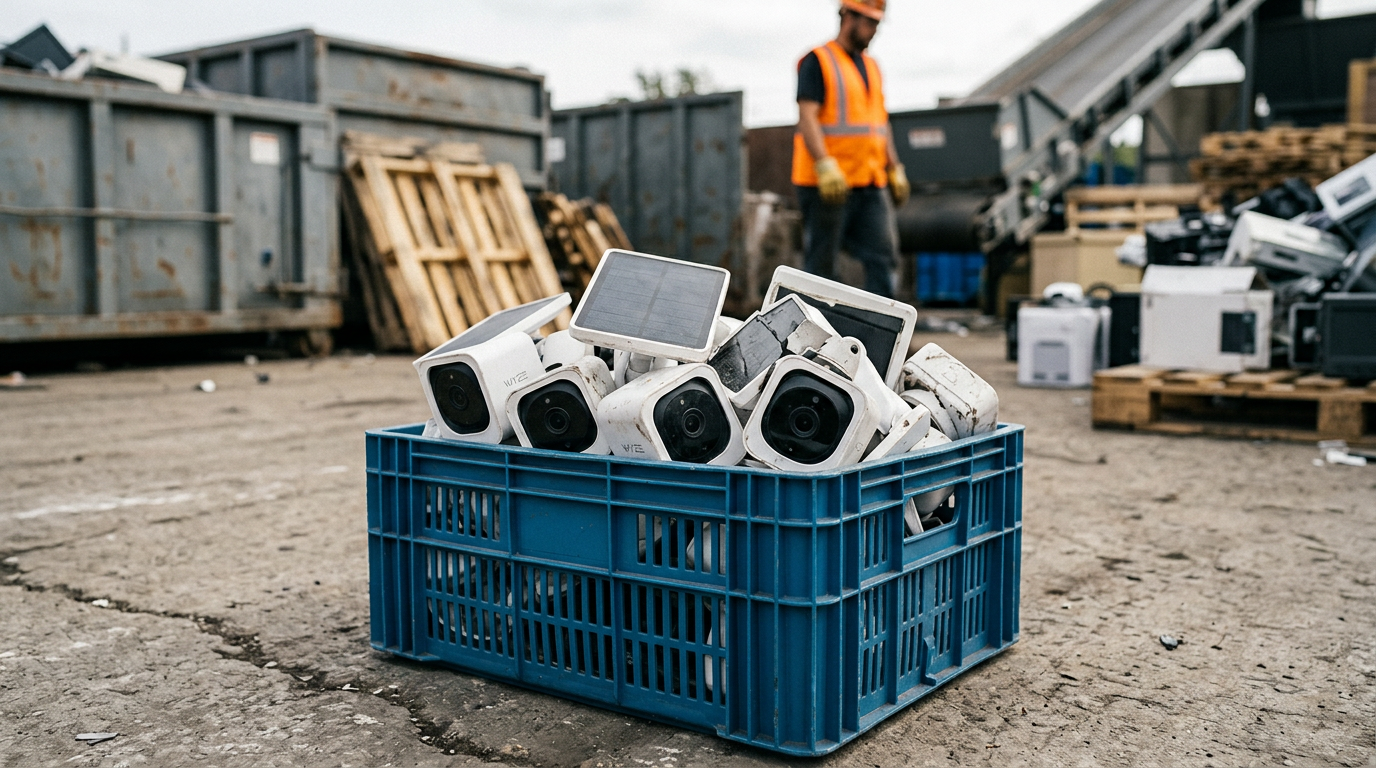
Wyze Labs has recalled its Solar Cam Pan security cameras due to potential fire and burn hazards caused by incorrect assembly instructions, posing a significant risk of injury or property damage. Wyze Labs Recalls Solar Cam Pan Security Cameras Due to Risk of Serious Injury from Fire and Burn Hazards This recall highlights the importance of proper handling and disposal procedures for e-waste products containing lithium-ion batteries.
Last reviewed by Samantha Holloway on 05 June 2026
What Happened with Wyze Solar Cam Pan?
Wyze Labs recalled its Solar Cam Pan security cameras in June 2026 due to incorrect assembly instructions that could lead users to puncture the lithium-ion battery's casing, causing it to overheat and potentially ignite. This recall affects all units sold between January 2025 and May 2026.
According to the UN Global E-Waste Monitor 2024, only 22.3% of e-waste was properly collected and recycled in 2022.
Why Does This Matter for Electronics Recycling?
The recall highlights the critical importance of proper recycling methods when dealing with electronics that contain hazardous components like lithium-ion batteries. Incorrect disposal can lead to environmental contamination or safety hazards, as seen in this case where faulty instructions led to potential fires.
In June 2026, the CPSC reported a surge in incidents involving improperly handled e-waste products containing lithium-ion batteries, highlighting the need for more stringent recycling standards and consumer education programs. Recycling centers must be equipped with the necessary tools and training to safely dismantle these devices without risking injury or environmental harm.
According to the Consumer Technology Association, The average US household has 21 unused electronic devices.
What Are the Risks of Improper Disposal?
Improper disposal of lithium-ion batteries can cause fires, leading to significant property damage and injuries. The CPSC reported that improper handling accounted for over 25% of incidents involving e-waste in the first half of 2026. Additionally, incorrect recycling methods release harmful chemicals into the environment.
Lithium-ion batteries are particularly hazardous due to their flammable electrolytes and high energy density. When these batteries are punctured or exposed to extreme temperatures during improper disposal, they can ignite spontaneously, posing a serious risk to both human life and property.
According to the Counterpoint Research, The global refurbished smartphone market was worth $49.3 billion in 2023.
How Can Consumers Safely Dispose of These Cameras?
Consumers should follow the manufacturer's guidelines for returning recalled products and seek out certified recycling facilities that specialize in handling e-waste with lithium-ion batteries. Wyze Labs has provided clear instructions on their website for customers to return affected units safely and securely.
Certified electronics recyclers adhere to strict safety protocols designed to prevent fires and other hazards associated with improper disposal of electronic devices containing lithium-ion batteries. At Wyze Labs Recalls Solar Cam Pan Security Cameras Due to Risk of Serious Injury from Fire and Burn Hazards, these facilities have specialized equipment, such as battery removal tools and containment systems, to ensure safe handling and recycling processes.
What Are the Environmental Impacts?
Improperly disposed lithium-ion batteries contribute significantly to environmental pollution by leaching toxic metals like cobalt and nickel into soil and water supplies. Recycling these batteries responsibly can recover valuable materials while minimizing ecological damage.
According to the UN Global E-Waste Monitor 2024, only 22.3% of global e-waste was formally recycled in 2023. This statistic highlights the pressing need for better recycling infrastructure and consumer awareness about the importance of proper disposal methods.
How Can Recyclers Handle These Devices Safely?
Recycling facilities should implement strong safety measures when handling devices with lithium-ion batteries, including using specialized equipment designed to safely remove and store these components before further processing. Proper training is important for staff to understand the risks involved in working with such hazardous materials.
Specialized tools like battery removal stations can help mitigate risks by ensuring that lithium-ion cells are removed safely from electronic devices without causing punctures or exposure to air, which could trigger a thermal runaway reaction leading to fire hazards.
What Are Some Alternatives to Recycling?
Before opting for recycling, consider refurbishing or reusing the camera if it's still functional. Refurbished electronics not only extend product life but also reduce waste and environmental impact compared to manufacturing new devices from raw materials.
Refurbishment can be a sustainable alternative that reduces e-waste while maintaining functionality. Programs like right-to-repair initiatives support consumers in repairing their devices rather than replacing them, thereby extending the lifecycle of electronic products.
What Should You Do Now?
If you own a Wyze Solar Cam Pan security camera affected by this recall, contact Wyze Labs immediately to arrange for its return and safe disposal. Follow guidelines provided by certified recyclers or local government e-waste programs for other electronics containing lithium-ion batteries.
For more information on responsible recycling practices and regulations, visit eCycling Central. At Wyze Labs Recalls Solar Cam Pan Security Cameras Due to Risk of Serious Injury from Fire and Burn Hazards, explore resources related to urban mining, planned obsolescence, right-to-repair, circular economy principles, and international directives like the WEEE Directive and RoHS standards.
Sources
- UN Global E-Waste Monitor 2024
- Consumer Technology Association
- Counterpoint Research