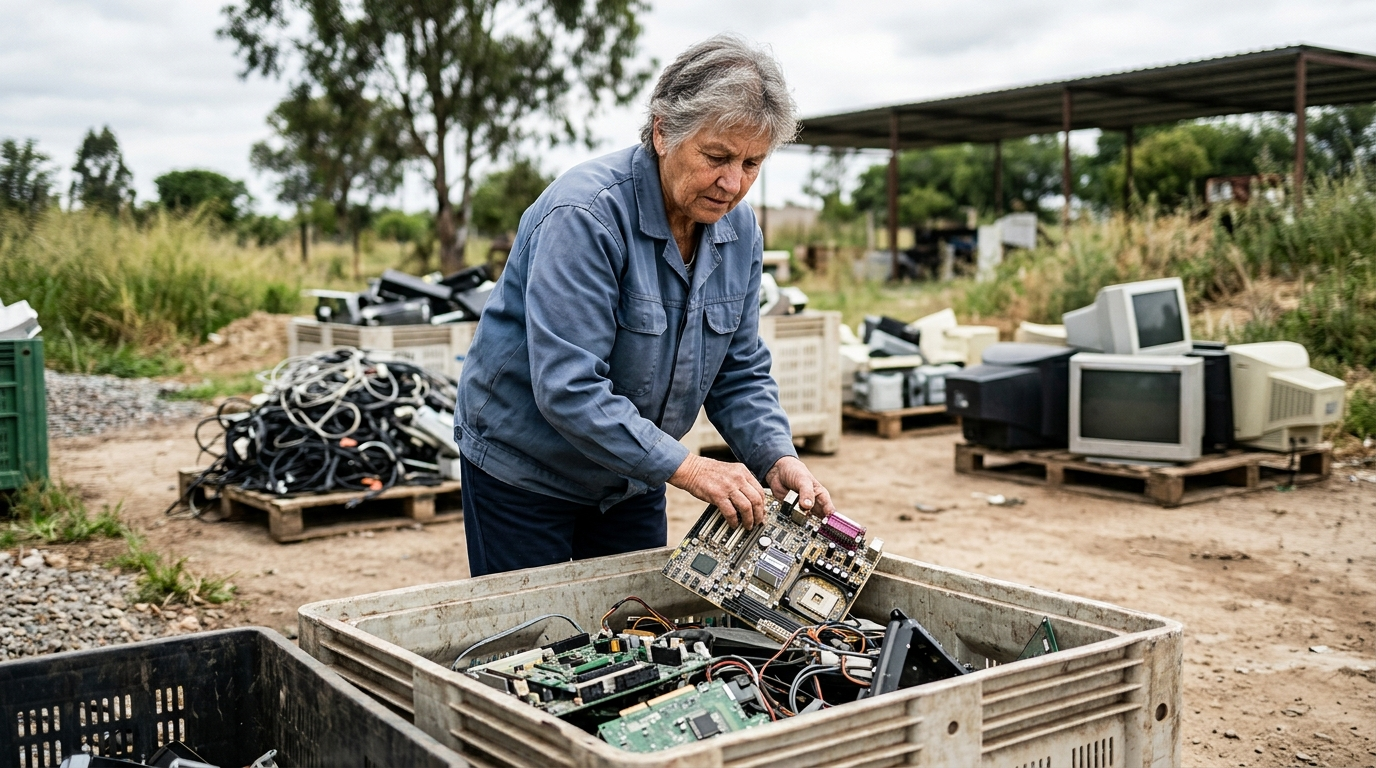
Tech sustainability remains a critical issue as the global e-waste problem continues to grow, with an estimated 62 million tonnes generated annually worldwide (UN Global E-Waste Monitor 2024). The challenge is exacerbated by low formal recycling rates, with only 22.3% of e-waste being recycled properly.
Last reviewed by Samantha Holloway on 26 September 2026
What Is Tech Sustainability?
Tech sustainability refers to the responsible management and disposal of
electronic waste, which includes reducing environmental impact through practices like recycling and reuse. It aims to minimize harm while maximizing resource recovery from discarded electronics.
The importance of tech sustainability can't be overstated as improper disposal leads to significant environmental damage. Electronic devices contain hazardous materials such as lead. Mercury, and cadmium that can leach into soil and water when dumped in landfills. Additionally, the extraction of raw materials for new gadgets contributes heavily to deforestation and habitat destruction.
According to the Consumer Technology Association, The average US household has 21 unused electronic devices.
How Does This Affect Electronics Recycling?
Tech sustainability directly affects how electronics are recycled by promoting practices that reduce waste and recover valuable resources. For instance, recycling one million mobile phones yields 35kg of gold and 340kg of silver (UN Global E-Waste Monitor 2024).
These materials can be recovered through proper recycling processes rather than being lost to landfill sites or incinerators. Recycling also reduces the demand for new raw material extraction, which is important given that an average smartphone contains over 60 different elements, many of them rare earth minerals (European Commission Report 2025).
What Are Key Regulations and Initiatives?
Key regulations such as the EU WEEE Directive require member states to collect at least 65% of electrical and electronic equipment placed on their markets by weight (EU WEEE Directive). Similarly, the US has implemented state-level Extended Producer Responsibility laws mandating manufacturers to cover disposal costs.
These initiatives encourage better design for recyclability and end-of-life management. tech sustainability also push companies towards circular economy models where waste is minimized through recycling and reuse rather than linear take-make-dispose cycles.
How Can Consumers Contribute?
Consumers play a vital role in tech sustainability by supporting the
right-to-repair movement, which allows individuals to fix their devices rather than replace them (iFixit). This not only extends product life but also reduces e-waste. Additionally, choosing products designed for longevity and easy repairability helps reduce environmental impact.
What Should Businesses Do?
Businesses should adopt sustainable practices such as implementing take-back programs and investing in recycling infrastructure to ensure their products are disposed of responsibly (
Basel Convention). This includes designing products with end-of-life recycling in mind and using fewer hazardous materials.
Companies must also comply with regulations like RoHS, which restricts the use of certain hazardous substances in electronic equipment. By adhering to these standards, businesses can contribute significantly to global tech sustainability efforts.
What Can Governments Do Now?
Governments need to enforce existing laws more rigorously while developing new policies that address emerging challenges such as lithium-ion battery disposal (BloombergNEF). The growing demand for electric vehicles and energy storage systems means there will be a surge in e-waste from batteries by 2030, reaching approximately 2.5 TWh of capacity (International Energy Agency).
To tackle this issue, governments should invest in research to develop more efficient recycling methods for lithium-ion batteries. They must also work closely with industry stakeholders to create guidelines that promote safe disposal and resource recovery.
According to the Counterpoint Research, The global refurbished smartphone market was worth $49.3 billion in 2023.
Practical Steps for Everyone
For individuals looking to make a difference today, start by learning about local e-waste collection events or drop-off centers (EPA). Engage in educating others about the importance of proper e-waste disposal. Support brands committed to sustainability through your purchasing decisions.
Businesses should conduct audits of their supply chains to identify opportunities for reducing environmental impact and enhance recyclability of products. They can also collaborate with non-profit organizations focused on tech sustainability initiatives like urban mining projects (World Economic Forum).
By taking these steps, everyone can contribute to the broader goal of creating a more sustainable future where electronic devices are responsibly manufactured, used, and recycled.
According to the UN Global E-Waste Monitor 2024, The value of raw materials in global e-waste was estimated at $91 billion in 2022.
For further information on how to recycle specific types of electronics safely and efficiently, visit our guides on [battery recycling](/guides/how-to-recycle-batteries-safely), lithium battery disposal, and [solar panel recycling](/guides/solar-panel-recycling-complete-guide).
Sources
- Consumer Technology Association
- Counterpoint Research
- UN Global E-Waste Monitor 2024