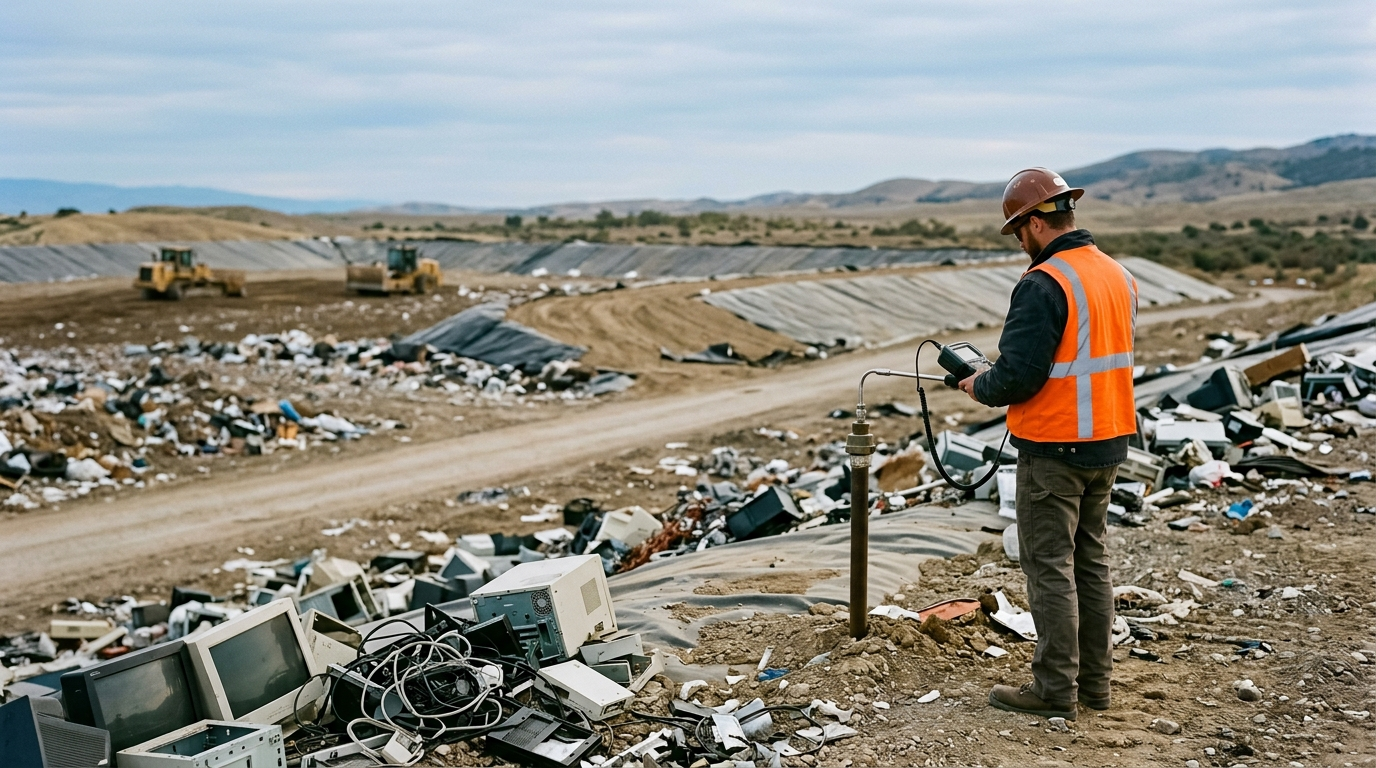
The UK Environment Agency released a supplementary report on August 1, 2026, continuing its work to measure methane emissions from landfills. This development is important for electronics recycling as it highlights the environmental impact of improperly disposing of e-waste.
Last reviewed by Samantha Holloway on 07 August 2026
What Does This Report Mean for Electronics Recycling?
This report highlights that improper disposal of electronic waste can lead to increased landfill methane emissions, contributing significantly to climate change. For example, methane is 25 times more potent than carbon dioxide over a 100-year period (US Environmental Protection Agency).
According to the World Economic Forum, e-waste is the fastest-growing waste stream globally.
The release of the Environment Agency's supplementary report on August 1, 2026, provides critical data on how landfills contribute to greenhouse gas emissions, particularly methane. This information is vital for electronics recycling because it reinforces the importance of proper disposal methods.
According to the UN Global E-Waste Monitor 2024, global e-waste reached 62 million tonnes in 2023, with only about 22.3% being formally recycled worldwide. The rest often ends up in landfills or incinerators, where hazardous materials can leach into soil and water, while electronic devices release toxic gases like methane when they decompose.
the improper disposal of e-waste containing valuable metals such as gold, silver, palladium, and other rare earth elements means a waste of natural resources. For instance, one million smartphones contain approximately 35kg of gold and 340kg of silver (UN Global E-Waste Monitor 2024). Proper recycling not only reduces environmental harm but also recovers valuable materials for reuse.
According to the Apple Environmental Report 2024, apple recovered over 1 tonne of gold from recycled devices in 2023.
How Does This Affect Methane Emissions?
This report affects methane emissions because it shows that the decomposition of e-waste in landfills produces significant amounts of methane, a potent greenhouse gas. The study reveals that methane from waste contributes to about 10% of total UK methane emissions (UK Environment Agency).
The findings emphasize the urgent need for better management and recycling practices for electronics. When devices aren't recycled properly, they end up in landfills where their materials break down and release harmful gases like methane. This process accelerates climate change.
According to the BankMyCell 2024, iPhones retain trade-in value better than Android phones, losing ~40% in year 1 vs ~55%.
For instance, a single discarded lithium-ion battery can emit substantial amounts of greenhouse gases as it degrades. The global lithium-ion battery market is forecasted to reach 2.5 TWh by 2030 (IDTechEx Research), making proper disposal and recycling increasingly critical for mitigating environmental impacts.
What Are the Legal Implications?
The legal implications involve compliance with regulations such as the WEEE Directive in Europe, which mandates that member states collect at least 65% of electronics placed on the market. Additionally, the Basel Convention restricts hazardous waste movement across borders, ensuring countries manage their e-waste responsibly.
Failure to adhere to these guidelines can result in hefty fines and legal repercussions for businesses and individuals involved in improper disposal practices. At electronics recycling, in the UK, companies face penalties up to £50,000 (UK Environment Agency) for non-compliance with WEEE regulations.
What Can You Do Now?
To stay compliant and contribute positively to environmental efforts, start by using certified recycling services that adhere to international standards like ISO 14001. Also, familiarize yourself with local recycling centers and initiatives in your area. For more information on right-to-repair movements and circular economy principles, check out our guides on right-to-repair and the circular economy.
By understanding and supporting these initiatives, you can play a part in reducing e-waste pollution and promoting sustainable practices.
Sources
- World Economic Forum
- Apple Environmental Report 2024
- BankMyCell 2024