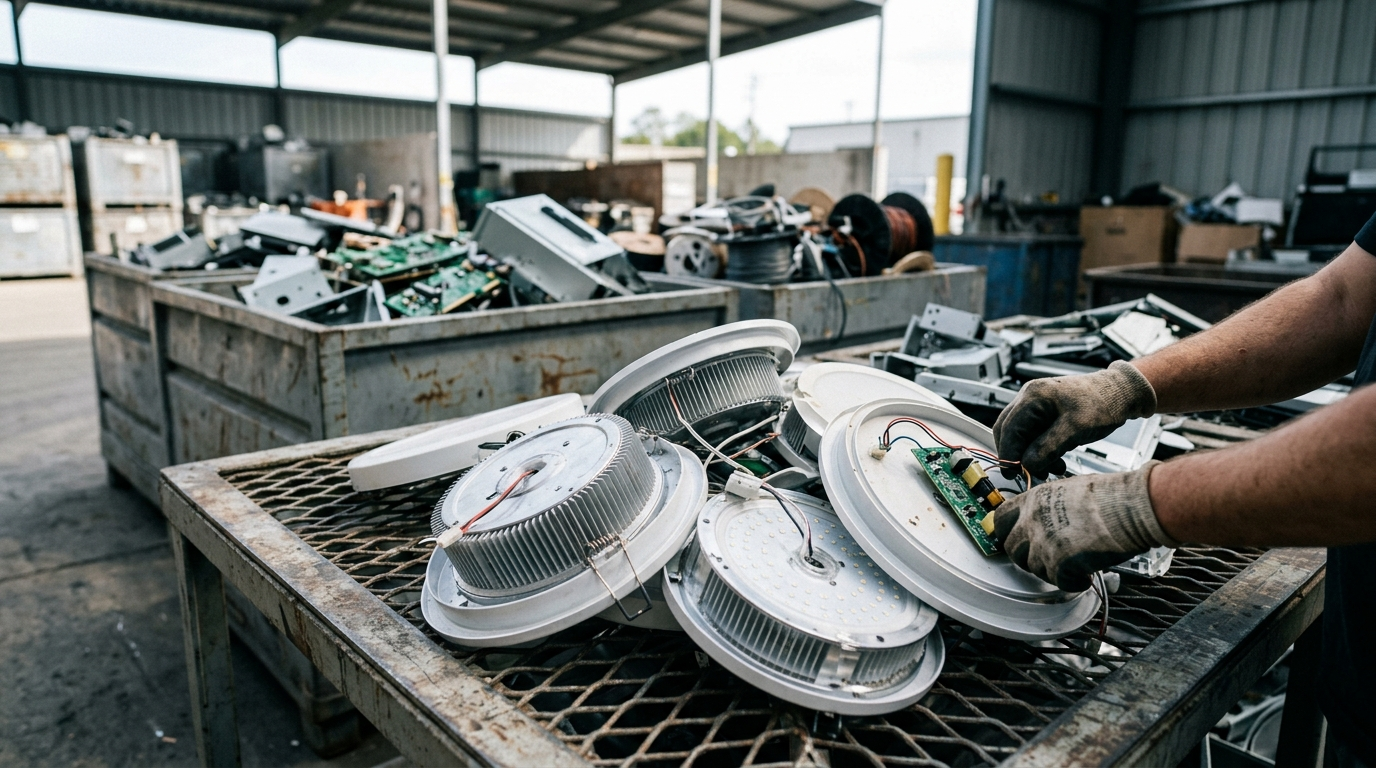
The UK Product Safety Alerts issued a report on August 1, 2026, concerning the safety of Jiangmen Hanma Optoelectronics Co., Ltd.'s LED Ceiling Light model 2608-0104. This alert is important for electronics recycling because it highlights the ongoing need to ensure that products are safe and recyclable.
Last reviewed by Samantha Holloway on 17 August 2026
What Happened?
The UK Product Safety Alerts reported that the LED Ceiling Light from Jiangmen Hanma Optoelectronics Co., Ltd. poses a risk of electric shock due to inadequate insulation in the device's wiring. The alert advises consumers to immediately stop using these lights until further instructions are issued by the company or relevant authorities.
This report highlights the importance of stringent safety checks before electronics enter the market, impacting both consumer confidence and recycling processes. Consumers and recycling facilities need clear guidance on how to handle potentially hazardous items safely.
According to the US EPA, recycling one million laptops saves the energy equivalent of electricity used by 3,657 us homes in a year.
Why Does This Matter for Electronics Recycling?
It matters because improper handling of faulty products can lead to accidents during disassembly and material recovery. The alert highlights that about 22.3% of global
e-waste is formally recycled, leaving a vast amount at risk if not handled correctly. Proper guidelines are necessary to ensure the safety of workers in recycling facilities.
What Do Regulations Say?
Regulations like the EU's
[WEEE Directive](/regulations/weee-directive-eu) aim to increase the collection and appropriate disposal of electrical and electronic equipment. The directive mandates that by 2030, member states must collect at least 65% of electronics placed on their markets each year. Such regulations help standardize practices across regions, ensuring safer recycling methods.
How Does This Affect Electronics Recycling?
For electronics recycling, the report necessitates a review and update of safety protocols for handling suspect products. Facilities need to ensure they have the capacity and training to identify and manage potentially dangerous items. The directive's goal to collect 65% of e-waste by 2030 means that more materials will be entering recycling streams, increasing the importance of thorough inspections.
What Are Consumers Told To Do?
Consumers are advised not to use the faulty LED Ceiling Light model until further notice from Jiangmen Hanma Optoelectronics Co., Ltd. or UK safety authorities. Additionally, they should check if their devices match the recalled product's specifications and report any findings to local waste management services.
What Should Recycling Facilities Do Now?
Recycling facilities must stay informed about such alerts and adjust their procedures accordingly. They need to invest in training for staff on identifying and handling potentially dangerous items safely. This ensures not only worker safety but also compliance with regulations like the WEEE Directive, which aims for 65% collection by 2030.
To responsibly manage e-waste, it's important that recycling facilities engage with manufacturers and regulatory bodies to stay updated about product recalls and safety issues. This proactive approach helps in maintaining high standards of safety and sustainability in electronics recycling practices.
According to the UN Global E-Waste Monitor 2024, only 22.3% of e-waste was properly collected and recycled in 2022.
For more information on how you can contribute to responsible e-waste disposal, visit our page on e-waste.
Sources
- US EPA
- UN Global E-Waste Monitor 2024
- Consumer Technology Association