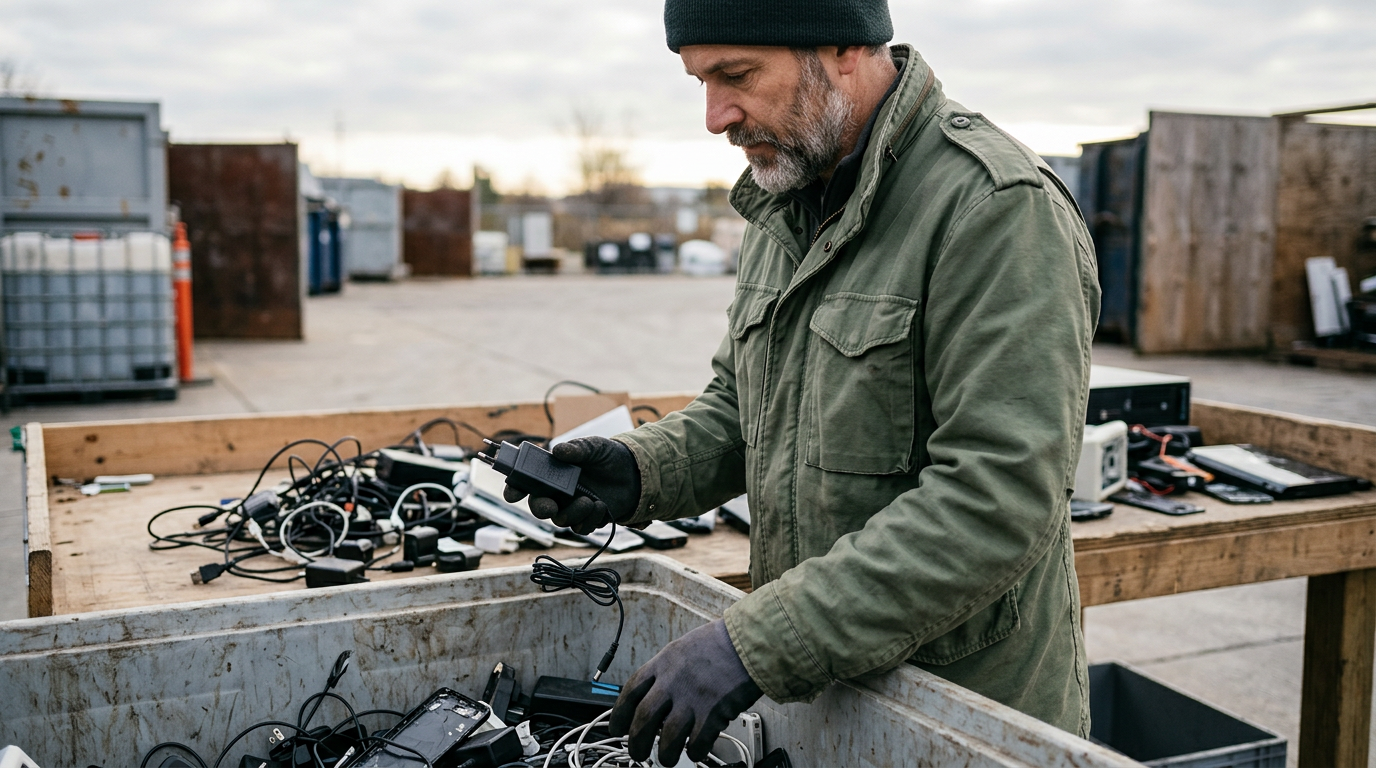
The UK Product Safety Alerts issued a report on August 1, 2026, regarding the EGTech 20W Fast Charger (model 2608-0040), highlighting safety concerns that could impact how consumers and businesses approach electronics recycling. The alert details potential overheating risks associated with this charger model, which could lead to fires or personal injury if not addressed properly.
Last reviewed by Samantha Holloway on 12 August 2026
What Happened?
The UK Product Safety Alerts reported a safety issue with the EGTech 20W Fast Charger, citing potential overheating risks that could cause fires or harm users. The alert was issued on August 1, 2026.
This report is important for electronics recycling because it highlights the importance of proper disposal and handling procedures. When dealing with faulty chargers like this one, which may contain hazardous materials such as lithium-ion batteries, the risk of fire increases significantly if not disposed of correctly.
According to the European Parliament, less than 1% of rare earth elements in e-waste are currently recycled.
How Does This Affect Electronics Recycling?
The alert emphasizes that improper recycling or disposal of defective electronics can pose significant safety risks. For example, 1 million smartphones can contain up to 35kg of gold and other precious metals, but also hazardous materials like lithium-ion batteries. Correct handling is important to prevent fires in recycling facilities.
This highlights the necessity for certified e-waste recyclers who adhere to strict safety guidelines. Recyclers must ensure that faulty chargers aren't improperly stored or discarded, reducing fire hazards. Proper certification under regulations such as the [WEEE Directive](/regulations/weee-directive-eu) ensures that materials are safely managed and recycled to recover valuable resources while minimizing environmental impact.
What Should Consumers Do?
Consumers should immediately stop using the EGTech 20W Fast Charger if they have it. They can visit the manufacturer's website or contact customer service for a replacement charger or refund. The safety alert also advises consumers to check their other chargers and ensure that none are defective, as this could lead to similar risks.
By reporting faulty equipment to manufacturers, individuals contribute to larger efforts in tracking and addressing safety issues within electronics recycling. This proactive approach helps prevent broader environmental hazards and ensures personal safety.
What Should Businesses Do?
Businesses need to establish clear protocols for handling recalled or potentially dangerous devices. They should educate staff about the importance of identifying and safely disposing of faulty products, such as the EGTech 20W Fast Charger, which may be part of a larger lot of similar issues.
Companies also benefit from engaging with certified e-waste recyclers who can provide secure disposal methods that comply with local regulations. For instance, in the EU, companies must adhere to WEEE collection targets, aiming for at least 65% recovery rates by weight. Proper recycling not only mitigates environmental risks but also helps recover valuable materials.
According to the WEEE Forum, over 5 billion mobile phones were estimated to be sitting unused in drawers worldwide in 2022.
What Should Governments Do?
Governments should enforce stricter oversight and regulation of e-waste management practices. This includes ensuring compliance with existing directives like the EU's WEEE Directive and promoting
circular economy principles that encourage repair, reuse, and safe disposal methods for electronics.
By implementing strong policies, governments can help ensure that defective products are handled responsibly from start to finish. They should also support initiatives aimed at educating both consumers and businesses about the dangers of improper e-waste management and how to recycle safely.
Practical Steps for Everyone
For individuals, it's important to stay informed about product recalls and safety alerts related to electronics. By regularly checking manufacturer websites or signing up for notifications, users can quickly respond to any issues affecting their devices.
Businesses should conduct regular audits of their e-waste disposal practices to ensure compliance with regulations and best practices. Engaging with certified recyclers who adhere to the WEEE Directive or equivalent standards is key to maintaining safety and environmental responsibility.
, proper handling and recycling of electronics are vital not only for personal safety but also for protecting our environment from hazardous waste. By acting responsibly and adhering to established guidelines, everyone can contribute to a safer and more sustainable future. For more information on e-waste disposal and the circular economy, visit this page.
Sources
- European Parliament
- WEEE Forum
- WHO