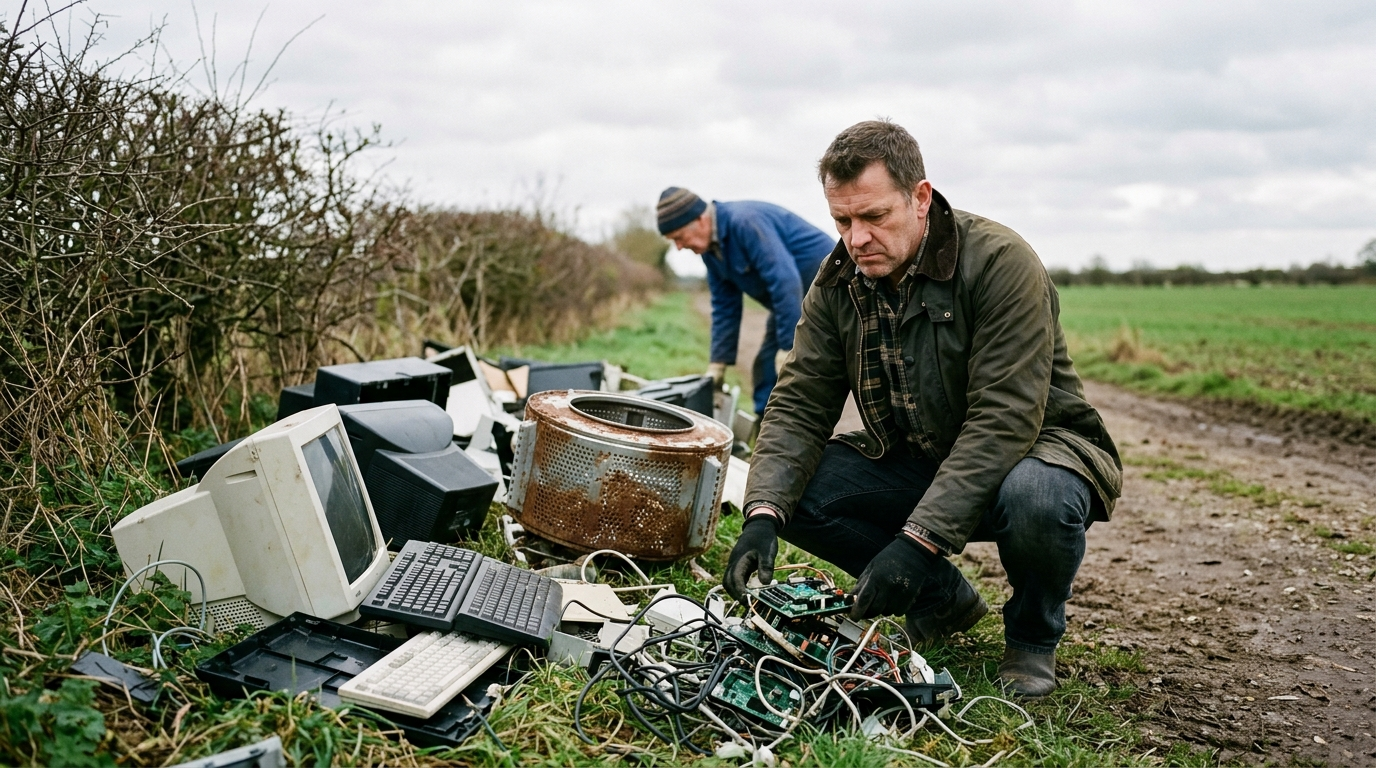
In June 2026, surveillance cameras spotted vehicles illegally dumping waste in Norfolk, leading to five prosecutions under the UK Environment Agency. Pair guilty after waste dumped in Norfolk This incident highlights significant risks and costs associated with improper e-waste disposal.
Last reviewed by Samantha Holloway on 10 June 2026
How Does This Affect Electronics Recycling?
This case highlights the legal consequences of illegal dumping and emphasizes the importance of following proper recycling protocols for electronics. Companies and individuals who dispose of electronic waste improperly face hefty fines and possible imprisonment, as seen in Norfolk where five parties have been prosecuted since the incident was discovered.
According to the Shift Project, manufacturing a new smartphone produces 50-80kg of co2 equivalent.
The global e-waste crisis continues to grow, with an estimated 62 million tonnes generated annually worldwide according to the UN Global E-Waste Monitor 2024. Only 22.3% of this waste is formally recycled each year, leaving a substantial amount to be handled improperly or illegally.
What Are the Costs Involved in Improper Disposal?
Improper disposal not only harms the environment but also incurs significant financial penalties. Companies found guilty can face fines up to £50,000 per tonne of waste under UK regulations. For individuals, such actions can result in a fine and imprisonment for up to six months.
According to the World Economic Forum, e-waste is the fastest-growing waste stream globally.
The cost of proper recycling processes pales in comparison to these legal fees and environmental damage costs. Recycling electronics responsibly ensures the recovery of valuable materials like gold and silver, which are worth millions globally. For instance, 1 million smartphones contain around 35kg of gold and 340kg of silver, highlighting the economic benefits of correct disposal practices.
How Can We Promote Responsible Recycling?
Promoting responsible recycling involves raising awareness about the importance of following legal guidelines for e-waste management. Companies should invest in training their staff on proper handling and disposal techniques to avoid costly mistakes.
According to the Apple Environmental Report 2024, apple recovered over 1 tonne of gold from recycled devices in 2023.
Individuals can also contribute by choosing certified recyclers who adhere to strict environmental standards, such as those compliant with [WEEE Directive](/regulations/weee-directive-eu) regulations in the EU. The directive aims to improve waste management through recycling targets of 65% of electronics placed on the market by 2030, ensuring a more sustainable approach to e-waste disposal.
What Should We Do Now?
To prevent similar incidents and promote responsible recycling, both businesses and individuals should take proactive measures. At Pair guilty after waste dumped in Norfolk, for companies, it's important to partner with reputable recyclers who have a track record of compliance and transparency. Individuals can educate themselves about local recycling options and use trusted services such as those provided by eCycling Central.
By adhering to guidelines like the WEEE Directive and supporting initiatives aimed at reducing waste and increasing recycling rates, everyone can play a part in mitigating the environmental impact of e-waste while avoiding legal repercussions. For more information on responsible disposal practices, check out our guide on [right-to-repair](/guides/right-to-repair-what-it-means) or visit our page dedicated to [urban mining](/glossary/urban-mining).
Sources
- Shift Project
- World Economic Forum
- Apple Environmental Report 2024