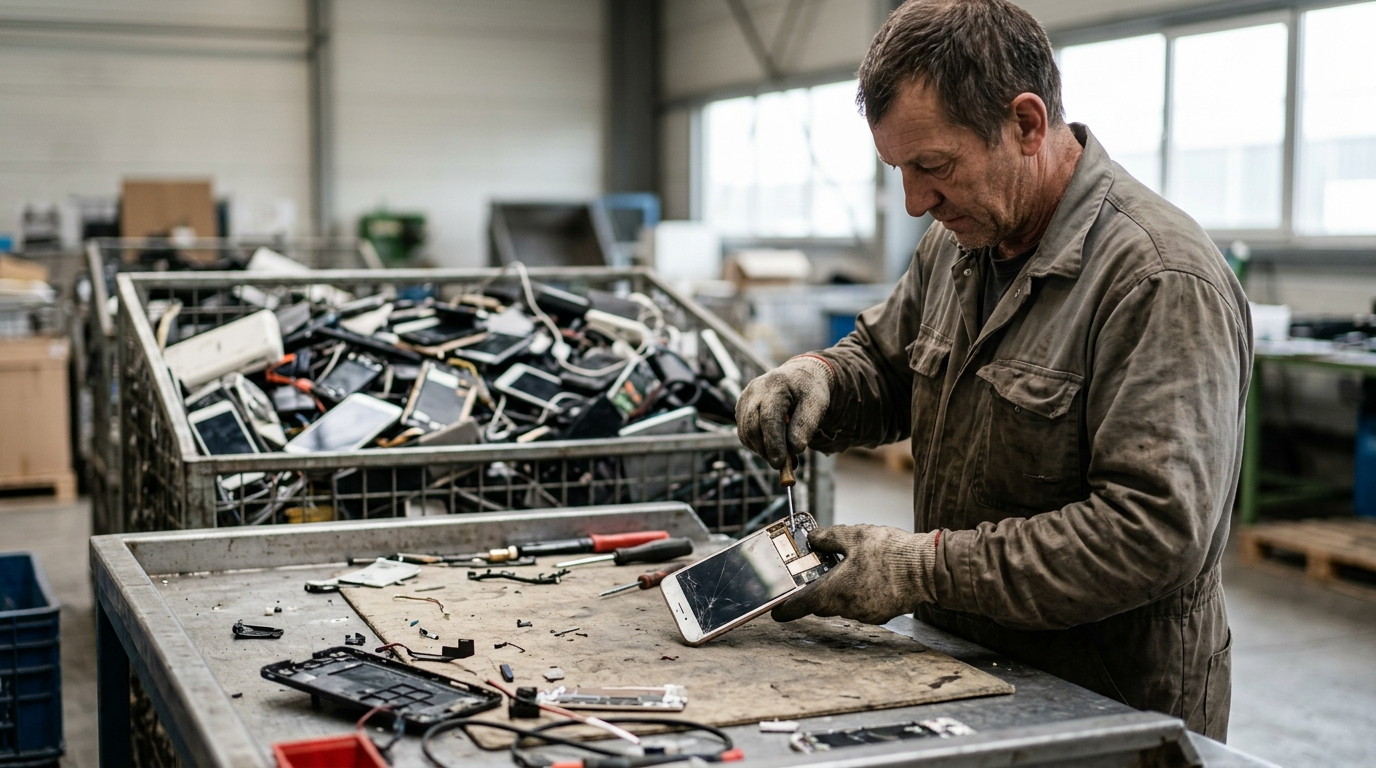
A year after the EU implemented new ecodesign rules aimed at improving electronics repairability and sustainability, a mere 18% of smartphones meet these requirements-highlighting significant challenges for those involved in electronics recycling.
Last reviewed by Samantha Holloway on 10 September 2026
How Does This Affect Electronics Recycling?
The lack of compliance means that only about 20 out of every 100 smartphones produced adhere to the new EU ecodesign regulations. This makes it harder for recyclers to access repair information and spare parts, complicating their work and potentially increasing
e-waste.
Since September 2025, the European Union has mandated that all new electronic devices sold in the region must carry a repairability score of at least three out of five stars and provide detailed repair manuals. The goal is to make it easier for consumers to fix broken gadgets rather than buy new ones. However, as of August 2026, a study by iFixit found that only around 18% of smartphones comply with these requirements.
According to the UN Global E-Waste Monitor 2024, only 22.3% of e-waste was properly collected and recycled in 2022.
The EU's ecodesign rules aim to curb the growing tide of e-waste, which is now estimated at over 62 million tonnes globally each year according to the UN Global E-Waste Monitor 2024. By encouraging repair and reuse, the regulations seek to extend product lifespans and reduce environmental impact.
What Are the Key Issues with Compliance?
The primary issue is that manufacturers aren't fully adhering to the new guidelines set by the EU ecodesign directive. Only about 18% of smartphones reviewed comply, indicating a significant gap in implementation. The regulations require companies to provide repair manuals and spare parts for five years after a device's sale, but many don't meet these criteria.
the lack of transparency regarding repairability scores means that consumers can't easily compare products based on their sustainability credentials. This hinders informed purchasing decisions that could drive demand towards more environmentally friendly devices.
According to the Consumer Technology Association, The average US household has 21 unused electronic devices.
What Impact Does Non-Compliance Have?
The non-compliance with EU ecodesign rules has direct implications for electronics recycling. With fewer phones meeting the criteria, recyclers struggle to find detailed repair manuals and replacement parts necessary for refurbishing gadgets. This complicates efforts to extend product lifespans through repair rather than disposal.
as smartphones contain valuable materials like gold, silver, and palladium (1 million phones yield 35kg of gold), non-compliance reduces the efficiency of resource recovery from e-waste streams. The lack of standardized repair information also increases costs for recyclers who must rely on generic parts or reverse-engineer solutions.
What Are Consumers' Rights in This Context?
Despite low compliance rates, consumers retain certain rights under EU legislation like the
WEEE Directive and RoHS regulations. These laws mandate that manufacturers take back their products at the end of life and ensure proper disposal. the
right-to-repair movement advocates for greater access to repair information and spare parts.
Consumers can also benefit from urban mining initiatives aimed at extracting valuable materials from discarded electronics. This practice not only recovers precious metals but also reduces harmful environmental impacts associated with traditional mining operations.
What Should Recyclers Do Now?
To adapt to the current lack of compliance, recyclers must explore alternative strategies for handling e-waste more sustainably. Engaging directly with manufacturers to request repair manuals and spare parts can help bridge this gap. Additionally, investing in training programs that enhance technicians' skills in reverse engineering undocumented devices is important.
Recyclers should also advocate for stricter enforcement of EU ecodesign rules and push for broader adoption of the right-to-repair principles globally. Supporting consumer awareness campaigns about the importance of device repairability can drive demand for more compliant products, thereby encouraging manufacturers to comply with regulations.
According to the Counterpoint Research, The global refurbished smartphone market was worth $49.3 billion in 2023.
By taking these steps, recyclers can contribute positively to the circular economy while ensuring that e-waste is managed responsibly and sustainably.
Sources
- UN Global E-Waste Monitor 2024
- Consumer Technology Association
- Counterpoint Research