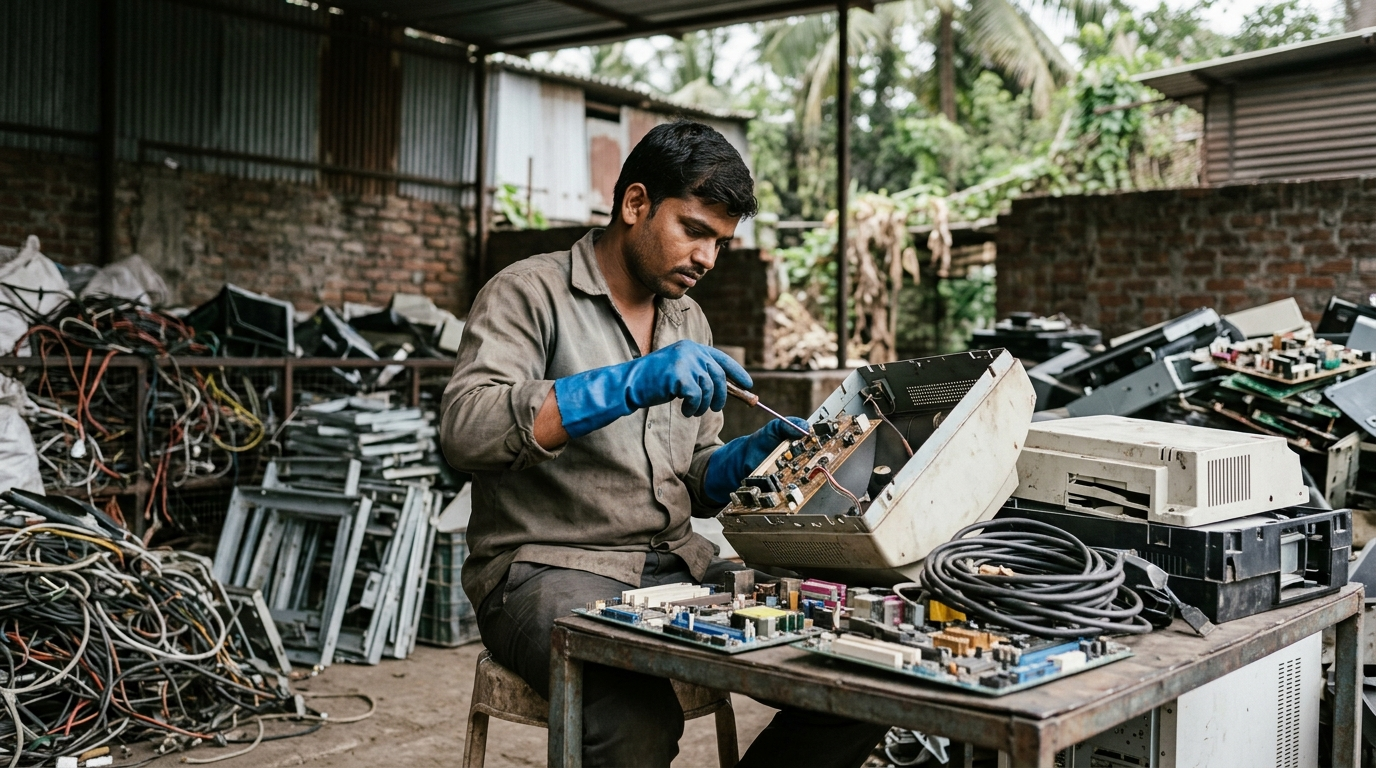
The Indian e-waste recycling market is projected to reach $3 billion by 2034, according to a recent report from Business Standard. This forecast highlights the growing importance of sustainable practices in tech sustainability and highlights the need for strong infrastructure to manage electronic waste responsibly.
Last reviewed by Samantha Holloway on 30 August 2026
What Does This Mean for Electronics Recycling?
This projection signals significant growth potential in the Indian e-waste management sector over the next decade. With an estimated 62 million tonnes of global e-waste generated annually, India's expanding market offers a critical avenue for addressing environmental concerns associated with electronic disposal and recycling.
According to the European Parliament, less than 1% of rare earth elements in e-waste are currently recycled.
The forecasted rise in India's e-waste recycling industry reflects broader trends towards sustainable electronics practices globally. As more countries implement regulations to curb the dumping of hazardous materials from outdated tech devices, the demand for effective recycling solutions increases. For instance, the EU's WEEE Directive sets a collection target of 65% of electronic products placed on the market. In parallel, India's growing e-waste generation necessitates a well-structured recycling framework.
How Will This Impact Global E-Waste Management?
The Indian market growth will likely stimulate advancements in recycling technologies and practices that can be adopted worldwide. As India develops its infrastructure to handle increasing volumes of electronic waste. Innovations like urban mining could become more commonplace globally. Urban mining involves extracting valuable materials from discarded electronics-like traditional mining but focused on used products.
According to the WEEE Forum, over 5 billion mobile phones were estimated to be sitting unused in drawers worldwide in 2022.
the projected $3 billion market value highlights the economic viability of sustainable tech practices. For instance, one million smartphones contain approximately 35 kilograms of gold and 340 kilograms of silver, demonstrating the significant resource recovery potential in e-waste recycling. This financial incentive encourages companies to invest in eco-friendly solutions.
What Are the Key Challenges?
Despite promising growth, challenges remain. The current global formal recycling rate stands at just 22.3%, indicating substantial room for improvement. Achieving higher rates requires coordinated efforts from governments, private sectors, and consumers alike. For example, the US generates around 6.92 million tonnes of e-waste annually but recycles only a fraction through established channels.
According to the WHO, e-waste contains over 1,000 different substances, many of them toxic.
ensuring that recycled materials are handled safely is important. At tech sustainability, hazardous substances like lead, mercury, and cadmium, which are common in electronic devices, can pose severe health risks if not managed properly. Adhering to international regulations such as the Basel Convention helps mitigate these risks by setting guidelines for the disposal of hazardous waste.
What Can We Do Now?
Individuals and businesses should embrace practices that promote tech sustainability. Consumers can start by choosing products from manufacturers committed to recycling programs, like Apple's Daisy robot which disassembles iPhones into component parts for reuse. They can also explore local e-waste collection initiatives, such as those supported by the WEEE Directive in Europe.
supporting legislative efforts aimed at extending product lifespans through measures like right-to-repair laws helps reduce overall waste generation. For instance, adopting a circular economy mindset encourages companies to design products with recyclability and longevity in mind.
To learn more about responsible e-waste disposal practices, visit our guides on right-to-repair and circular economy approaches. These resources provide actionable steps for minimizing the environmental impact of electronic devices.
By taking proactive measures now, we can contribute to a more sustainable future for tech sustainability.
Sources
- European Parliament
- WEEE Forum
- WHO