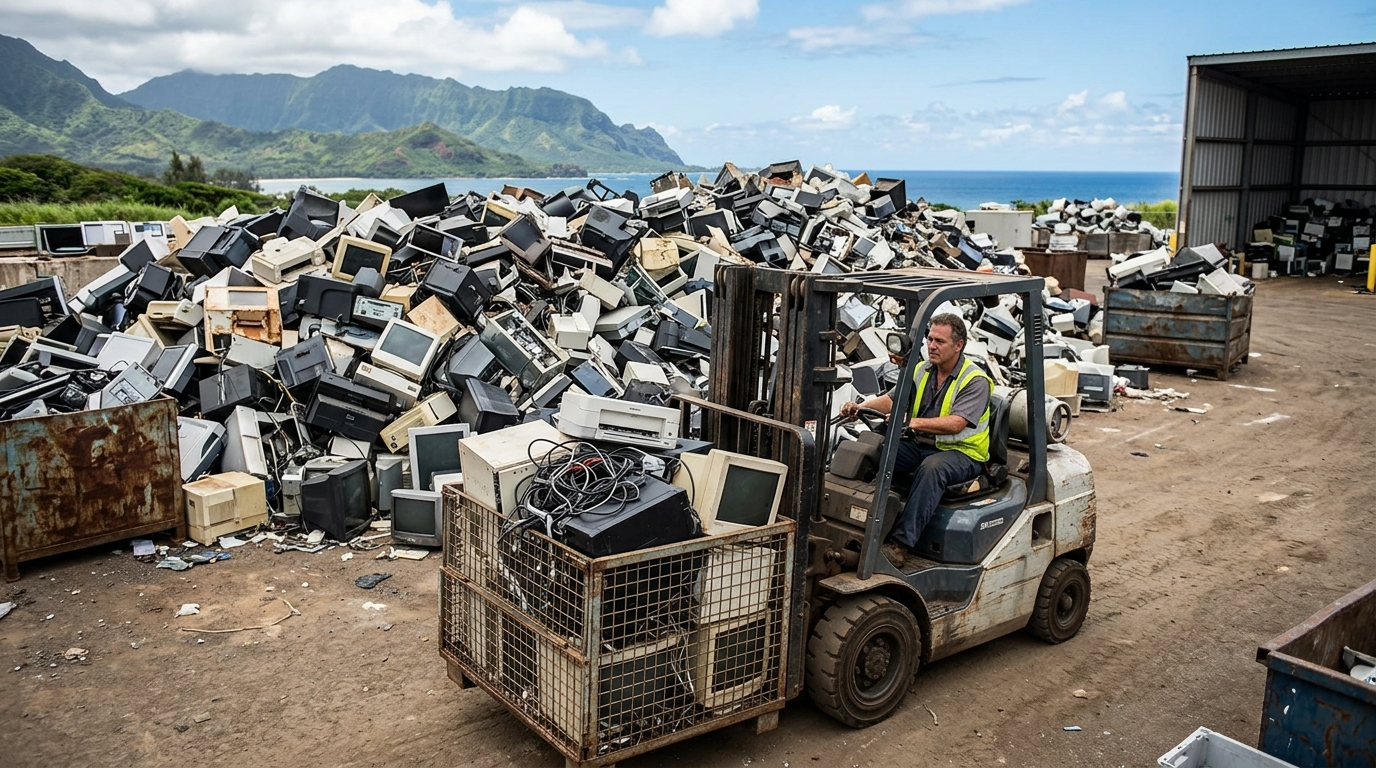
The e-waste crisis in Hawaii is worsening as the state struggles to manage an influx of discarded electronics, which poses a significant challenge for tech sustainability and environmental health.
Last reviewed by Samantha Holloway on 09 September 2026
As of September 2026, Hawaii has seen a dramatic increase in electronic waste, with local landfills nearing capacity. This surge directly impacts residents, businesses, and recycling centers that must find new ways to handle the growing volume of e-waste responsibly.
How Does This Affect Electronics Recycling?
It significantly complicates electronics recycling efforts, requiring innovative solutions for disposal. The state's recycling facilities are overwhelmed by the sheer volume of discarded devices, leading to concerns about proper handling and environmental contamination.
The global context highlights the scale of this issue: globally, 62 million tonnes of e-waste were generated in 2024 alone, with only 22.3% formally recycled worldwide. In Hawaii, limited recycling infrastructure exacerbates these challenges, pushing tech sustainability to the forefront as a critical concern.
What Are The Main Contributing Factors?
Increased consumer electronics usage and shorter device lifespans contribute significantly to this issue. Planned obsolescence-where devices are designed to become obsolete after a certain period-accelerates the e-waste cycle. In Hawaii, smartphones typically last an average of 24 months before being replaced.
population growth and economic development in tourist-heavy areas like Honolulu have driven up demand for electronics. The state's remote location adds logistical challenges to recycling efforts, making it harder to transport waste to specialized facilities.
How Are Recycling Programs Responding?
Recycling programs are adapting by expanding collection sites and implementing community education initiatives. For example, Hawaii's Department of Health has launched a new program aimed at increasing public awareness about e-waste recycling options.
The EU WEEE Directive sets an ambitious 65% target for the collection rate of electrical and electronic equipment placed on the market, offering a model that could inspire similar goals in Hawaii. By following such directives, states can improve their recycling rates and reduce environmental impact.
What Are The Environmental Impacts?
Improper disposal of e-waste leads to soil and water contamination from hazardous materials like lead, mercury, and cadmium found in electronics. These pollutants not only harm local ecosystems but also pose health risks to residents living near contaminated sites.
the extraction of raw materials for new devices contributes to environmental degradation and carbon emissions. Recycling these materials through tech sustainability initiatives can significantly reduce this impact.
What Can Individuals Do Now?
Individuals should take proactive steps to manage their e-waste responsibly:
- Use e-waste collection services. - Donate functional electronics for reuse or recycling. - Support local and national regulations like the [Basel Convention](/regulations/basel-convention-on-hazardous-waste). - Educate themselves about [circular economy](/guides/circular-economy-and-electronics) principles to promote sustainable consumption.
By adopting these practices, residents can help alleviate pressure on recycling infrastructure and contribute positively to environmental health.
Sources
- US EPA
- UN Global E-Waste Monitor 2024
- Consumer Technology Association