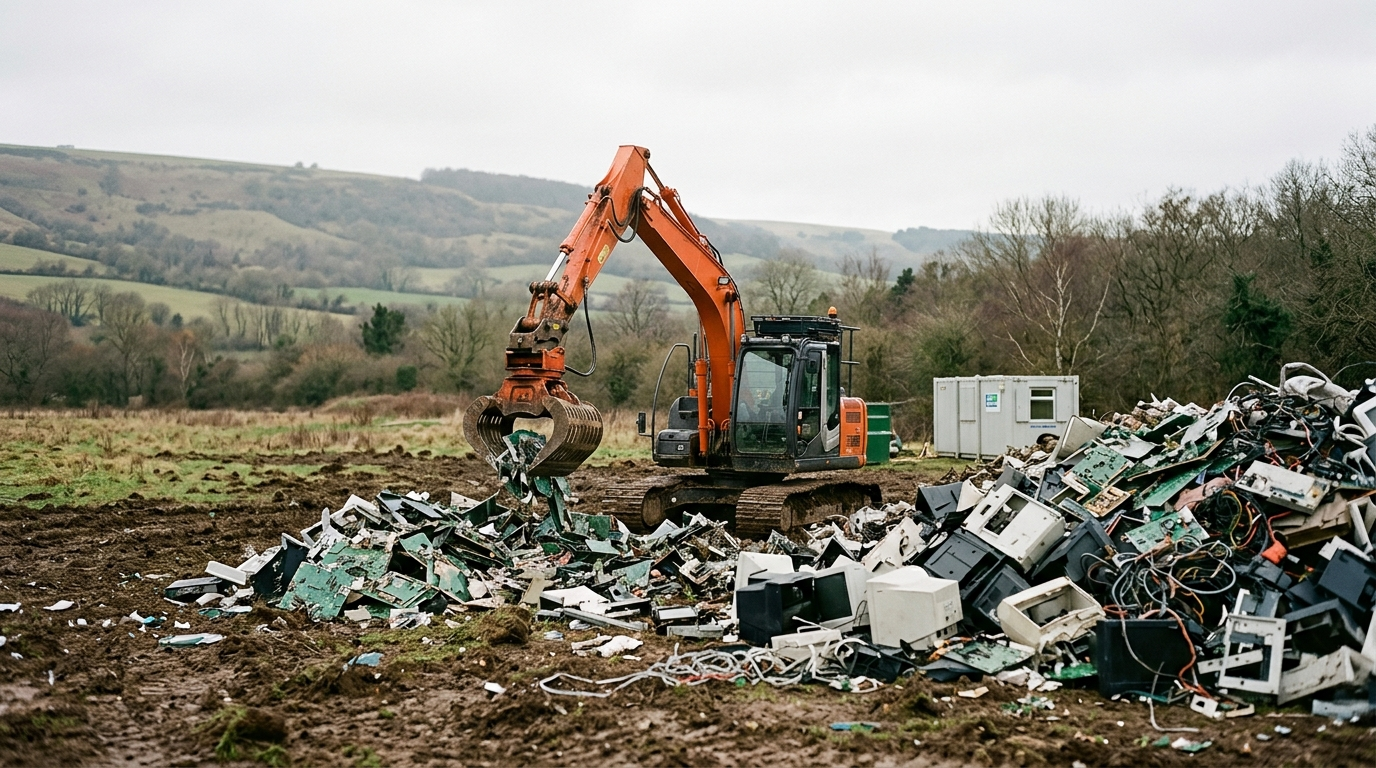
A court order has shut down an illegal waste site in Gloucester, UK, which directly impacts the proper handling and disposal of e-waste. The shutdown is important for electronics recycling as it helps prevent hazardous materials from entering the environment.
Last reviewed by Samantha Holloway on 14 August 2026
What Happened at Severnside Farm?
The Environment Agency secured a court order to prohibit any entry or importation of waste onto Severnside Farm in Gloucester, UK. This action ensures that no further illegal dumping occurs and protects the surrounding area from environmental damage.
According to the Apple Environmental Report 2024, apple recovered over 1 tonne of gold from recycled devices in 2023.
This shutdown is part of an ongoing effort by regulatory bodies worldwide to combat improper disposal practices. In August 2026, the Environment Agency's intervention was a direct response to concerns about hazardous waste accumulating at the site without proper permits or oversight.
How Does This Affect Electronics Recycling?
Electronics recycling benefits from such actions as they prevent illegal dumping sites like Severnside Farm from operating and spreading toxic substances. By enforcing legal standards, authorities ensure that e-waste is managed safely and responsibly.
According to the BankMyCell 2024, iPhones retain trade-in value better than Android phones, losing ~40% in year 1 vs ~55%.
The WEEE Directive in the EU mandates strict guidelines for collecting and processing electronic waste to minimize environmental impacts. Similarly, regulations like RoHS restrict hazardous substances in electronics sold within the European market, ensuring better recycling outcomes when devices reach their end of life.
What's at Stake with Improper Disposal?
Improper disposal can lead to severe environmental damage through soil and water contamination by toxic materials found in e-waste such as lead, mercury, and cadmium. For instance, the improper handling of lithium-ion batteries poses a fire risk and releases harmful chemicals into the environment.
According to the Royal Society of Chemistry, mobile phones contain up to 60 different elements, including critical raw materials.
According to the UN Global E-Waste Monitor 2024, only about 22.3% of global e-waste is formally recycled each year. This means that a significant portion ends up in landfills or illegal dumping sites where it can cause serious harm to ecosystems and human health.
How Can Individuals Ensure Their Electronics Are Recycled Properly?
To ensure your electronics are disposed of correctly, look for certified recycling centers near you. Many regions have local schemes like the WEEE Directive that provide designated drop-off points for old devices.
In the UK, citizens can use the Environment Agency's find-a-recycler service or check with local councils to locate authorized collection sites. In addition, participating in events such as community e-waste collections ensures items are handled according to environmental and safety regulations.
What Are Consumers' Rights Regarding Electronics Recycling?
Consumers have a right to know that their discarded electronics will be managed safely and responsibly. This includes adhering to laws like the WEEE Directive and RoHS which mandate proper recycling practices across Europe.
Understanding your rights under these directives helps you to demand transparency from manufacturers and retailers regarding take-back schemes, repair services, and recycling facilities available for used products.
How Can Businesses Stay Compliant?
Businesses must comply with regulations such as the WEEE Directive by ensuring they use approved e-waste disposal methods. This includes setting up collection systems and educating staff on proper handling procedures to avoid legal penalties and environmental damage.
For example, companies can partner with accredited recycling organizations that specialize in managing IT equipment securely and efficiently. By doing so, businesses not only fulfill their legal obligations but also contribute positively to waste reduction initiatives globally.
What's the Future of Electronics Recycling?
Looking ahead, advancements in technology will continue to shape how we recycle electronics. Innovations such as urban mining-extracting valuable materials from discarded devices-are becoming more prevalent and efficient.
As e-waste volumes increase alongside stricter regulations, businesses and individuals must stay informed about best practices for managing waste streams responsibly. Engaging with circular economy principles through initiatives like the right-to-repair movements can also help reduce environmental impact by extending product lifespans.
What Should You Do Now?
To start recycling your electronics properly:
- Check local government websites or the Environment Agency's find-a-recycler service to locate certified disposal sites.
- Learn about take-back programs offered by manufacturers and retailers.
- Participate in community e-waste collection events if available.
- Spread awareness among friends, family, and colleagues about responsible recycling practices.
By taking these steps, you contribute positively towards reducing environmental harm while supporting sustainable electronics management practices globally.
Sources
- Apple Environmental Report 2024
- BankMyCell 2024
- Royal Society of Chemistry