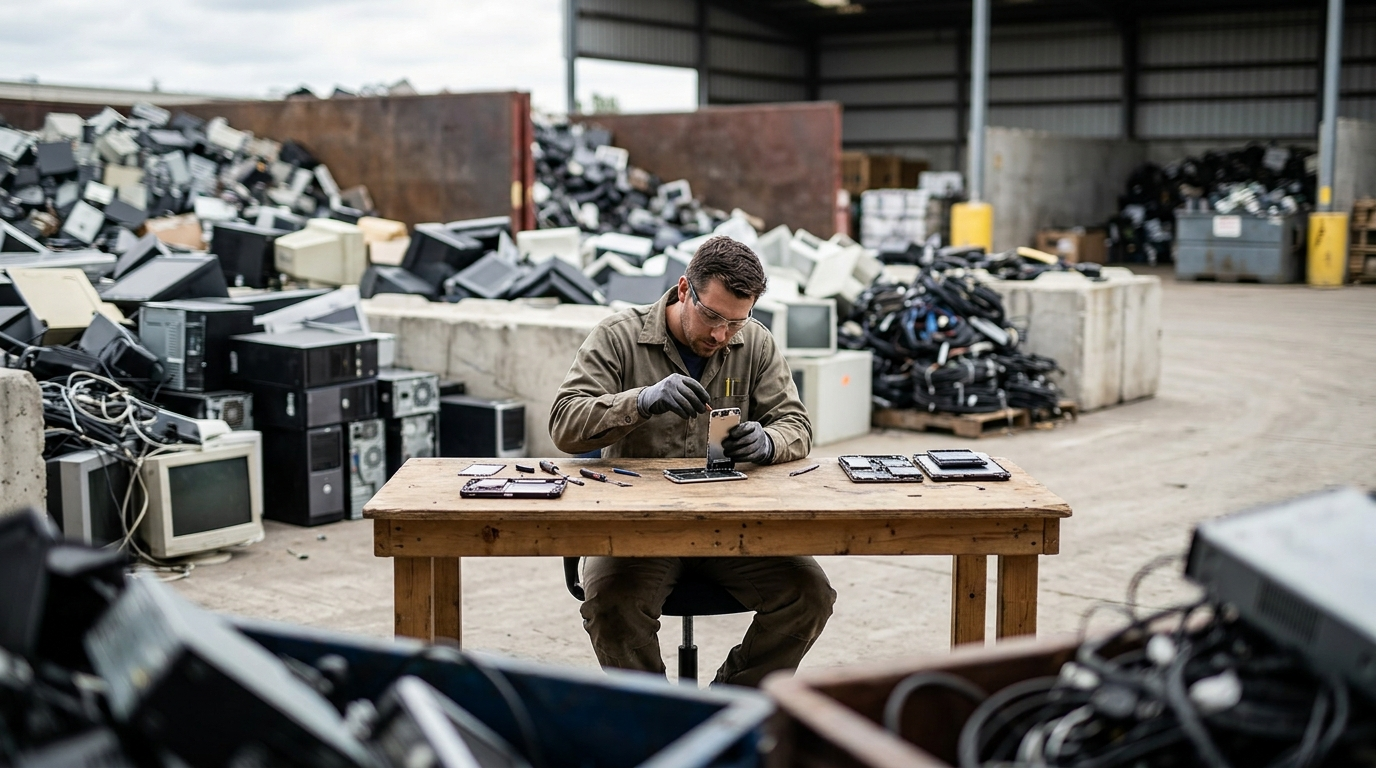
The 'right to repair' movement is gaining traction in the US and EU, but it falls short of addressing the full scope of challenges faced by electronics recycling services and consumers concerned about e-waste. In September 2026, new regulations aim to make it easier for individuals to fix their own gadgets, which could reduce waste and cut down on environmental damage.
Last reviewed by Samantha Holloway on 04 September 2026
The right to repair movement is a global initiative that aims to give consumers more control over repairing and maintaining electronic devices. By law, electronics manufacturers must provide tools and information necessary for customers to repair or upgrade their products themselves. This means making spare parts available, offering manuals with detailed repair instructions, and ensuring software updates don't hinder the device's functionality.
How Does This Affect Electronics Recycling?
The right to repair movement could potentially decrease the volume of e-waste by extending product lifespans through better repairability. However, it does little to address existing stockpiles of unusable electronics or older models that lack repair parts. For instance, in 2024 alone, global e-waste reached a staggering 62 million tonnes, with only 22.3% formally recycled worldwide according to the UN Global E-Waste Monitor.
What Are the Key Regulations for Electronics Recycling?
Several international regulations and directives govern how electronics should be handled once they reach end-of-life status. The EU's Waste Electrical and Electronic Equipment (WEEE) Directive sets collection targets, such as a goal of 65% of electronics placed on the market being collected by recycling services. In contrast, the United States lacks similar full federal legislation, although individual states have adopted their own
right-to-repair laws.
How Can Consumers Get Involved in Electronics Recycling?
Consumers play a important role in reducing e-waste through responsible disposal practices. By using certified electronics recyclers like those listed on ecyclingcentral.com, individuals can ensure that old devices are safely processed and valuable materials like gold and silver are recovered instead of ending up in landfills. For example, one million smartphones contain approximately 35kg of gold and 340kg of silver, highlighting the value recovery potential when electronics recycling is done properly.
What Are Some Practical Steps for Businesses?
Businesses can support sustainable practices by implementing take-back programs and encouraging employees to recycle their devices responsibly. Companies should also consider designing products with end-of-life disposal in mind-a concept known as
circular economy design-which aims to minimize waste and maximize resource efficiency from production through recycling or reuse.
As the market for lithium-ion batteries continues to grow-expected to reach 2.5 TWh by 2030-recycling these components becomes increasingly important. Batteries contain harmful chemicals and heavy metals that can leach into soil and water if not managed correctly. Proper disposal methods, such as those detailed in our battery recycling guide, are important for preventing environmental contamination.
What Is the Role of Government Policy?
Government policies like the
WEEE Directive and state-level right-to-repair laws provide a framework for responsible e-waste management. These regulations mandate that manufacturers take responsibility for the entire lifecycle of their products, including disposal. Such measures help ensure that electronics recycling services operate under ethical standards while promoting sustainable practices.
What Can Individuals Do Now?
Individuals can start by educating themselves on local e-waste collection events and authorized recycling centers. They should also consider donating working but outdated devices to charity or community programs rather than discarding them as waste. By doing so, they contribute to reducing the environmental impact of e-waste while supporting reuse initiatives.
By taking these steps, everyone-from individual consumers to large corporations-can help mitigate the effects of e-waste and promote more sustainable electronics recycling practices globally.
Sources
- European Parliament
- WEEE Forum
- WHO