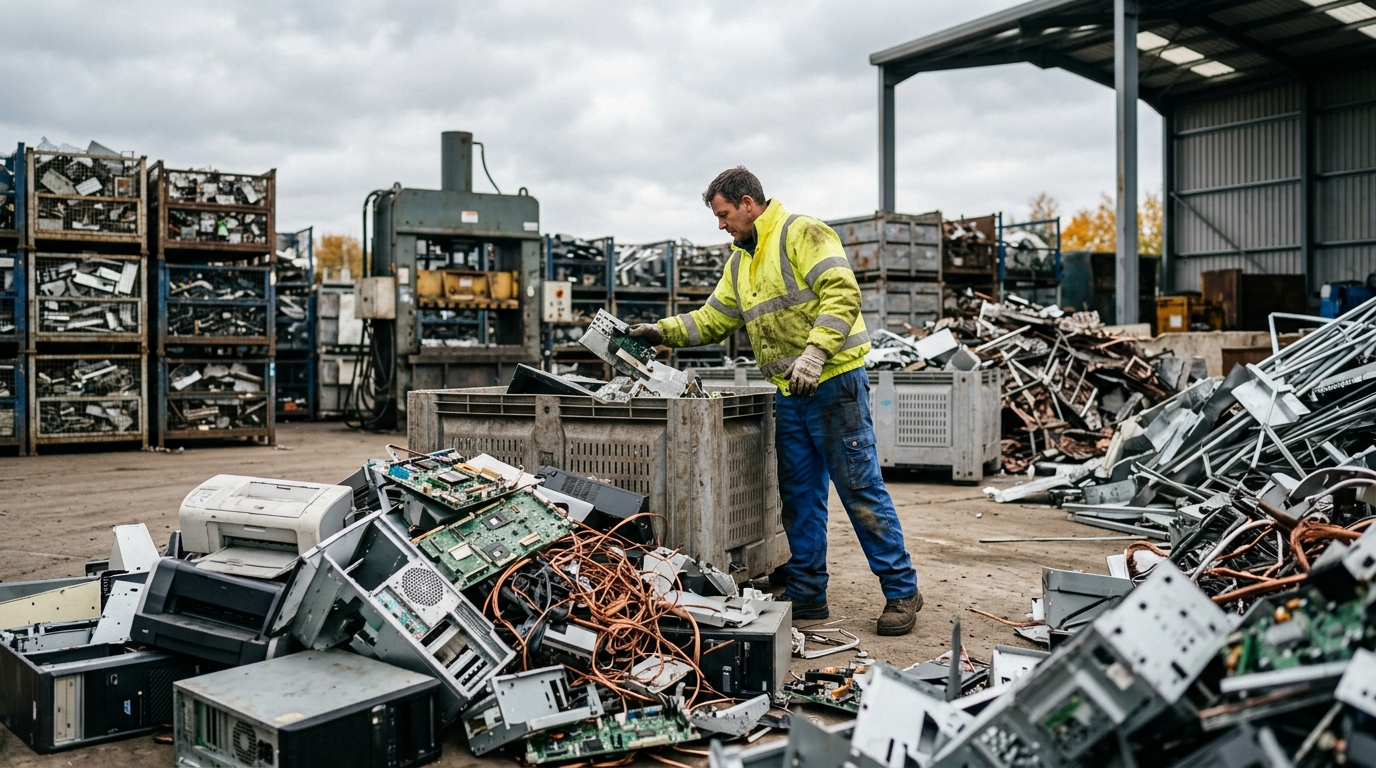
The UK Department for Environment, Food and Rural Affairs (DEFRA) has updated guidelines for submitting compliance fee proposals under the Waste Electrical and Electronic Equipment (WEEE) Directive as of August 2026. This development is important for electronics recycling companies aiming to comply with regulations and manage their environmental impact efficiently.
Last reviewed by Samantha Holloway on 26 August 2026
How Does This Affect Electronics Recycling?
This update affects how electronics recycling businesses calculate and pay WEEE compliance fees, ensuring alignment with EU standards. Businesses must now adhere to stricter guidelines on data submission and fee calculation processes.
The WEEE Directive aims to improve the collection, treatment, recovery, disposal, and environmental management of waste from electrical and electronic equipment in Europe. In August 2026, DEFRA released new guidance that simplifies the process for companies to submit their compliance fees accurately. This ensures transparency and accountability in funding recycling efforts across the UK.
According to the WHO, improper e-waste disposal releases toxic substances including lead, mercury, and cadmium into soil and water.
Electronics recycling firms must now provide detailed data on the types and quantities of WEEE collected and recycled each year. The directive mandates that at least 85% of electronics waste be recovered and reused, which has been a challenge for many businesses to meet due to varying collection rates and inefficiencies in the supply chain.
For instance, the global e-waste generated annually is estimated at 62 million tonnes (UN Global E-Waste Monitor 2024), with only 22.3% of this waste being formally recycled worldwide. This highlights the critical need for strong compliance mechanisms like those outlined by DEFRA to ensure more effective recycling practices.
Businesses must also consider the economic implications of these changes, as compliance fees can vary widely based on the volume and type of electronics processed. For example, processing one million smartphones could yield around 35kg of gold and 340kg of silver (source: UN Global E-Waste Monitor 2024), highlighting both the financial benefits and environmental responsibilities associated with proper recycling practices.
According to the UN Global E-Waste Monitor 2024, The world generated 62 million tonnes of e-waste in 2022, up 82% from 2010.
What Are the Key Changes in Compliance Fees?
The key changes involve a more streamlined process for calculating compliance fees based on specific data points. Businesses must now report detailed information about the types of electronics collected and recycled, including weight metrics and material content breakdowns.
Compliance fee calculations will be adjusted to reflect these new reporting requirements, ensuring that companies pay accurately based on their actual recycling activities. This means businesses must invest in better tracking systems and improve their data collection processes to comply with the updated guidelines.
To stay compliant, electronics recyclers should familiarize themselves with the latest DEFRA guidance documents available online. These resources provide detailed instructions and templates for submitting accurate compliance fee proposals. Additionally, adhering to these new standards will help companies avoid potential fines and legal issues while contributing positively to environmental sustainability efforts.
According to the European Parliament, less than 1% of rare earth elements in e-waste are currently recycled.
What Should Recyclers Do Now?
Recycling companies should immediately review their current data collection methods and update them if necessary. Ensuring accurate reporting of WEEE volumes and types is critical for compliance with the updated regulations. Companies can also consult DEFRA's official website or seek professional advice from industry experts to deal with these changes effectively.
investing in advanced tracking software and training staff on new data submission processes will help businesses maintain regulatory compliance without compromising operational efficiency. By doing so, electronics recyclers not only comply with legal requirements but also contribute positively to the circular economy by ensuring that valuable materials are recovered and reused responsibly.
For more information on e-waste management and recycling best practices, visit eCycling Central.
Sources
- WHO
- UN Global E-Waste Monitor 2024
- European Parliament