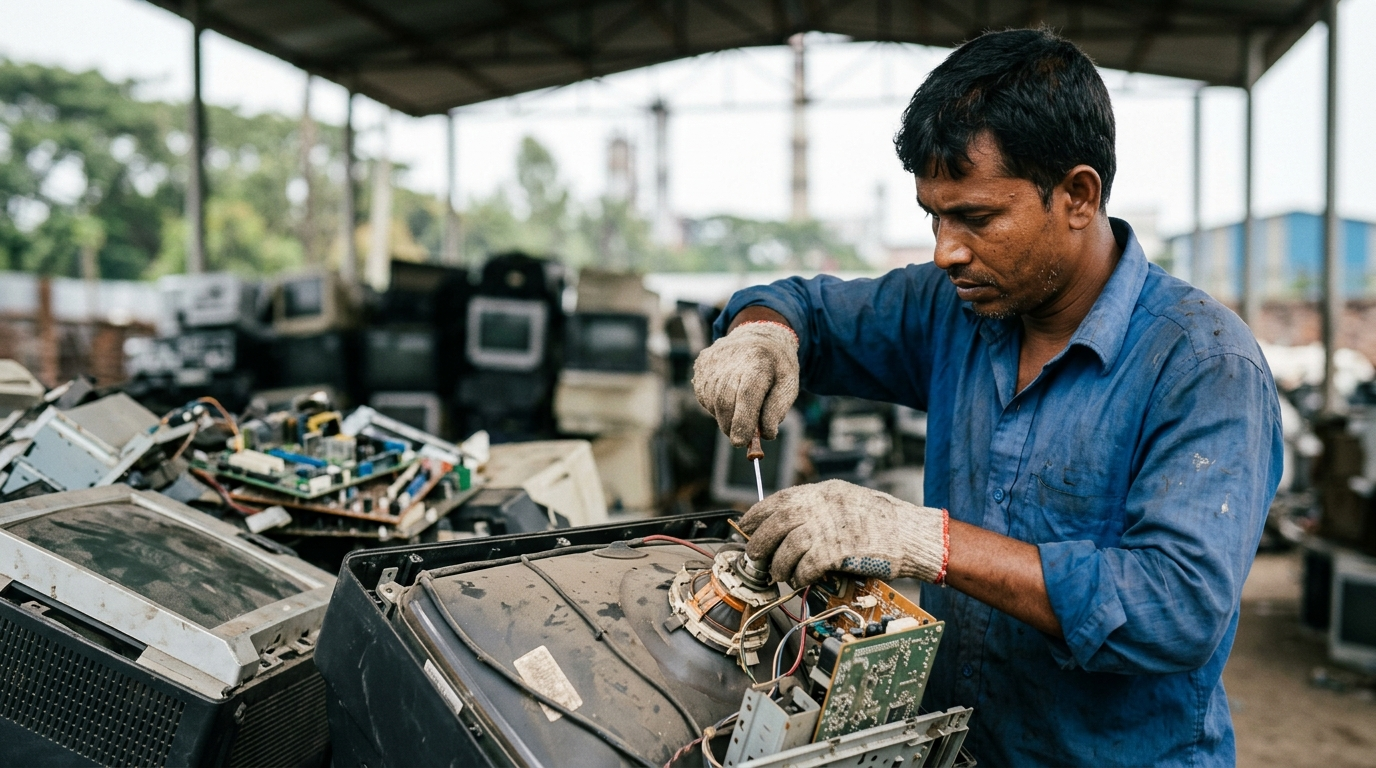
As of June 2026, Illegal e-waste trade turns Bangladesh into net importer - Mongabay reports that the country is now importing more electronic waste than it exports due to illegal activities, highlighting a significant shift in global e-waste management practices.
Last reviewed by Samantha Holloway on 12 June 2026
Why Is This Happening?
This situation has arisen because Bangladesh's lax regulations and high demand for recycled materials make it an attractive destination for illicit shipments. Additionally, stringent rules in developed countries like the EU and US push e-waste into less regulated markets.
According to the UNEP, A single tonne of circuit boards contains 40-800 times more gold than a tonne of ore.
Bangladesh is a prime example of how developing nations become dumping grounds for hazardous waste due to inadequate oversight. According to Mongabay, illegal imports have surged by 40% from 2021 to 2025, while legal exports decreased by 30%. This stark contrast highlights the need for better international cooperation and enforcement.
How Does This Affect Electronics Recycling?
The shift in Bangladesh's e-waste trade status complicates global recycling efforts. As more developed nations tighten regulations, illegal exporters look for loopholes or turn to countries with weaker oversight. For instance, the EU [WEEE Directive](/regulations/weee-directive-eu) aims for a 65% collection rate but faces challenges in curbing illicit flows.
According to the WHO, improper e-waste disposal releases toxic substances including lead, mercury, and cadmium into soil and water.
Recycling companies and consumers must be aware that materials sourced from such operations may not meet safety and environmental standards. This can compromise both human health and the integrity of the recycling supply chain.
What Are the Consequences?
The consequences are severe for both local populations and global e-waste management efforts. Illegal dumping exposes workers to toxic substances like lead, mercury, and cadmium. For example, a single smartphone contains over 60 different elements, many of which can be harmful if not handled correctly (UN Global E-Waste Monitor 2024).
According to the UN Global E-Waste Monitor 2024, The world generated 62 million tonnes of e-waste in 2022, up 82% from 2010.
this practice undermines legitimate recycling initiatives by undercutting prices and reducing demand for responsibly collected materials.
What Can Be Done to Tackle This Issue?
To address the growing problem, international bodies like the Basel Convention need to enhance surveillance and enforcement mechanisms. Countries should also strengthen domestic regulations and improve border controls to prevent illegal imports.
Consumers play a vital role too; they can support certified recycling programs that adhere to strict safety guidelines. At Illegal e-waste trade turns Bangladesh into net importer - Mongabay, initiatives such as WEEE Directive compliance in Europe set benchmarks for responsible e-waste management worldwide.
Practical Steps for Consumers
Here are some practical steps you can take:
- Use Certified Recyclers: Look for recyclers accredited by organizations like the Basel Convention or ISO 14001 standards.
- Support Right-to-Repair Movements: Advocate for policies that make it easier to repair and reuse electronics rather than dispose of them.
- Recycle Through Official Channels: Drop off your old devices at certified collection points instead of selling them privately.
By taking these actions, you contribute directly to reducing illegal e-waste trafficking and promoting sustainable practices in the tech industry.
Sources
- UNEP
- WHO
- UN Global E-Waste Monitor 2024