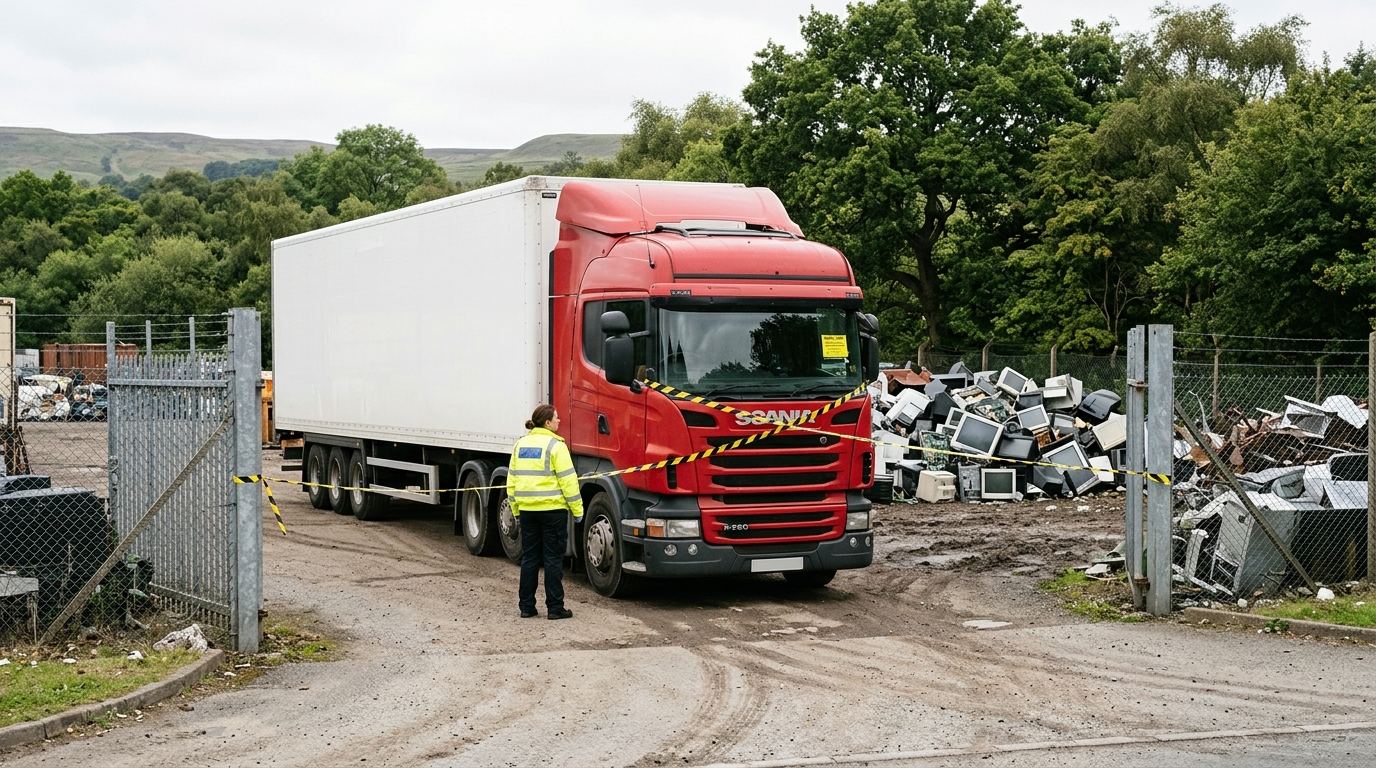
The Environment Agency seized an HGV as part of its ongoing investigation into illegal waste disposal practices at a site in Bradford, highlighting the critical need for proper e-waste management and regulation enforcement. HGV seized as Bradford waste site investigation continues This action highlights the severe environmental and health risks associated with improper handling of electronic waste.
Last reviewed by Samantha Holloway on 10 July 2026
What Is the Current Status of the Investigation?
As of July 2026, the Environment Agency continues its investigation into illegal dumping activities at a waste site in Bradford. The seizure of an HGV loaded with hazardous materials marks a significant step toward holding accountable those responsible for environmental violations.
According to the World Economic Forum, e-waste is the fastest-growing waste stream globally.
The incident raises serious concerns about the proper disposal and recycling of electronic devices that often contain harmful substances like lead, mercury, and brominated flame retardants. According to the UN Global E-Waste Monitor 2024, the global generation of e-waste stands at 62 million tonnes annually, with only 22.3% being formally recycled worldwide.
How Does This Affect Electronics Recycling?
This seizure directly impacts electronics recycling by highlighting the importance of adhering to regulations like the [WEEE Directive](/regulations/weee-directive-eu) in Europe and similar laws globally aimed at ensuring responsible disposal practices. The improper disposal of e-waste not only harms the environment but also poses significant health risks to local communities.
According to the Apple Environmental Report 2024, apple recovered over 1 tonne of gold from recycled devices in 2023.
The EU, for instance, has set a collection target of 65% of electronics placed on the market, aiming to reduce environmental pollution from improperly discarded devices. In parallel, the US generates over 6 million tonnes of electronic waste annually, emphasizing the urgent need for stringent enforcement and compliance with recycling standards.
What Are the Environmental Impacts?
The improper disposal of e-waste can lead to severe environmental degradation, including soil contamination and water pollution due to toxic substances leaking into ecosystems. The Bradford case is a stark reminder that such activities can have far-reaching consequences beyond immediate local areas.
According to the BankMyCell 2024, iPhones retain trade-in value better than Android phones, losing ~40% in year 1 vs ~55%.
electronic devices often contain valuable metals like gold and silver-1 million smartphones contain 35kg of gold and 340kg of silver-which are lost when waste isn't processed through certified recycling facilities. Proper handling couldn't only mitigate environmental harm but also support urban mining initiatives aimed at recovering precious materials from discarded electronics.
What Are the Health Risks Associated with Improper E-Waste Disposal?
Improper disposal exposes communities to health risks due to toxic substances leaching into soil and groundwater, affecting both human health and wildlife. At HGV seized as Bradford waste site investigation continues, the hazardous nature of e-waste components like lead and mercury can cause severe neurological damage and other chronic illnesses if not handled properly.
The seizure in Bradford serves as a warning that illegal dumping practices must be curtailed to prevent exposure to these risks. Proper recycling processes ensure that such materials are safely managed, reducing the likelihood of harmful effects on human health.
What Can Individuals Do Now?
Individuals can take several steps to contribute to responsible e-waste disposal:
- Use certified recycling services for all electronic waste.
- Support policies like the right-to-repair movement which encourages sustainable device repair and reuse.
- Educate oneself about local regulations regarding proper e-waste management.
By following these guidelines, consumers play a important role in protecting both environmental health and personal safety while promoting more sustainable practices in electronics recycling.
Sources
- World Economic Forum
- Apple Environmental Report 2024
- BankMyCell 2024