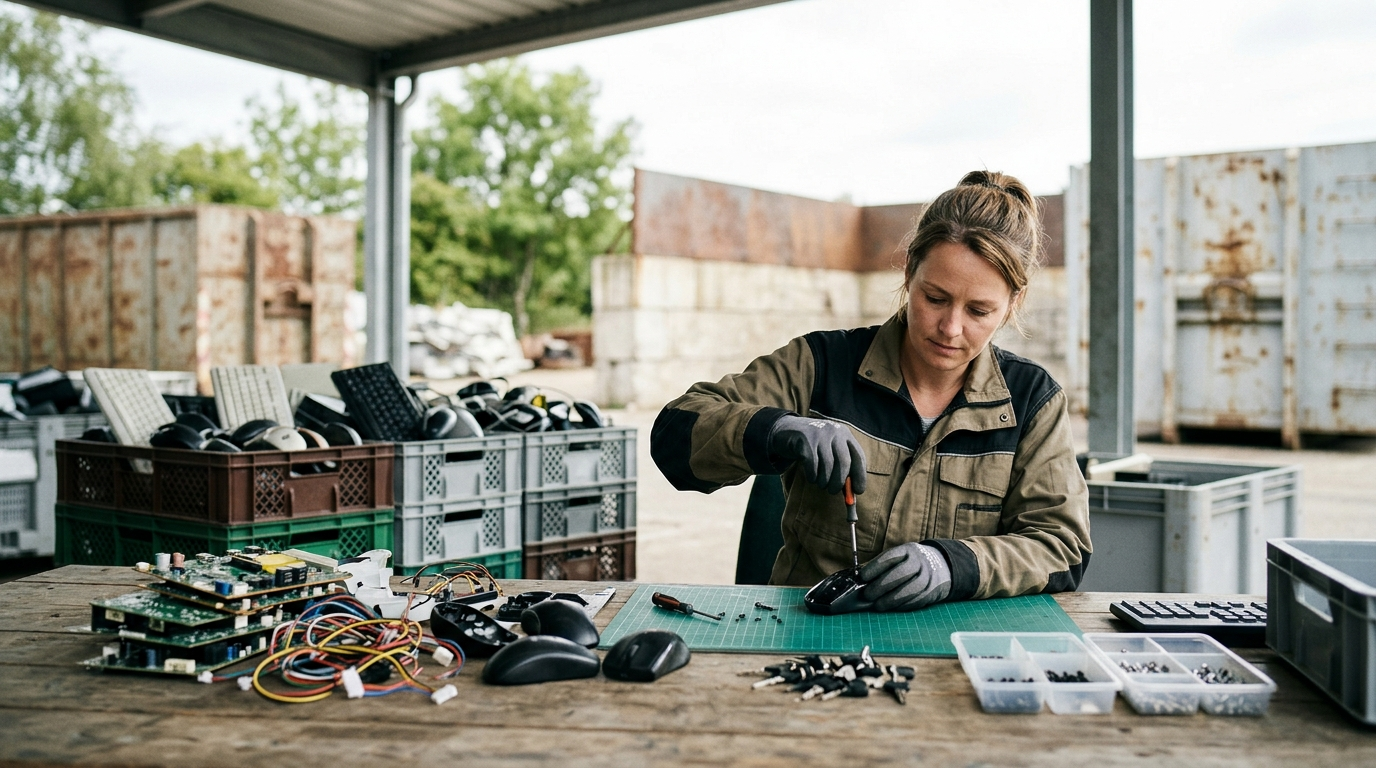
Logitech repair content on iFixit was viewed over five million times in the last year, highlighting the growing demand for accessible and sustainable electronics maintenance.
Last reviewed by Samantha Holloway on 01 August 2026
What Does This Mean for Electronics Recycling?
This means that consumers increasingly expect easy access to repair information and spare parts, which can significantly extend product lifespans. By making repairs more feasible, companies like Logitech contribute to reducing e-waste volumes and promoting a circular economy.
According to the Shift Project, manufacturing a new smartphone produces 50-80kg of co2 equivalent.
In August 2026, iFixit reported that repair guides for Logitech products were viewed over five million times in the past year alone. This surge in interest indicates a growing consumer awareness of environmental issues tied to electronic waste (e-waste) disposal and sustainability.
The data from iFixit shows not only an increase in users seeking repair information but also a shift towards more sustainable consumption patterns. With 62 million tonnes of e-waste generated globally each year, according to the UN Global E-Waste Monitor 2024, every action that prolongs product life has substantial environmental benefits.
How Does This Affect Electronics Recycling?
This affects electronics recycling by reducing the volume of waste entering landfills or informal recycling channels. By extending the lifespan of devices through repair and maintenance. Fewer units end up as e-waste, which only 22.3% is formally recycled worldwide annually. Repairing rather than replacing products can help meet targets set forth in regulations like the EU's WEEE Directive.
The impact extends beyond just reducing waste volumes. When devices are repaired instead of discarded, valuable resources such as gold, silver, and palladium remain within the product lifecycle, potentially getting reused multiple times before ending up in recycling streams. For context, one million phones contain approximately 35kg of gold, 340kg of silver, and 15kg of palladium.
What Are the Legal Implications for Companies?
Companies like Logitech face increasing pressure from legal frameworks encouraging product durability and repairability. The EU's WEEE Directive aims to improve collection rates for electronic waste, currently targeting a minimum of 65% of products placed on the market each year for recovery by 2031.
By providing detailed repair guides and spare parts availability, companies can comply with these regulations while also enhancing their brand reputation among environmentally conscious consumers. In the United States, efforts to enact federal Right-to-Repair legislation continue, driven largely by consumer demand for more accessible product maintenance options.
How Can Consumers Benefit?
Consumers benefit from easier access to repair services and information because it allows them to extend the life of their devices, saving money in the long run. Repairing a mouse or keyboard can often be far less expensive than buying a new one outright.
consumers gain peace of mind knowing that popular products come with extensive support for maintenance rather than being designed solely for obsolescence. This shift toward repairability challenges the concept of planned obsolescence-where manufacturers design products to become obsolete after a short time frame-which is widely criticized across various markets including the US and EU.
What Should Electronics Recycling Organizations Do Now?
Electronics recycling organizations should use this trend by partnering with companies that prioritize repair services. By integrating repair and refurbishment into their operations, these organizations can further reduce e-waste volumes and promote sustainable practices among consumers and manufacturers alike.
They could also advocate for stronger Right-to-Repair legislation at local, national, and international levels to ensure broader access to repair information and parts across different regions globally. Additionally, focusing on urban mining initiatives-retrieving valuable materials from discarded electronics-can become more efficient as the quality of recycled products improves through better maintenance practices.
, the growing trend in repairability exemplified by Logitech's engagement with iFixit highlights a broader movement toward more sustainable and responsible use of technology. This shift not only benefits individual consumers but also contributes significantly to global efforts aimed at reducing e-waste and promoting circular economy principles in electronics recycling.
According to the World Economic Forum, e-waste is the fastest-growing waste stream globally.
Sources
- Shift Project
- World Economic Forum
- Apple Environmental Report 2024