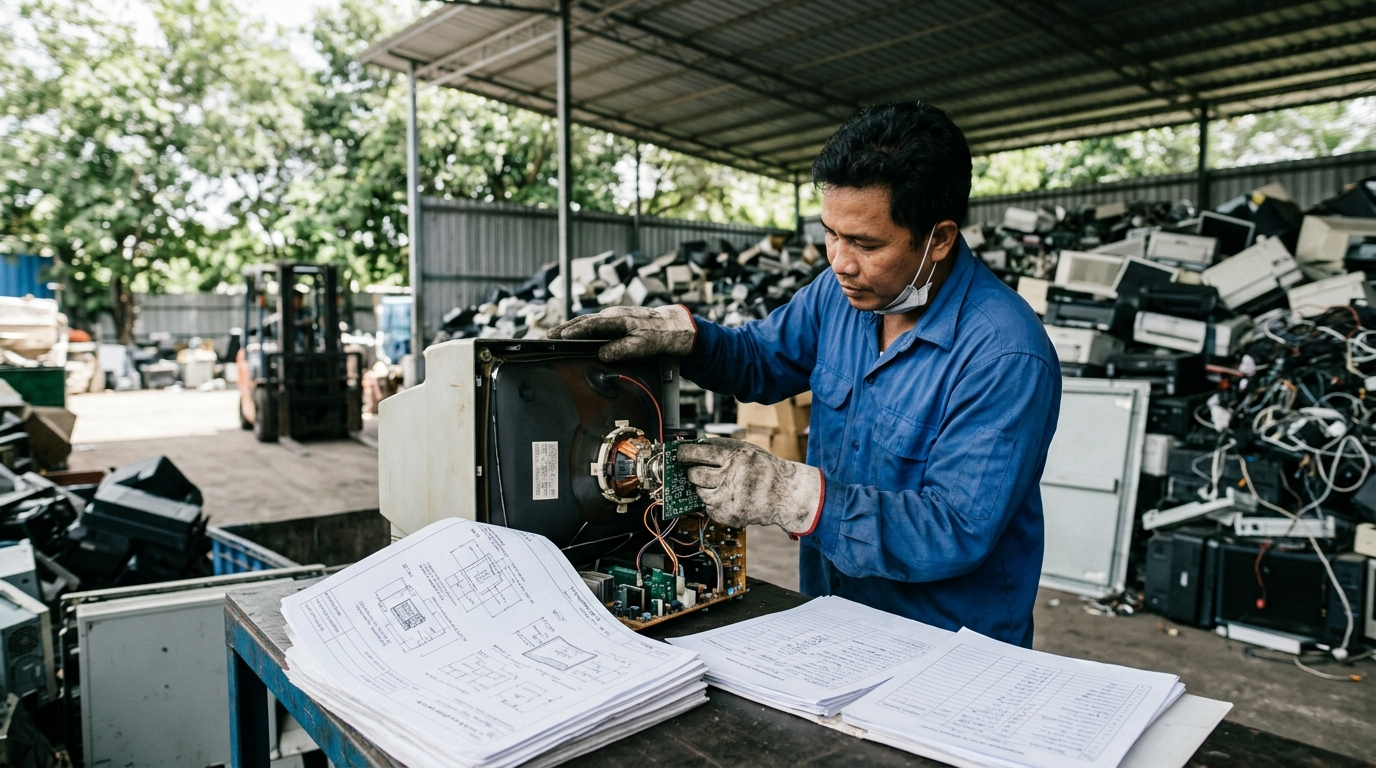
The UK Environment Agency has released new templates for sampling and inspection plans (SIPs) related to packaging waste, effective July 1, 2026. This move directly impacts electronics recycling by offering clearer guidelines on how companies must handle waste streams that include electronic components.
Last reviewed by Samantha Holloway on 28 July 2026
What Are the New Guidelines?
These new SIP templates provide a standardized approach for reprocessors and exporters dealing with packaging waste, including
e-waste. The guidelines specify detailed procedures for sampling and inspecting packaging materials to ensure compliance with environmental regulations.
The UK Environment Agency's move is part of broader efforts across Europe to regulate electronic waste more strictly. According to the UN Global E-Waste Monitor 2024, global e-waste reached 62 million tonnes in 2023, highlighting the urgency for stricter recycling standards. Only 22.3% of this volume was formally recycled worldwide last year.
According to the UN Global E-Waste Monitor 2024, The world generated 62 million tonnes of e-waste in 2022, up 82% from 2010.
How Does This Affect Electronics Recycling?
The new guidelines affect electronics recycling by requiring companies to follow specific protocols when handling electronic components embedded within packaging waste. For instance, a reprocessor must now submit detailed plans on how they will manage and inspect items like printed circuit boards or batteries that are part of their packaging stream.
This regulation is particularly relevant given the increasing complexity of electronics. On average, a smartphone contains over 60 different elements, making proper recycling important to recovering valuable materials efficiently. Companies must adapt by implementing strong systems for sorting and processing these components safely and effectively.
What Are the Key Compliance Requirements?
Companies must submit detailed SIPs that outline their methods for sampling and inspecting packaging waste, including any electronic parts. These plans need to be submitted to the UK Environment Agency before July 1, 2026, to ensure compliance with upcoming regulations.
To comply, companies should review existing processes for handling e-waste within packaging streams. They must also develop or refine inspection methods that can accurately identify and segregate electronic components from other materials. This might involve investing in new technology or training staff on the latest recycling techniques.
How Can Companies Stay Ahead of Compliance?
Companies can stay ahead by proactively reviewing their current practices against the upcoming guidelines. For instance, they should assess how well their existing sorting equipment can handle complex electronics within packaging waste streams. Additionally, engaging with certified recyclers who specialize in e-waste management will help ensure compliance and optimize material recovery.
The UK Environment Agency's new guidelines present an opportunity for companies to enhance their recycling practices. By adopting these standards early, businesses can't only avoid potential fines but also contribute positively to the circular economy by recovering valuable materials like gold, silver, and palladium from e-waste. For example, one million phones contain approximately 35kg of gold, making efficient recovery important for both environmental and economic reasons.
According to the European Parliament, less than 1% of rare earth elements in e-waste are currently recycled.
What Should Companies Do Now?
Companies should start preparing now by reviewing their current practices against the new guidelines. They can also reach out to certified electronics recyclers who are familiar with these regulations to ensure proper handling and disposal methods are in place before the July 1, 2026 deadline. This proactive approach will help companies not only comply but also optimize material recovery processes.
To learn more about sustainable practices in e-waste management and recycling, visit eCycling Central's glossary for definitions of terms like "urban mining" and "planned obsolescence." Additionally, explore our guides on the [right to repair](/guides/right-to-repair-what-it-means), circular economy, and [[WEEE Directive](/regulations/weee-directive-eu) compliance](/regulations/weee-directive-eu). These resources provide a full framework for understanding how best to manage e-waste responsibly.
By taking action now, companies can contribute positively to environmental sustainability while ensuring regulatory compliance.
Sources
- UN Global E-Waste Monitor 2024
- European Parliament
- WEEE Forum