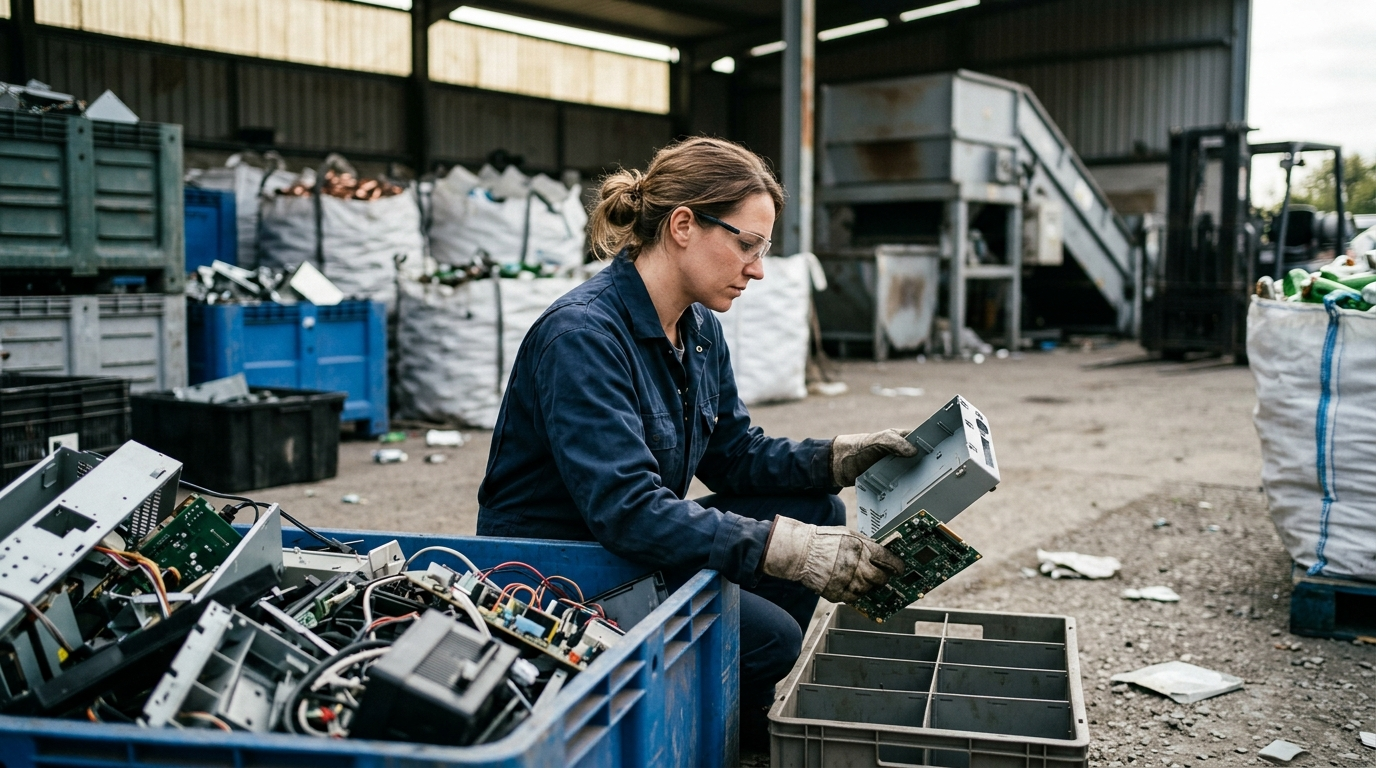
The UK Environment Agency has updated its regulatory position on Extended Producer Responsibility (EPR) for packaging, setting out new requirements that impact electronics recycling significantly. Starting in 2024, producers must collect and report detailed data on waste management practices, which will influence how e-waste is handled going forward.
Last reviewed by Samantha Holloway on 26 August 2026
As of August 2026, the UK Environment Agency has published RPS 330, a regulatory update to Extended Producer Responsibility (EPR) for packaging. This new regulation mandates specific data requirements for producers managing waste from 2024 onwards, directly affecting how electronics recycling is approached and regulated.
How Does This Affect Electronics Recycling?
Electronics recycling will be impacted by stricter reporting standards on waste management practices, including data collection and transparency measures. For instance, the updated EPR regulations require producers to report detailed information about their packaging waste, which can inform better practices in handling e-waste materials like plastics and metals.
The new requirements set out specific guidelines for collecting and reporting national and organisational waste data. This means that electronics manufacturers will need to track and disclose more full details regarding the disposal of electronic devices. Batteries, and other components. The regulation aims to enhance transparency and accountability across the supply chain. Promoting better environmental stewardship in how e-waste is managed.
What Are the Key Changes in RPS 330?
RPS 330 mandates producers to report waste data for packaging from 2024 to 2027. Additionally, it includes requirements for bags data reporting from 2025 onwards, adding another layer of accountability and scrutiny on how materials used in electronics are managed throughout their lifecycle.
Producers must now provide detailed self-managed organisational waste data annually, which will help regulators assess compliance with EPR goals. This regulation builds upon the existing [WEEE Directive](/regulations/weee-directive-eu) (Waste Electrical and Electronic Equipment), reinforcing the need for producers to be more responsible about the disposal of electronic devices.
According to the UN Global E-Waste Monitor 2024, The value of raw materials in global e-waste was estimated at $91 billion in 2022.
How Will These Regulations Impact Consumers?
Consumers benefit from these regulations as they drive improvements in e-waste recycling practices. With better reporting, there's a greater likelihood that electronics will be recycled responsibly, reducing environmental harm. For example, under RPS 330, producers must track the volume and type of packaging waste generated by their products, which can lead to more efficient recycling processes.
The regulation also encourages manufacturers to design products with recyclability in mind, aligning with the principles of a circular economy. This shift towards sustainable practices is important given that only about 22.3% of global e-waste is formally recycled each year, according to the UN Global E-Waste Monitor (2024).
What Are the Challenges for Electronics Manufacturers?
Manufacturers face new challenges in complying with these regulations, particularly when it comes to data collection and reporting. The requirement to track waste from packaging materials poses a significant logistical challenge, especially as electronics contain numerous components that must be managed responsibly.
the regulation's emphasis on transparency means companies will need strong systems to monitor and report on their waste management practices accurately. This could involve investing in new technologies or partnerships with recycling facilities capable of handling specific types of e-waste, such as lithium-ion batteries, which are expected to reach a market size of 2.5 TWh by 2030.
What Should Electronics Recycling Facilities Do Now?
Electronics recycling facilities should prepare for increased scrutiny and demand for detailed records on how they handle incoming waste streams. This includes documenting the type and quantity of materials received, as well as the methods used to process them.
Facilities can also use opportunities presented by these regulations to enhance their services and attract more business from compliant manufacturers looking to meet EPR requirements. For instance, adopting advanced recycling techniques that recover valuable metals like gold (1 million phones contain 35kg) or palladium (1 million phones contain 15kg) could make them more attractive partners in the circular economy.
According to the Shift Project, manufacturing a new smartphone produces 50-80kg of co2 equivalent.
What Are Some Practical Next Steps for Producers?
Producers should review their current waste management practices and ensure compliance with RPS 330's reporting requirements. They can start by assessing their supply chains to identify areas where improvements can be made regarding material sourcing, product design, and end-of-life disposal processes.
Collaborating with recycling facilities that adhere to high standards of environmental responsibility is also important. This collaboration not only helps in meeting regulatory obligations but also supports broader sustainability goals related to the circular economy and urban mining initiatives.
For more information on how these regulations impact specific aspects of electronics recycling, visit our guides on WEEE Directive and circular economy.
According to the World Economic Forum, e-waste is the fastest-growing waste stream globally.
Sources
- UN Global E-Waste Monitor 2024
- Shift Project
- World Economic Forum