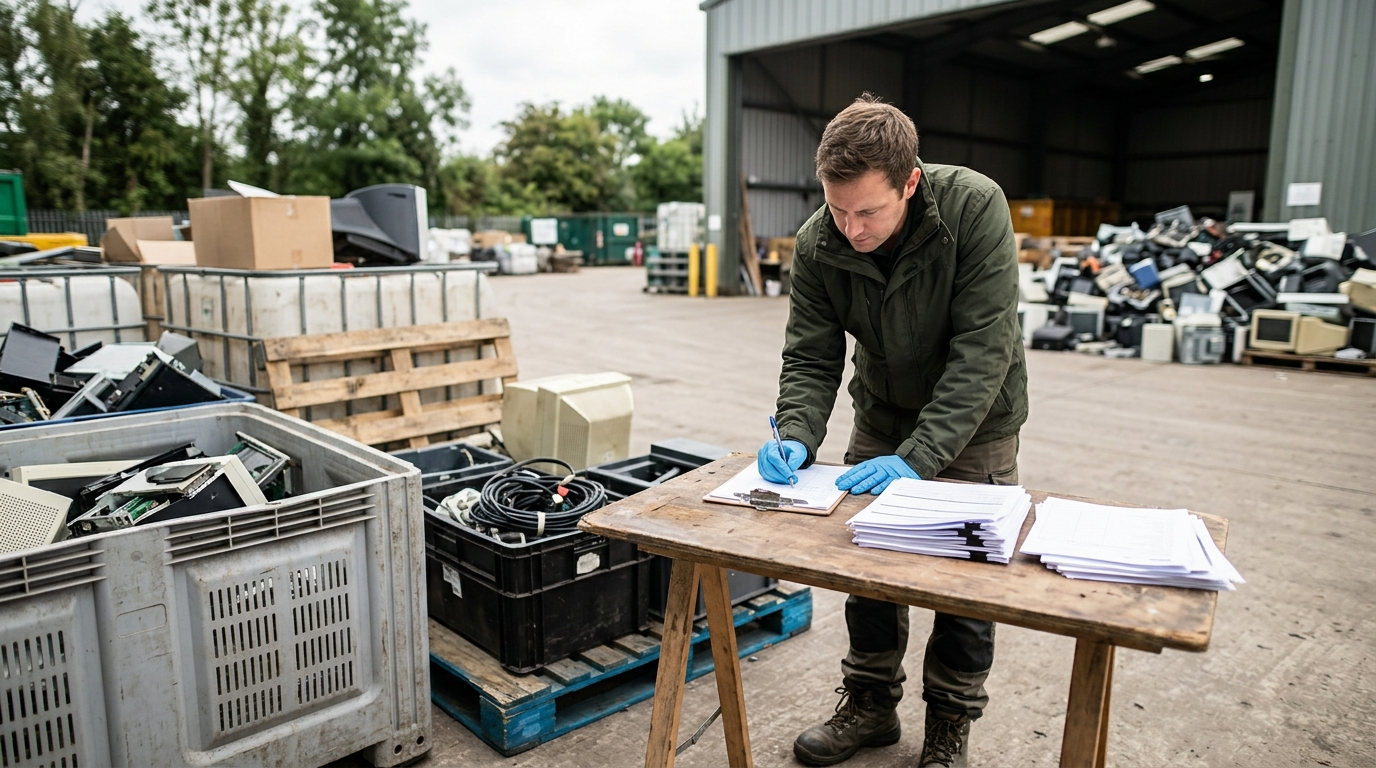
The UK Environment Agency has updated its regulatory position on completing waste transfer and consignment notes when business waste is deposited at a takeback point, affecting how electronics recycling facilities handle documentation for e-waste management.
Last reviewed by Samantha Holloway on 26 August 2026
What Happens When Business Waste Is Deposited at Takeback Points?
Businesses must now complete full waste transfer and consignment notes when depositing their waste at takeback points. This update ensures that all business-generated waste is properly documented and tracked in compliance with the latest regulations.
As of August 2026, the UK Environment Agency issued regulatory position statement (RPS) 283 to clarify how businesses should document waste transfers for electronics recycling. The statement aims to streamline processes while ensuring compliance with environmental laws designed to protect public health and the environment from hazardous e-waste.
According to the BankMyCell 2024, iPhones retain trade-in value better than Android phones, losing ~40% in year 1 vs ~55%.
Why Is Proper Documentation Important in Electronics Recycling?
Proper documentation is important because it ensures that all materials are tracked accurately from collection through disposal or reuse, minimizing risks of illegal dumping and unauthorized processing. For electronics recycling facilities, this means maintaining detailed records on waste types and quantities to comply with legal standards and improve transparency in the supply chain.
According to the UN Global E-Waste Monitor 2024, global e-waste reached an estimated 62 million tonnes annually. In the context of this massive volume, accurate documentation becomes important for managing hazardous materials responsibly. Without proper tracking, there's a higher risk of these materials ending up in illegal or substandard recycling facilities, which can lead to environmental contamination and health hazards.
How Does This Affect Electronics Recycling?
Electronics recyclers must now ensure that all business waste they receive is accompanied by completed transfer notes. This change impacts the operational procedures for documentation but reinforces the importance of legal compliance throughout the e-waste management process.
This update affects electronics recycling facilities directly, as they must adhere to stricter record-keeping requirements. The regulation ensures that businesses and recyclers alike are aware of their responsibilities in managing electronic waste responsibly. For example, one million smartphones contain up to 35 kilograms of gold, highlighting the value and potential environmental impact if not handled correctly.
What Are the Legal Implications for Businesses?
Businesses face legal obligations to document all business-generated e-waste accurately when using takeback services. Failure to comply can result in penalties and fines, emphasizing the need for proper training and process implementation within organizations generating significant amounts of electronic waste.
Under the [WEEE Directive](/regulations/weee-directive-eu) (EU), companies have a clear responsibility to manage their waste streams effectively, with collection targets set at 65% of electronics placed on the market. The UK's new regulation aligns closely with these directives, ensuring businesses in both regions operate under similar standards and guidelines for e-waste management.
According to the Royal Society of Chemistry, mobile phones contain up to 60 different elements, including critical raw materials.
How Can Businesses Ensure Compliance?
Businesses can ensure compliance by implementing strong internal procedures that include training staff on waste transfer documentation requirements. electronics recycling also involves partnering with reputable electronics recycling facilities that provide transparent reporting mechanisms to verify adherence to legal mandates and best practices in handling e-waste responsibly.
To stay compliant, businesses should engage with accredited electronics recyclers who offer clear tracking systems for all materials processed. This not only helps avoid potential fines but also supports the global goal of increasing the formal recycling rate from its current 22.3% worldwide to a more sustainable level.
What Should Recyclers Do Now?
Recycling facilities need to review and update their documentation processes to align with these new requirements, ensuring all business waste transactions are fully documented and compliant with environmental regulations.
For recyclers, adapting to the updated guidelines involves reassessing current procedures and possibly investing in software solutions that streamline the management of consignment notes. By doing so, they not only meet legal standards but also enhance their reputation as responsible players in e-waste management.
What Are Some Practical Steps for Individuals?
Individuals can contribute by ensuring their personal electronics are disposed of through official channels, such as those certified under WEEE or similar regional regulations. This helps prevent informal and potentially harmful disposal practices that could lead to environmental contamination.
For individuals disposing of old devices, it's important to use designated collection points recognized by local authorities or recycling programs adhering to WEEE standards. By taking this step, you help ensure your electronics are recycled responsibly, contributing to the overall goal of reducing e-waste and recovering valuable materials.
According to the BankMyCell depreciation tracker, The average smartphone loses 35-45% of its trade-in value within the first year.
Where Can I Learn More?
For further information on responsible e-waste disposal practices, refer to guides like "Right-to-repair" (https://www.ecyclingcentral.com/guides/right-to-repair-what-it-means) or explore resources on
circular economy principles at https://www.ecyclingcentral.com/guides/circular-economy-and-electronics. These materials provide valuable insights into sustainable practices for managing electronic devices throughout their lifecycle, from purchase to end-of-life disposal.
By staying informed and adhering to these guidelines, both businesses and individuals can play a critical role in advancing the responsible management of e-waste globally.
Sources
- BankMyCell 2024
- Royal Society of Chemistry
- BankMyCell depreciation tracker