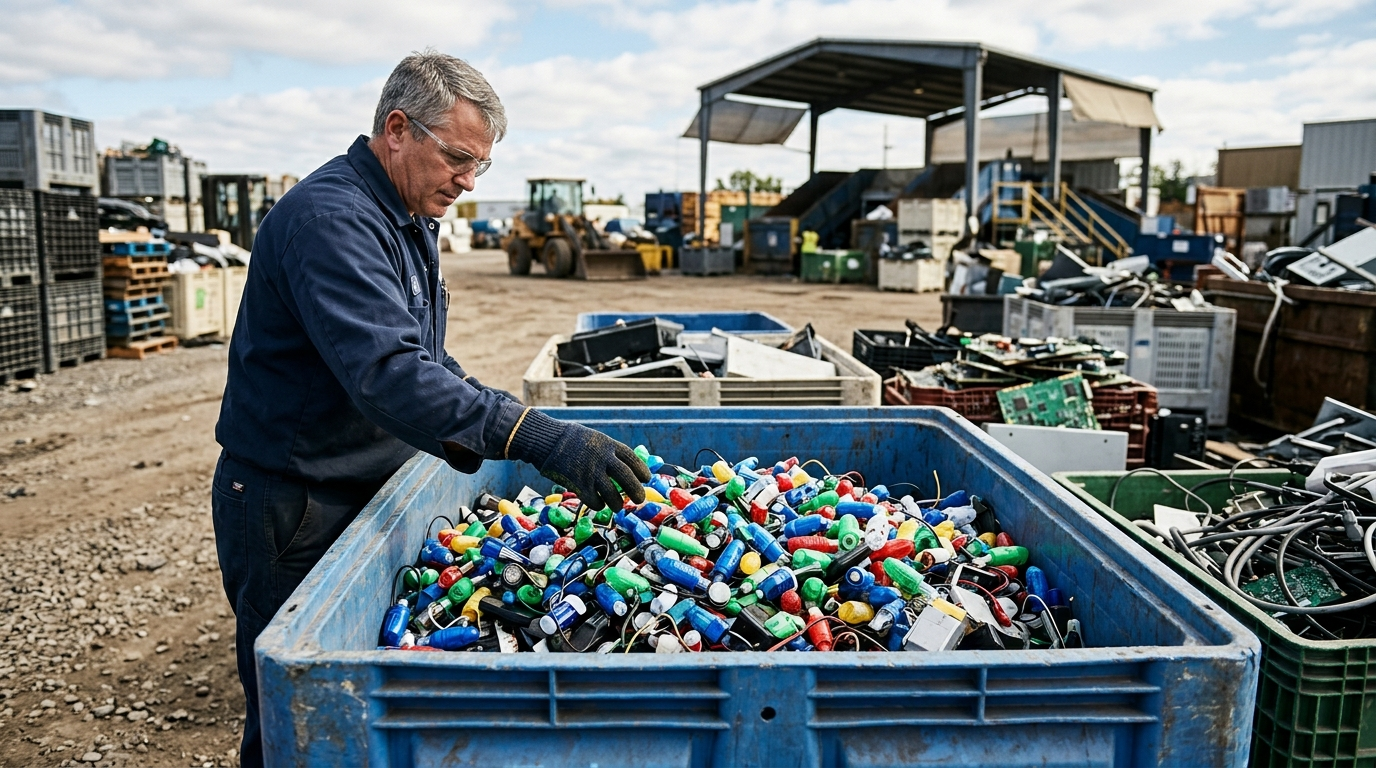
The Consumer Product Safety Commission (CPSC) has recalled finger light toys from Cade California due to the risk of serious injury or death from battery ingestion, violating mandatory safety standards for children's products in September 2026. This recall highlights the importance of adhering to safety regulations when dealing with electronics recycling and highlights potential dangers associated with improper disposal.
Last reviewed by Samantha Holloway on 11 September 2026
What Is the Recall About?
The Cade California finger light toys are being recalled because they contain small button cell batteries that can be easily removed by children, posing a severe risk if ingested. This violation of mandatory toy safety standards is critical as it directly impacts the health and safety of consumers, particularly young children who may come into contact with these products during play or disposal.
The finger lights are marketed for ages 3 and up but contain batteries that can be easily dislodged and swallowed by younger kids, a significant risk factor given that button cell battery ingestions in children under five have risen by 90% since 2017. The recall involves an estimated 45,000 units distributed across the United States.
According to the Shift Project, manufacturing a new smartphone produces 50-80kg of co2 equivalent.
How Does This Affect Electronics Recycling?
This recall affects electronics recycling because it highlights the importance of proper handling and disposal protocols for electronic devices that contain batteries. When people discard such items improperly, they risk exposing children to harmful substances like lithium-ion or button cell batteries, which can cause serious injuries if ingested.
Manufacturers must ensure their products comply with safety standards not only during manufacturing but also throughout the product's lifecycle, including proper end-of-life management. This includes ensuring that recycling facilities are equipped and trained to handle potentially dangerous components safely.
What Are the Safety Standards Involved?
The mandatory safety standard violated by Cade California is part of broader regulations like the US Consumer Product Safety Act (CPSA) and similar laws in other countries such as the EU Toy Safety Directive. These standards require that children's products, especially those containing small parts or batteries, are designed to prevent easy access and ingestion.
Manufacturers must undergo rigorous testing and certification processes before releasing new toys onto the market. Non-compliance can result in recalls, fines, and legal action to protect public health and safety. In this case, failure to adhere to these standards resulted in a recall affecting thousands of units.
What Should Consumers Do?
Consumers who own affected Cade California finger light toys should stop using them immediately and return them for a full refund or exchange. Parents and caregivers should check other products they own for similar risks-such as loose batteries-and follow proper disposal guidelines to avoid accidents.
For electronic devices in general, consumers should always seek out certified electronics recycling centers that adhere to safety protocols when disposing of items containing potentially hazardous materials like lithium-ion batteries. Proper disposal not only ensures compliance with local regulations but also helps protect public health and the environment from harmful waste products.
According to the World Economic Forum, e-waste is the fastest-growing waste stream globally.
What Should Recycling Centers Do?
Recycling centers must stay updated on product recalls and safety standards to ensure they can safely handle incoming
electronic waste. They should invest in training staff on how to identify hazardous components like batteries and follow safe removal procedures. By doing so, recycling facilities help prevent incidents that could harm individuals or the environment.
partnerships between electronics manufacturers, retailers, and recycling centers are important for creating a more sustainable and responsible e-waste management system. Consumers can benefit from these collaborations through better access to safe disposal options and education on proper handling of electronic products throughout their lifecycle.
What Is Next in Electronics Recycling?
Looking ahead, advancements in technology and materials science offer opportunities for improving the sustainability of electronics recycling practices. Innovations such as
urban mining-recovering valuable metals and components from discarded devices-and developing more recyclable materials can significantly enhance environmental outcomes while ensuring safety standards are met.
By embracing these innovations and maintaining compliance with regulations like WEEE (Waste Electrical and Electronic Equipment) in Europe or similar directives globally, the electronics recycling industry can continue to evolve towards a more circular economy model that benefits both people and the planet.
For further information on how you can responsibly recycle your electronic waste, visit our guides on [right-to-repair](/guides/right-to-repair-what-it-means) and circular economy.
Sources
- Shift Project
- World Economic Forum
- Apple Environmental Report 2024