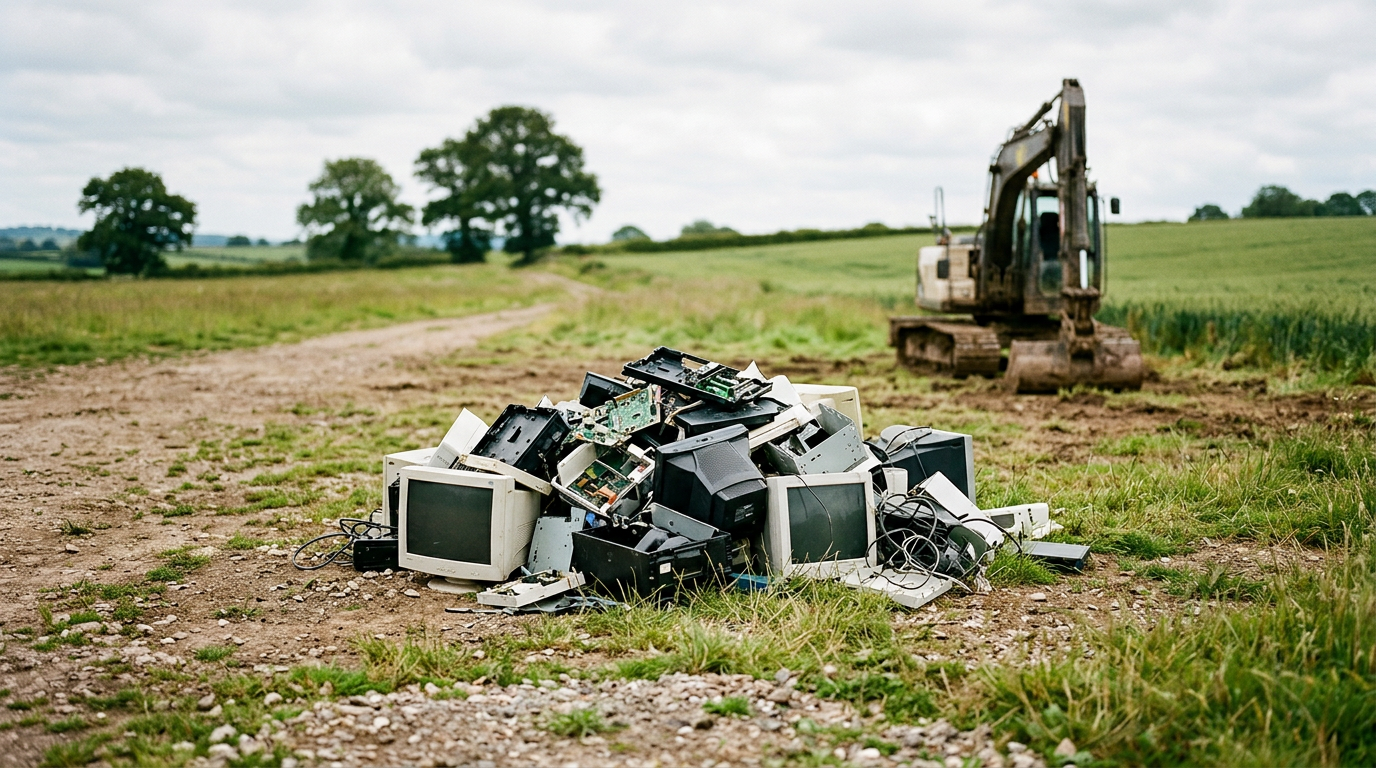
An illegal waste site in Sheffield, South Yorkshire, has been cleared following a successful court case brought by the Environment Agency. This development highlights the importance of adhering to legal regulations for electronics recycling and disposing of e-waste responsibly.
Last reviewed by Samantha Holloway on 24 August 2026
The clearance of the illegal waste site highlights the stringent measures taken by regulatory bodies like the UK Environment Agency to combat improper disposal of hazardous materials, including electronic waste. With over 62 million tonnes of global e-waste generated annually according to the UN Global E-Waste Monitor 2024, ensuring that all electronics recycling and disposal practices comply with legal standards is critical.
What Happened in Sheffield?
The Environment Agency successfully cleared an illegal waste site after a court case. This site was illegally storing hazardous materials, including electronic waste. This action by the UK Environment Agency ensures that such sites don't pose environmental or health risks to local communities. The case serves as a warning to anyone involved in unauthorized e-waste disposal.
How Does This Affect Electronics Recycling?
Electronics recycling companies must adhere strictly to legal regulations and guidelines set forth by governing bodies. This enforcement action reinforces the need for compliance with laws such as the [WEEE Directive](/regulations/weee-directive-eu), which mandates proper handling of waste electrical and electronic equipment. Non-compliance can lead to hefty fines and damage to a company's reputation.
According to the Apple Environmental Report 2024, apple recovered over 1 tonne of gold from recycled devices in 2023.
What Data Backs Up This Action?
According to the UN Global E-Waste Monitor 2024, only 22.3% of global e-waste is formally recycled each year. In addition, the EU WEEE collection target stands at 65%, reflecting growing concerns about improper disposal practices. These statistics emphasize the urgent need for regulated and ethical electronics recycling to prevent environmental harm from uncontrolled waste sites.
What Are the Risks of Illegal E-Waste Disposal?
Illegal e-waste disposal can lead to significant environmental contamination, including soil and water pollution. For instance, improperly disposed lithium-ion batteries pose a fire risk. Regulatory bodies like the UK Environment Agency actively work to prevent such hazards by enforcing strict penalties for non-compliance.
What Steps Should Consumers Take Now?
Consumers should ensure their electronics are recycled through authorized channels that comply with relevant regulations. For those in the EU, look for recyclers certified under the WEEE Directive. In the US and Australia, seek out e-Stewards or R2-certified facilities to responsibly dispose of old devices.
According to the BankMyCell 2024, iPhones retain trade-in value better than Android phones, losing ~40% in year 1 vs ~55%.
Electronics recycling is important not only for environmental reasons but also for legal compliance. By choosing responsible disposal methods and supporting organizations that adhere to stringent regulations, consumers can play a key role in reducing harmful practices like those seen at the Sheffield site.
Sources
- Apple Environmental Report 2024
- BankMyCell 2024
- Royal Society of Chemistry