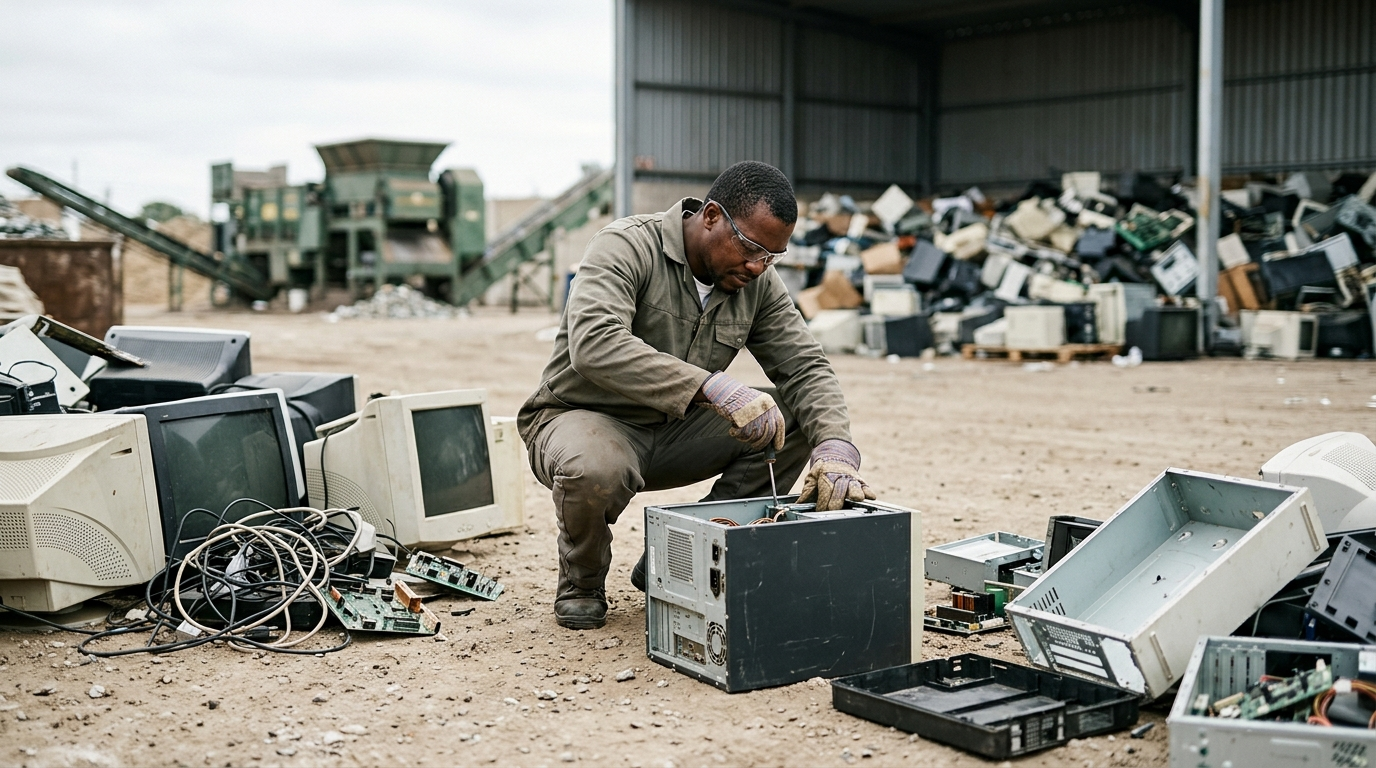
Tech sustainability faces a growing challenge as global e-waste reaches staggering levels. With 62 million tonnes generated annually according to the UN Global E-Waste Monitor 2024. This waste includes an estimated $57 billion worth of gold and other valuable materials that remain unrecycled each year. The urgency of addressing this issue has never been clearer for those involved in electronics recycling or concerned about environmental impacts.
Last reviewed by Samantha Holloway on 21 September 2026
How Does This Affect Electronics Recycling?
This massive volume of e-waste means a growing demand for responsible recycling practices, which directly affects the efficiency and capacity needed to manage waste streams. In 2024, only 22.3% of global e-waste was formally recycled, leaving a vast potential for recovery and reuse.
Recyclers must adapt by expanding their capabilities to handle the influx of obsolete devices. For instance, one million discarded phones contain up to 35kg of gold and 340kg of silver, materials that are important in making recycling economically viable. As these figures illustrate, there's a significant opportunity for reclaiming valuable resources through proper recycling methods.
According to the WHO, e-waste contains over 1,000 different substances, many of them toxic.
What Are Key Regulations Impacting E-Waste Management?
Regulations such as the EU's WEEE Directive set collection targets to ensure that countries recycle at least 65% of electronics placed on the market. This directive aims to improve recycling rates and reduce environmental harm caused by improperly disposed e-waste.
In the US, state-level initiatives like California's Electronic Waste Recycling Act aim for similar outcomes but face challenges in achieving uniform compliance across all states. These regulations require manufacturers and consumers alike to participate actively in sustainable practices.
How Can Consumers Contribute to Tech Sustainability?
Consumers play a vital role by participating in recycling programs and choosing devices that are repairable or upgradable, thereby extending their lifespan. For example, supporting the
right-to-repair movement can lead to more durable products that last longer, reducing overall waste generation.
Consumers should be aware of where their e-waste ends up-proper disposal through certified recyclers ensures hazardous materials don't leak into the environment. Recycling batteries properly is also important; in 2030, the lithium-ion battery market is expected to reach 2.5 TWh, making safe recycling practices even more important.
What Are Upcoming Trends in Tech Sustainability?
In September 2026, trends will likely focus on enhancing
circular economy principles and improving urban mining techniques. Companies are exploring innovative ways to recycle
rare earth elements from old electronics, which could significantly reduce reliance on new raw material extraction.
Another trend is the integration of advanced recycling technologies that can extract more materials efficiently and safely. For instance, specialized equipment for solar panel recycling will become increasingly necessary as these panels reach their end-of-life stage en masse in coming years.
According to the US EPA, recycling one million laptops saves the energy equivalent of electricity used by 3,657 us homes in a year.
What Should Businesses Do to Promote Tech Sustainability?
Businesses should prioritize designing products with recyclability in mind and investing in research and development of sustainable tech solutions. Implementing RoHS guidelines strictly can help eliminate the use of hazardous substances, making devices safer for recycling processes.
Partnering with certified e-waste management facilities ensures that waste is handled according to international standards set by conventions like the Basel Convention. By doing so, businesses contribute positively towards achieving higher global recycling rates and reducing environmental footprints associated with electronic gadgets.
What Are Practical Steps Individuals Can Take?
Individuals can start by checking local regulations for proper disposal options and participating in community e-waste collection events. They should also consider donating or selling working electronics rather than discarding them, extending the life cycle of devices and reducing landfill contributions.
For those interested in supporting tech sustainability efforts, advocating for stronger right-to-repair laws is another impactful action. Engaging with local representatives to push for better recycling infrastructure can make a significant difference in how communities manage e-waste.
By taking these steps, everyone-from individuals to large corporations-can contribute positively towards addressing the growing issue of global e-waste and promoting tech sustainability practices that benefit both people and the planet.
eCycling Central's guides on right-to-repair, circular economy principles, and proper battery disposal techniques provide further insights into actionable measures for reducing e-waste.
According to the UN Global E-Waste Monitor 2024, only 22.3% of e-waste was properly collected and recycled in 2022.
Sources
- WHO
- US EPA
- UN Global E-Waste Monitor 2024