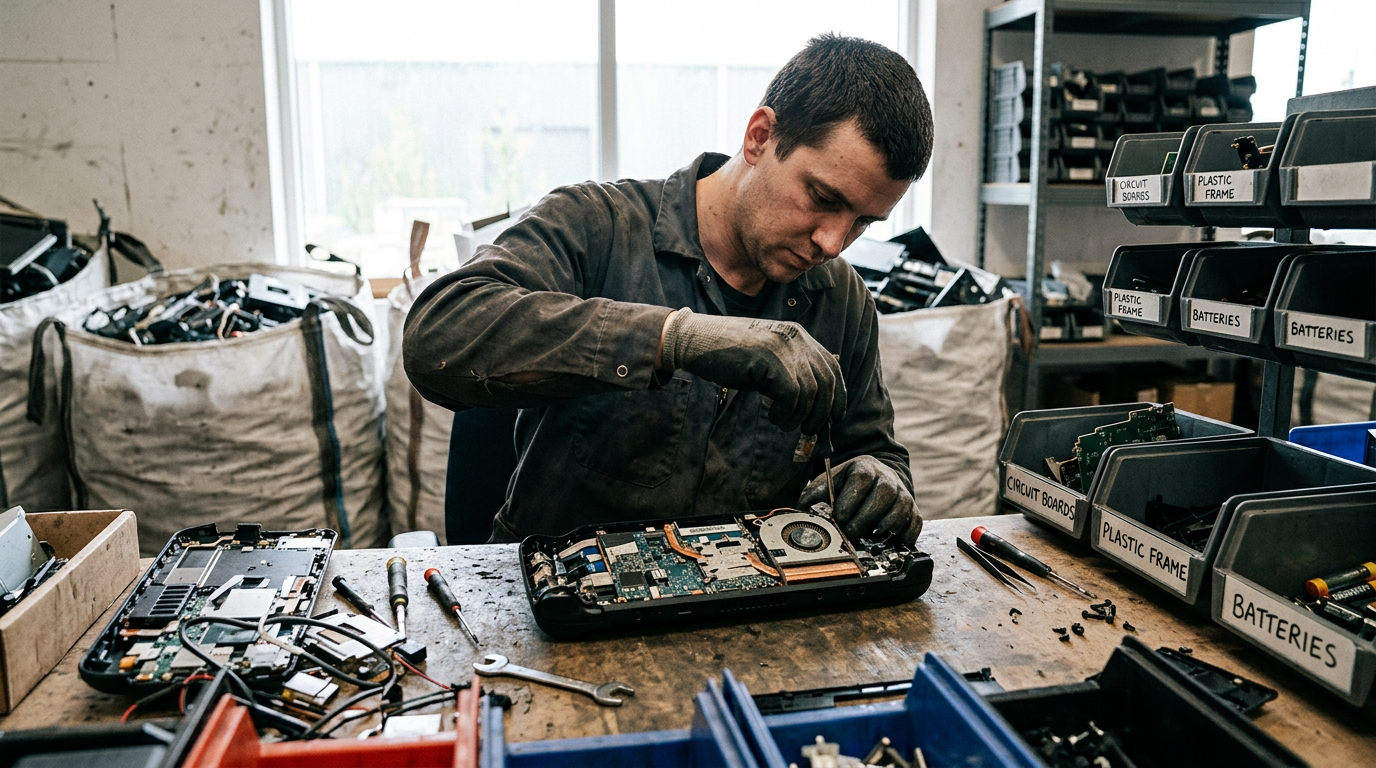
The launch of Valve's Steam Frame headset in September 2026 has sparked renewed interest in the accessibility and sustainability of high-end gaming hardware. This development matters for those involved in electronics recycling because it highlights ongoing challenges in handling complex e-waste components.
Last reviewed by Samantha Holloway on 24 September 2026
What's the Valve Steam Frame?
Valve's Steam Frame is a new virtual reality (VR) headset aimed at gamers seeking an immersive experience with advanced features like eye tracking and haptic feedback. The device, available now, comes with a price tag of around £900.
The release of the Steam Frame highlights the increasing complexity in electronic devices, making them harder to recycle efficiently. As more sophisticated components enter the market, such as those found in the Steam Frame-like high-resolution displays and advanced tracking systems-the need for specialized recycling processes becomes even more critical. With over 62 million tonnes of e-waste generated globally each year (UN Global E-Waste Monitor 2024), finding sustainable solutions is imperative.
According to the US EPA, recycling one million laptops saves the energy equivalent of electricity used by 3,657 us homes in a year.
How Does This Affect Electronics Recycling?
This new headset affects electronics recycling because it incorporates materials like
rare earth elements and precious metals that are challenging to extract. According to the UN report, only about 22.3% of global e-waste was formally recycled in 2024. The Steam Frame's detailed design includes components like lithium-ion batteries and advanced circuitry, which can be hazardous if not disposed of properly.
As more electronics become embedded with such complex parts, it becomes important for recycling facilities to adapt their techniques. For instance, extracting precious metals from devices can yield substantial returns-about 35kg of gold and 340kg of silver from one million mobile phones (UN Global E-Waste Monitor 2024). These materials aren't only valuable but also important in reducing environmental impacts.
What Are the Environmental Impacts?
The environmental impact of devices like the Steam Frame is significant, given their complex composition. A single unit may contain over 60 different elements and rare earth metals that pose disposal challenges. The US alone generates around 6.92 million tonnes of e-waste annually (UN Global E-Waste Monitor 2024), emphasizing the scale at which proper recycling measures are needed.
Improper disposal can lead to soil and water contamination from substances like lead, mercury, and cadmium found in electronic devices. Recycling centers must invest in technologies that safely handle these materials to mitigate environmental harm.
What Are Current Regulations?
Current regulations such as the EU's
WEEE Directive set collection targets of 65% for electronics placed on the market (EU WEEE Directive). This directive aims to ensure better recycling practices across Europe but falls short when dealing with highly specialized devices like the Steam Frame. In the US, states have varying requirements under the
Basel Convention and RoHS regulations, which aim to restrict hazardous substances in electronic products.
These frameworks push manufacturers and consumers towards more responsible disposal methods but often lack specifics for new technologies. As a result, there's a need for updated guidelines tailored to emerging devices like the Steam Frame.
According to the UN Global E-Waste Monitor 2024, only 22.3% of e-waste was properly collected and recycled in 2022.
How Can Consumers Contribute?
Consumers can contribute by supporting brands that prioritize sustainability and
right-to-repair initiatives. For example, choosing products from companies committed to reducing
planned obsolescence (ecyclingcentral.com/glossary/planned-obsolescence) or offering repair services can help extend product life cycles.
Consumers should recycle old devices through certified recycling centers rather than dumping them in landfills. Many local governments and retailers offer drop-off points for electronics recycling, ensuring materials are handled safely and responsibly.
Conclusion
The introduction of the Steam Frame highlights the ongoing need for better e-waste management strategies. With global e-waste expected to reach 62 million tonnes annually by 2024 (UN Global E-Waste Monitor 2024), concerted efforts from manufacturers, recyclers, and consumers are important. By adopting
circular economy principles and supporting regulations like the EU's WEEE Directive, we can work towards a more sustainable future for electronic devices.
For more information on e-waste management practices and guidelines, visit ecyclingcentral.com/glossary/e-waste.
Sources
- US EPA
- UN Global E-Waste Monitor 2024
- Consumer Technology Association