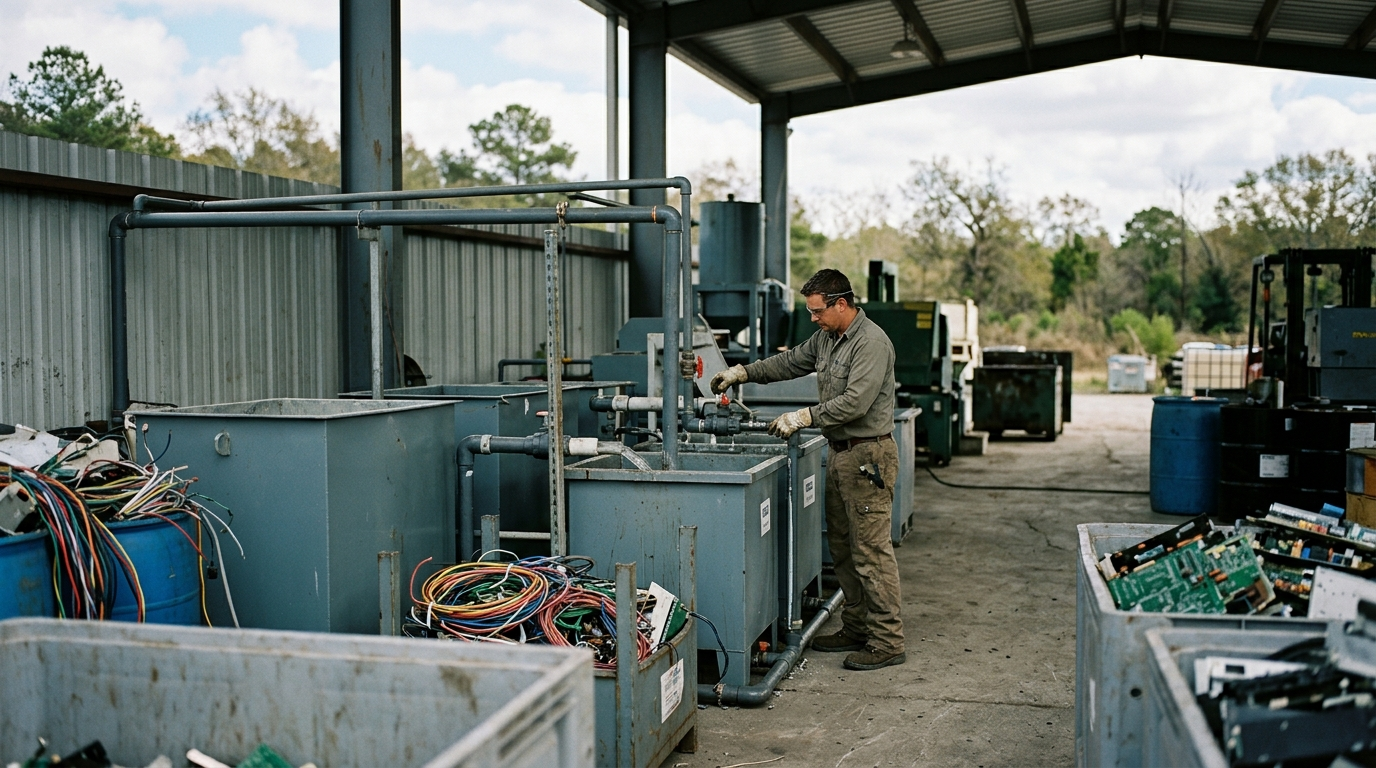
The global market for nitric acid leaching is expected to reach a value of 158 index by 2035, driven primarily by the growing demand for recycling e-waste. This surge highlights the increasing importance of tech sustainability practices as electronic waste continues to pile up around the world.
Last reviewed by Samantha Holloway on 24 August 2026
According to IndexBox's recent report, the nitric acid leaching market will see a significant rise due to the need for more efficient and effective methods in handling e-waste. As tech sustainability gains traction globally, this development highlights how critical proper recycling processes are becoming.
How Does This Affect Electronics Recycling?
This growth affects electronics recycling by offering a new, potentially more efficient method of recovering valuable materials from discarded devices. Nitric acid leaching can help extract precious metals like gold and silver from circuit boards with higher purity rates than traditional methods. For instance, one million smartphones contain 35kg of gold and 340kg of silver, emphasizing the importance of effective recycling techniques.
As e-waste volumes continue to increase-reaching an estimated 62 million tonnes globally each year according to the UN's Global E-Waste Monitor (2024)-the demand for advanced recycling technologies grows. Nitric acid leaching provides a way to meet this challenge by improving recovery rates and reducing environmental impact.
What Are the Key Drivers Behind This Growth?
The primary drivers behind the growth of nitric acid leaching in e-waste recycling are regulatory pressures. Economic incentives, and technological advancements. Regulations such as the EU's WEEE Directive aim for a 65% collection rate of electronics placed on the market by member states. Additionally, the rising cost of raw materials encourages companies to recover valuable elements from recycled products rather than sourcing them anew.
technological improvements in chemical leaching processes make it more viable and cost-effective compared to previous methods. For example, advancements allow for better control over reaction conditions, minimizing waste generation while maximizing metal recovery rates.
What Challenges Does This Present?
Despite the benefits of nitric acid leaching, several challenges remain. Environmental concerns are significant as this process involves hazardous chemicals that require careful handling and disposal. The improper use or disposal of these acids can lead to serious ecological damage.
the cost-effectiveness of implementing such technologies depends on economies of scale and technological readiness. Smaller recycling operations might struggle with upfront costs associated with adopting advanced leaching techniques unless supported by government subsidies or incentives.
What Can Consumers Do?
Consumers play a important role in promoting tech sustainability through informed decisions about purchasing and disposing of electronics. By supporting products from manufacturers that adhere to rigorous environmental standards, consumers can drive demand for more sustainable practices throughout the industry. For example, initiatives like [right-to-repair](/guides/right-to-repair-what-it-means) encourage longevity and repairability over planned obsolescence.
individuals can participate in local recycling programs or use certified e-waste collection services to ensure their discarded devices are processed responsibly. This not only reduces environmental impact but also supports the circular economy by recovering valuable materials for reuse.
What Should Businesses Consider?
Businesses must consider integrating sustainable practices into their operations as part of broader tech sustainability efforts. Engaging in urban mining initiatives allows companies to tap into a resource pool rich with precious metals and rare earth elements, reducing reliance on primary extraction while lowering costs.
investing in research and development for improved recycling technologies can position businesses at the forefront of innovation within their industry. By adopting modern methodologies like nitric acid leaching, firms can enhance profitability through higher material recovery rates alongside compliance with stringent regulations such as RoHS (Restriction of Hazardous Substances) directives.
, while advancements in nitric acid leaching present promising opportunities for enhancing e-waste recycling efficiency, addressing environmental and economic challenges remains important. By building collaboration between industry stakeholders, regulatory bodies, and consumers, tech sustainability can be achieved more effectively, ensuring a greener future for our planet.
According to the UN Global E-Waste Monitor 2024, only 22.3% of e-waste was properly collected and recycled in 2022.
Sources
- UN Global E-Waste Monitor 2024
- Consumer Technology Association
- Counterpoint Research