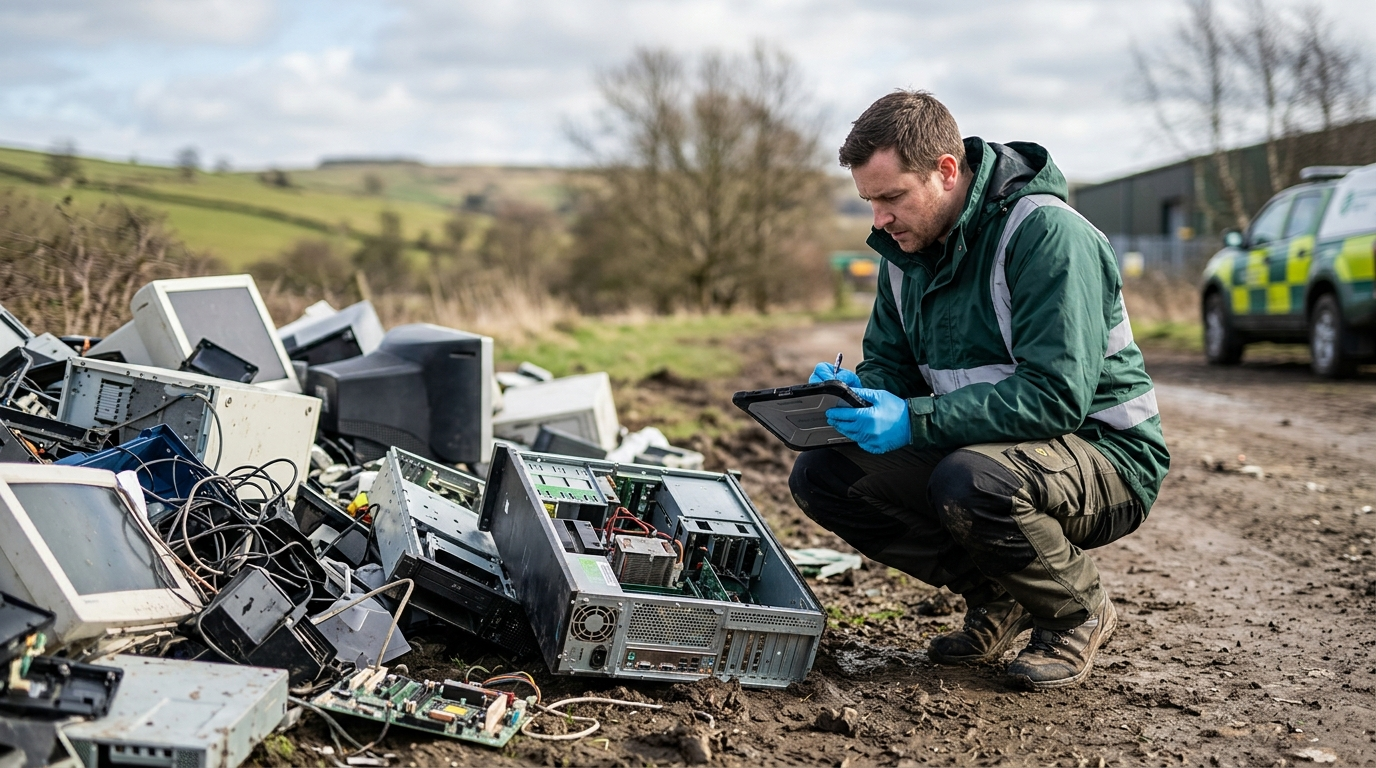
In July 2026, the Environment Agency led an operation in East Lancashire that saw over 35 officers from five organisations crack down on waste crime, including illegal electronics recycling. This action highlights the ongoing issues with non-compliance and the need for stricter enforcement to protect environmental standards.
Last reviewed by Samantha Holloway on 30 July 2026
What Happened in East Lancashire?
More than 35 officials from multiple agencies carried out a joint operation targeting illegal waste disposal in July 2026. The Environment Agency led this multi-agency effort, focusing on sites suspected of handling hazardous materials improperly, including
e-waste.
This crackdown highlights the importance of adhering to regulations like the [WEEE Directive](/regulations/weee-directive-eu) and RoHS when recycling electronics. Non-compliance can lead to severe penalties and environmental damage.
According to the UN Global E-Waste Monitor 2024, only 22.3% of e-waste was properly collected and recycled in 2022.
Why Does This Matter for Electronics Recycling?
Electronics recycling is important because it helps recover valuable resources from old devices while preventing toxic substances from entering the environment. The operation in East Lancashire shows that regulatory bodies are stepping up enforcement efforts to ensure compliance with waste management laws.
In 2024, the UN reported that global e-waste reached 62 million tonnes annually, yet only 22.3% was formally recycled worldwide. This statistic highlights why strict regulations and enforcement are vital for proper electronics disposal.
How Does This Affect Consumers?
Consumers must be aware of the risks associated with improper recycling and seek out certified facilities to dispose of their old devices safely. The Environment Agency's actions serve as a reminder that illegal e-waste practices can harm both health and the environment, making it important for individuals to choose responsible disposal methods.
Certified electronics recyclers adhere to stringent standards set by regulations like WEEE and RoHS. These guidelines aim to minimize environmental impact while promoting sustainable recycling practices.
What Are the Key Regulations Impacting Electronics Recycling?
Regulations such as the EU's WEEE Directive and the UK's RoHS Directives play key roles in governing how electronics are recycled and disposed of properly. The WEEE Directive sets targets for e-waste collection rates, currently aiming for 65% of electrical products placed on the market.
These regulations mandate that businesses must collect and recycle waste from electronic equipment, ensuring materials like gold, silver, palladium, and rare earth elements are recovered responsibly.
According to the Consumer Technology Association, The average US household has 21 unused electronic devices.
What Can People Do Now?
To ensure electronics are recycled safely and sustainably, consumers should:
- Use certified recyclers who follow WEEE and RoHS guidelines.
- Check if local councils offer recycling services for e-waste.
- Explore options like urban mining to recover valuable materials from old devices.
By choosing responsible disposal methods, individuals can contribute positively to environmental conservation efforts and support a circular economy model.
Sources
- UN Global E-Waste Monitor 2024
- Consumer Technology Association
- Counterpoint Research