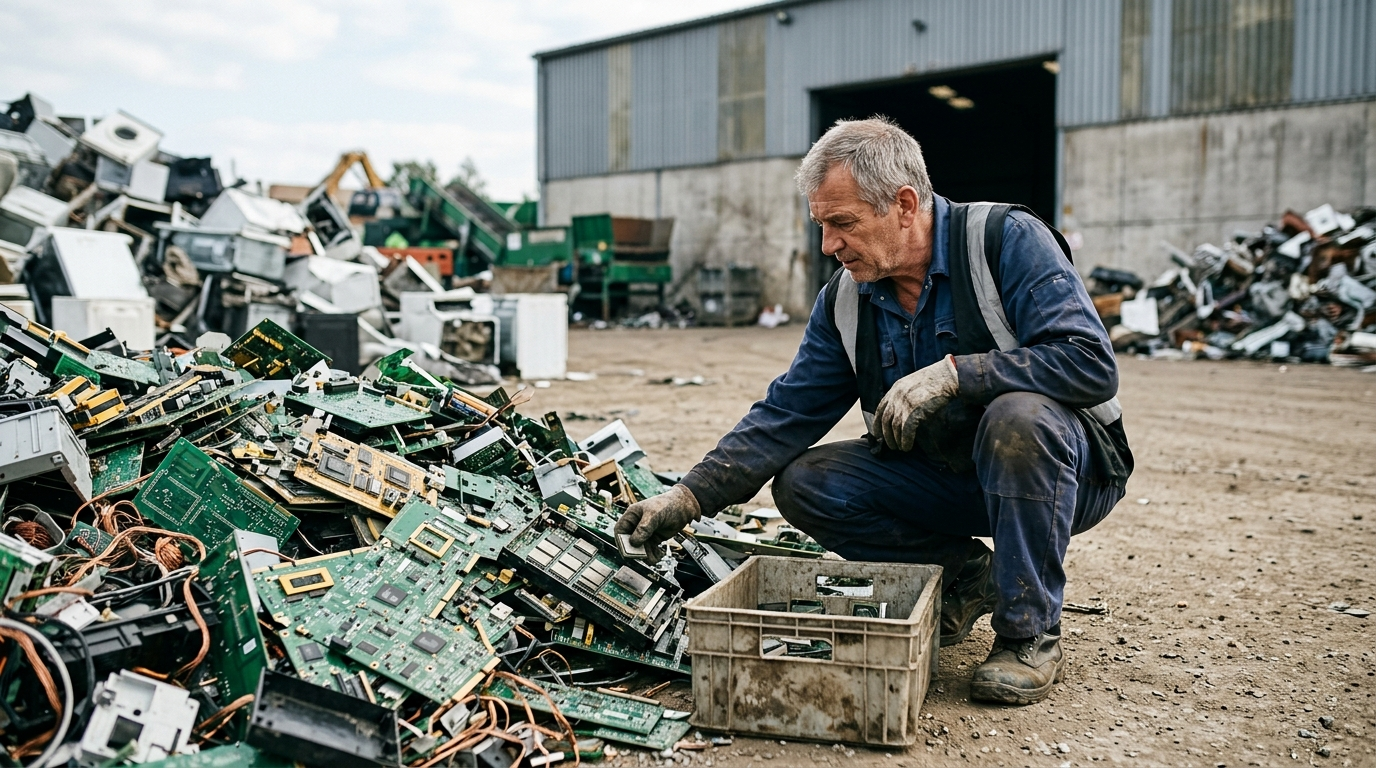
Europe's electronic waste crisis is a critical issue that holds the key to supply security, especially for rare earth metals and precious materials used in tech devices. According to recent reports by Reuters, this situation highlights the need for immediate action if we're to address e-waste sustainably.
Last reviewed by Samantha Holloway on 24 August 2026
What Happened?
The European Union's WEEE Directive aims to improve the collection rate of waste electrical and electronic equipment but falls short with only 65% of electronics placed on the market being formally recycled. This gap highlights inefficiencies in tech sustainability efforts, particularly concerning the recovery of precious materials from e-waste.
According to the Consumer Technology Association, The average US household has 21 unused electronic devices.
Tech sustainability is important for mitigating environmental damage and ensuring a secure supply chain for critical materials used in technology devices. E-waste recycling offers an opportunity to recover valuable metals like gold. Silver, copper, and rare earth elements that are integral to manufacturing tech products. For instance, a million phones can yield 35kg of gold, illustrating the economic potential of urban mining.
Why Does This Matter?
Tech sustainability matters because it addresses both environmental concerns and resource scarcity issues. E-waste recycling helps prevent hazardous materials from entering landfills and supports the recovery of valuable components that are otherwise lost to disposal practices. As tech devices become more complex, containing over 60 different elements, the importance of responsible end-of-life management increases.
According to the Counterpoint Research, The global refurbished smartphone market was worth $49.3 billion in 2023.
The EU's WEEE Directive sets ambitious targets for e-waste collection but struggles with enforcement due to inadequate infrastructure in some member states. Countries like Germany and Norway have achieved high recycling rates, while others lag behind significantly. This disparity affects overall compliance levels and hinders efforts towards sustainable tech practices globally.
What's the Impact on Recycling Efforts?
The impact of this situation is significant for electronics recyclers who must adapt to fluctuating regulations and market demands. Recyclers face challenges in scaling up operations efficiently, given that only 22.3% of global e-waste is formally recycled worldwide. This statistic highlights a major challenge: the need for better infrastructure and more strong recycling programs.
According to the UN Global E-Waste Monitor 2024, The value of raw materials in global e-waste was estimated at $91 billion in 2022.
Recycling facilities need to invest in advanced technologies and processes to handle increasing volumes of complex devices. For example, lithium-ion batteries pose specific risks and require specialized handling techniques due to their high energy density and potential for fires. With projections indicating that the lithium-ion battery market will reach 2.5 TWh by 2030. There's a pressing need to enhance recycling capabilities.
How Does This Affect Electronics Recycling?
Electronics recycling efforts are significantly impacted by the lack of uniform global standards and consistent regulation enforcement. The EU WEEE Directive, while progressive in its goals, faces implementation challenges that affect overall tech sustainability outcomes. For instance, inadequate collection infrastructure means that much e-waste ends up in informal sectors rather than formal recycling channels.
To improve recycling efficiency, stakeholders need to collaborate on developing standardized methodologies for e-waste processing and disposal. This includes building innovation in recovery technologies to address the growing complexity of electronic devices and the increasing presence of hazardous materials like lithium-ion batteries.
What Can We Do Now?
Individuals and businesses can contribute by supporting initiatives that promote responsible electronics recycling and sustainable practices. For example, engaging with local e-waste collection programs or advocating for stricter enforcement of regulations like the WEEE Directive can drive positive change. Additionally, exploring options for repair and reuse through measures like right-to-repair legislation helps extend product lifespans.
By taking these steps, we can move towards a more sustainable future where tech sustainability isn't just an environmental imperative but also a strategic economic advantage. For more information on how to recycle e-waste responsibly, visit our guide on right-to-repair and learn about the benefits of urban mining for recovering valuable materials from discarded electronics.
Sources
- Consumer Technology Association
- Counterpoint Research
- UN Global E-Waste Monitor 2024