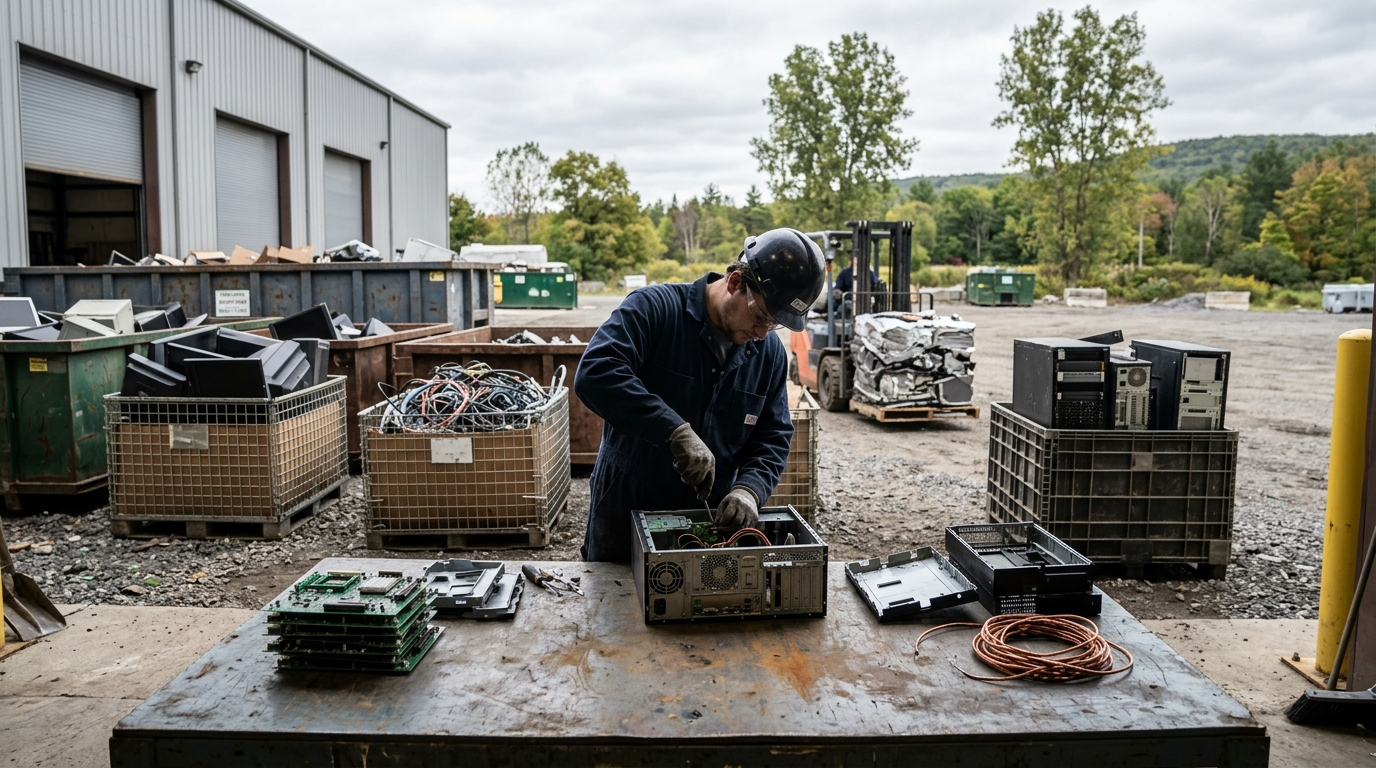
The Town of Plattsburgh in New York State has initiated a new e-waste recycling program, which is important for managing the growing pile of electronic waste and promoting tech sustainability.
Last reviewed by Samantha Holloway on 01 September 2026
As of September 2026, residents can drop off their old electronics at designated collection sites. This move aligns with broader efforts to address environmental concerns linked to improper disposal of e-waste. According to the UN Global E-Waste Monitor 2024. Global e-waste reached 62 million tonnes in 2023, with only 22.3% being formally recycled worldwide.
What Does This Mean for Local Residents?
For Plattsburgh residents, this means easier access to responsible e-waste disposal. The program will help prevent toxic materials from ending up in landfills and facilitate the recovery of valuable metals like gold and silver that are abundant in discarded electronics. For instance, one million recycled phones contain 35kg of gold and 340kg of silver.
How Does This Affect Electronics Recycling?
This initiative sets a precedent for other communities to follow suit. By providing convenient drop-off points, Plattsburgh encourages higher recycling rates, which is critical given that only about 22% of global e-waste is recycled formally each year.
According to the European Parliament, less than 1% of rare earth elements in e-waste are currently recycled.
The program also supports local recycling facilities by increasing their throughput and operational efficiency. This can lead to a reduction in the environmental impact associated with improper disposal and promote tech sustainability.
What Are the Environmental Benefits?
By preventing harmful substances from entering landfills, the Plattsburgh initiative significantly reduces pollution levels. E-waste contains hazardous materials such as lead, mercury, and cadmium, which pose risks to human health and ecosystems if not managed properly.
According to the WEEE Forum, over 5 billion mobile phones were estimated to be sitting unused in drawers worldwide in 2022.
recycling electronics helps recover precious metals that are often embedded in devices. For example, a typical smartphone might contain over 60 different elements, many of which can be reused through proper recycling processes.
What Does This Say About the Broader Trend?
This new program highlights growing awareness and action towards addressing e-waste challenges globally. As countries like those within the EU aim for WEEE collection targets of up to 65% by weight of electronics placed on their markets, localized initiatives play a key role in achieving these goals.
According to the WHO, e-waste contains over 1,000 different substances, many of them toxic.
The launch of such programs also highlights the increasing importance of urban mining-a practice that involves extracting valuable materials from discarded electronics-thereby supporting tech sustainability efforts. For more information on how urban mining contributes to resource recovery and recycling efficiency, see our urban mining guide.
What Should Individuals Do Now?
Residents in Plattsburgh should take advantage of the new drop-off locations for e-waste disposal. By doing so, they not only reduce environmental pollution but also contribute to conserving natural resources. individuals can explore other recycling options available through local recycling centers or online platforms dedicated to tech sustainability.
For a full understanding of how electronic waste impacts our environment and what steps you can take to minimize your contribution, visit our e-waste page. Additionally, staying informed about regulations such as the EU's WEEE Directive can help individuals ensure their e-waste is handled responsibly.
What About Businesses?
Businesses in Plattsburgh and beyond should consider implementing similar recycling programs for company-generated e-waste. Adopting these practices not only aligns with corporate social responsibility goals but also helps businesses comply with environmental regulations such as the WEEE Directive and RoHS standards. For more details on how to implement effective e-waste management strategies, refer to our [circular economy](/guides/circular-economy-and-electronics) guide.
By embracing these measures, companies can contribute positively to tech sustainability while potentially reducing costs associated with improper disposal fines and improving their public image through eco-friendly practices.
Sources
- European Parliament
- WEEE Forum
- WHO