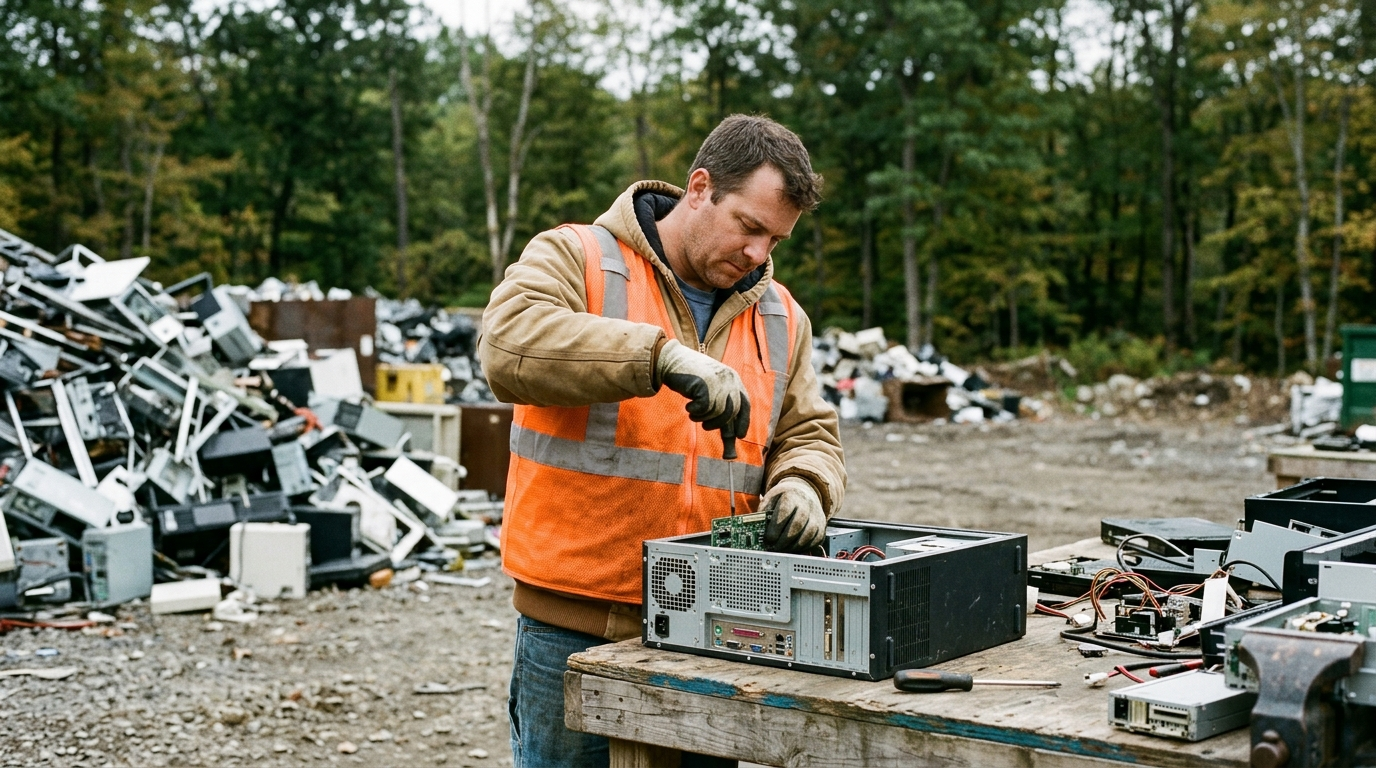
The Connecticut Right to Repair law comes into force on July 1, 2026, aiming to give consumers greater access and control over repairing their electronic devices. Connecticut Right to Repair law comes into force - PIRG This development is a significant step forward in the push for sustainable electronics recycling practices.
Last reviewed by Samantha Holloway on 24 July 2026
How Does This Affect Electronics Recycling?
This law mandates manufacturers to provide repair manuals and parts for products sold in Connecticut. It affects electronics recycling by promoting reuse and extending product lifespans, reducing e-waste. As of 2024, only 22.3% of global e-waste is formally recycled worldwide-a number that the new legislation aims to improve.
According to the Consumer Technology Association, The average US household has 21 unused electronic devices.
Connecticut's law targets major tech companies operating within its borders, requiring them to disclose repair information and make necessary parts available to independent shops and consumers. This move aligns with broader environmental goals by reducing electronic waste and encouraging a circular economy. By increasing repair rates, less e-waste will end up in landfills or incinerators.
What Are the Key Provisions of Connecticut Right to Repair Law?
Key provisions include mandatory part availability and documentation sharing for repairs. Companies must provide access to diagnostic tools, schematics, and software updates needed for repairs. For context, a million smartphones contain about 35 kilograms of gold and 340 kilograms of silver-resources that can be reclaimed through better repair practices.
According to the Counterpoint Research, The global refurbished smartphone market was worth $49.3 billion in 2023.
These measures are designed to help consumers and small businesses by reducing barriers to entry in the repair market. The law also sets a precedent for other states or countries looking to reduce e-waste and promote sustainable electronics use.
How Will This Impact Consumers?
Consumers will benefit from lower repair costs as independent shops can compete with official service centers, driving down prices. Additionally, access to repair information means consumers won't be locked into expensive manufacturer contracts just to keep their gadgets running.
According to the UN Global E-Waste Monitor 2024, The value of raw materials in global e-waste was estimated at $91 billion in 2022.
The initiative also aims to educate the public on the environmental benefits of repairing rather than replacing electronics. With an estimated 62 million tonnes of e-waste generated globally each year, every small step towards repair and reuse can have a substantial impact.
What Challenges Will Manufacturers Face?
Manufacturers face compliance costs and potential changes in business models due to increased competition from independent repair shops. At Connecticut Right to Repair law comes into force - PIRG, they must adapt their supply chains to support part distribution networks for repairs.
the law requires companies to share proprietary information, which could pose security risks if not managed properly. However, these challenges are outweighed by the long-term benefits of reduced e-waste and environmental sustainability.
How Can Consumers Stay Informed About This Change?
Consumers can stay informed through official state resources or watchdog groups monitoring compliance with Connecticut Right to Repair law comes into force - PIRG. Regular updates from manufacturers on their repair policies will also be helpful.
Staying engaged in local advocacy efforts for similar laws elsewhere will ensure continued progress towards more sustainable electronics management practices.
What Should People Do Now?
People should start by learning about the specific products covered under Connecticut's Right to Repair law and how to access repair services. For those outside of Connecticut, supporting similar initiatives in their regions can help drive broader adoption of these principles across different jurisdictions.
Encouraging manufacturers to comply with existing regulations on e-waste disposal and advocating for better recycling infrastructure also plays a important role in advancing tech sustainability goals globally.
By taking informed action now, individuals contribute to the larger effort of reducing electronic waste and building more sustainable consumption patterns.
Sources
- Consumer Technology Association
- Counterpoint Research
- UN Global E-Waste Monitor 2024