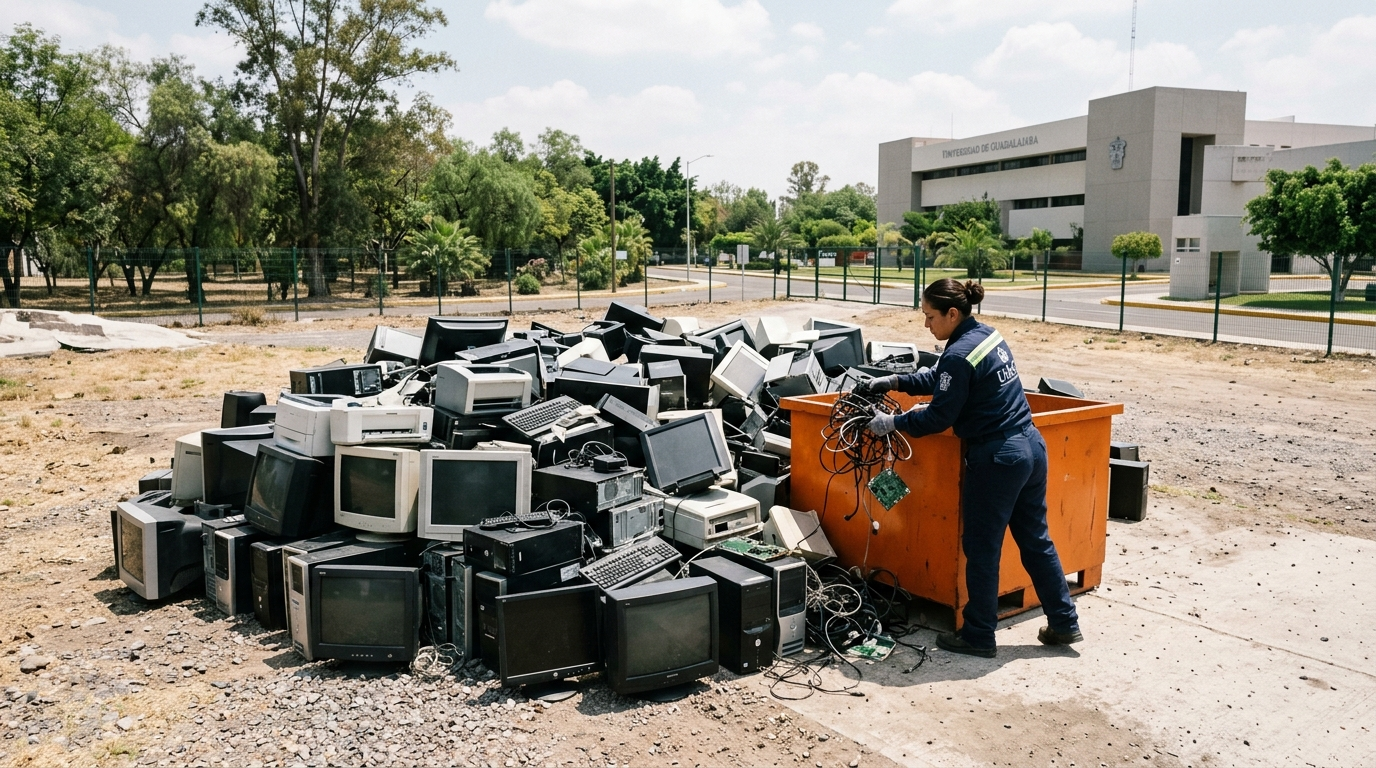
Universidad de Guadalajara (UdeG) recently collected 75.5 tons of electronic waste, highlighting the critical role educational institutions play in tech sustainability efforts. This initiative is part of a broader trend where organizations focus on responsible disposal methods to combat the global e-waste crisis.
Last reviewed by Samantha Holloway on 06 September 2026
What Does UdeG's Collection Highlight About Tech Sustainability?
UdeG's collection highlights the importance of proactive measures in managing e-waste, especially given that only 22.3% of worldwide e-waste is formally recycled each year according to the UN Global E-Waste Monitor 2024. By collecting 75.5 tons of electronic waste, UdeG demonstrates a commitment to reducing environmental impact and promoting recycling practices.
According to the Counterpoint Research, The global refurbished smartphone market was worth $49.3 billion in 2023.
Universities like UdeG are key in tech sustainability efforts due to their influence on future generations and their ability to set standards within local communities. This initiative not only addresses the immediate issue of e-waste but also educates students and staff about the importance of proper disposal methods, building a culture of environmental responsibility.
How Does This Affect Electronics Recycling?
This collection has direct implications for electronics recycling by raising awareness and setting an example for other educational institutions to follow. With universities often being hubs for technology usage and innovation, their involvement in e-waste management can significantly impact local recycling rates and public perception.
According to the UN Global E-Waste Monitor 2024, The value of raw materials in global e-waste was estimated at $91 billion in 2022.
For context, the UN Global E-Waste Monitor 2024 reports that globally, over 62 million tonnes of electronic waste are generated annually. Initiatives like UdeG's collection contribute to addressing this massive challenge by encouraging a shift towards more sustainable practices in both education and technology sectors.
What Can Other Institutions Learn From This Initiative?
Other educational institutions can adopt similar strategies to manage e-waste effectively, such as setting up dedicated recycling programs or partnering with local recycling facilities. By doing so, they not only contribute positively to environmental conservation but also reduce the overall burden on landfills and incinerators, which are major sources of greenhouse gas emissions.
According to the Shift Project, manufacturing a new smartphone produces 50-80kg of co2 equivalent.
universities could incorporate tech sustainability into their curricula and research projects, building innovation in sustainable technology solutions while educating students about responsible disposal methods. This dual approach enhances both practical outcomes and theoretical understanding among future professionals.
What Are the Broader Environmental Implications?
The broader environmental implications of such initiatives are significant as they help reduce the amount of hazardous materials that end up in landfills or informal recycling sectors where conditions often lack proper safety measures. For example, improperly disposed lithium-ion batteries can lead to fires and toxic chemical leaks, posing serious risks to human health and the environment.
effective e-waste management supports resource recovery through processes like urban mining. This process extracts valuable metals from discarded electronics efficiently. According to industry estimates, one million mobile phones contain approximately 35 kilograms of gold, 340 kilograms of silver, and 15 kilograms of palladium-resources that are important for manufacturing new devices.
What Are the Financial Benefits?
Financially, institutions like UdeG can benefit from e-waste management initiatives through reduced disposal costs and potential revenue streams from selling recycled materials. For instance, partnerships with recycling companies allow universities to earn income while ensuring proper handling of electronic waste. This dual benefit approach addresses both financial concerns and environmental responsibilities.
engaging in responsible practices often leads to improved public relations and enhanced brand reputation within the community. Institutions recognized for their sustainability efforts may attract more students interested in joining a forward-thinking environment focused on long-term social and ecological impacts.
What Should Individuals Do Now?
Individuals can contribute significantly by properly disposing of electronic waste through designated recycling programs or drop-off points at local facilities. They should also consider repairing rather than replacing broken devices when possible, which extends product lifespans and reduces the demand for new manufacturing.
For those interested in supporting tech sustainability further, participating in community clean-up events or advocating for stronger regulations on e-waste management can make a tangible difference. Engaging with campaigns promoting the right to repair or circular economy principles also helps consumers to push for more sustainable practices across industries.
By taking these steps, individuals not only support environmental conservation but also encourage broader systemic changes that benefit society as a whole. For detailed guidance and resources on how to recycle specific items safely, visit our guides on [right-to-repair](/guides/right-to-repair-what-it-means) and circular economy.
Sources
- Counterpoint Research
- UN Global E-Waste Monitor 2024
- Shift Project