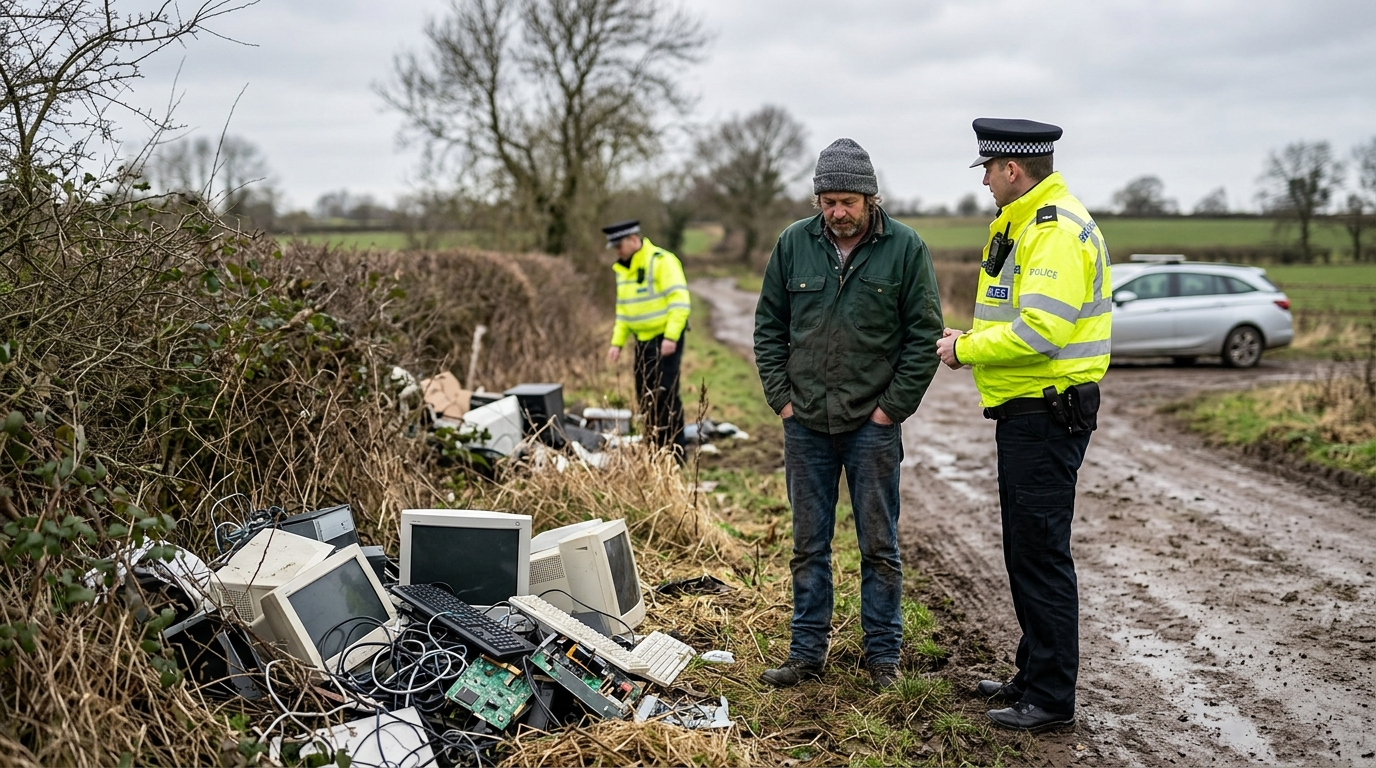
Two men have been arrested in Cheshire as part of an Environment Agency investigation into illegal waste dumping, highlighting the ongoing challenges faced by electronics recycling and proper e-waste disposal.
Last reviewed by Samantha Holloway on 11 August 2026
What Does This Mean for Electronics Recycling?
This incident highlights serious concerns about improper handling and disposal of
electronic waste. Illegal dumping can lead to environmental hazards and undermine efforts to recycle electronics responsibly.
In August 2026, UK authorities arrested two individuals involved in illegal waste activities near Middlewich. Such actions violate local laws and international conventions like the
Basel Convention, which regulates hazardous waste transfer between countries.
The arrest reflects broader issues surrounding e-waste management globally. According to the UN Global E-Waste Monitor from 2024, only 22.3% of global electronic waste is formally recycled each year, leaving a significant portion at risk for improper disposal. This statistic highlights the urgent need for stricter enforcement and better regulation of recycling practices.
According to the World Economic Forum, e-waste is the fastest-growing waste stream globally.
How Does This Affect Consumers?
For consumers concerned about e-waste, this news reinforces the importance of knowing where to properly dispose of unwanted devices.
Consumers play a important role in promoting responsible electronics recycling by ensuring their old gadgets end up with certified recyclers. The EU's
WEEE Directive sets targets for member states to collect and recycle at least 65% of electrical equipment placed on the market, aiming to reduce illegal dumping and promote sustainable practices.
What Can Businesses Do?
Businesses must prioritize compliance with environmental regulations when disposing of electronic waste.
Companies should partner with certified recycling facilities that adhere to standards like RoHS (Restriction of Hazardous Substances), which limits harmful substances in electronics. By doing so, businesses not only avoid legal repercussions but also contribute positively to the
circular economy.
What Are the Environmental Impacts?
Illegal dumping poses severe environmental threats due to the hazardous materials found in many electronic devices.
For instance, a million smartphones contain valuable metals such as 35kg of gold and 340kg of silver. Improper disposal can lead to toxic contamination affecting soil, water, and air quality.
What Should Governments Do?
Governments should strengthen regulations and enforcement mechanisms against illegal waste dumping.
Legislation like the WEEE Directive in Europe sets clear guidelines for manufacturers and consumers alike, ensuring that e-waste is managed safely throughout its lifecycle. By enforcing stricter penalties for non-compliance, governments can deter illegal activities and promote sustainable practices.
What Can Individuals Do Now?
Individuals should take proactive steps to ensure their electronics are recycled responsibly.
Check local government websites or use online resources like ecyclingcentral.com to find certified recycling centers near you. Properly disposing of e-waste not only protects the environment but also supports the recovery of valuable materials through processes such as
urban mining.
By adhering to these guidelines and supporting responsible practices, we can collectively address the challenge of improper e-waste disposal and work towards a more sustainable future for electronics recycling. Learn more about [right-to-repair laws](/guides/right-to-repair-what-it-means) and circular economy principles.
According to the Apple Environmental Report 2024, apple recovered over 1 tonne of gold from recycled devices in 2023.
Sources
- World Economic Forum
- Apple Environmental Report 2024
- BankMyCell 2024