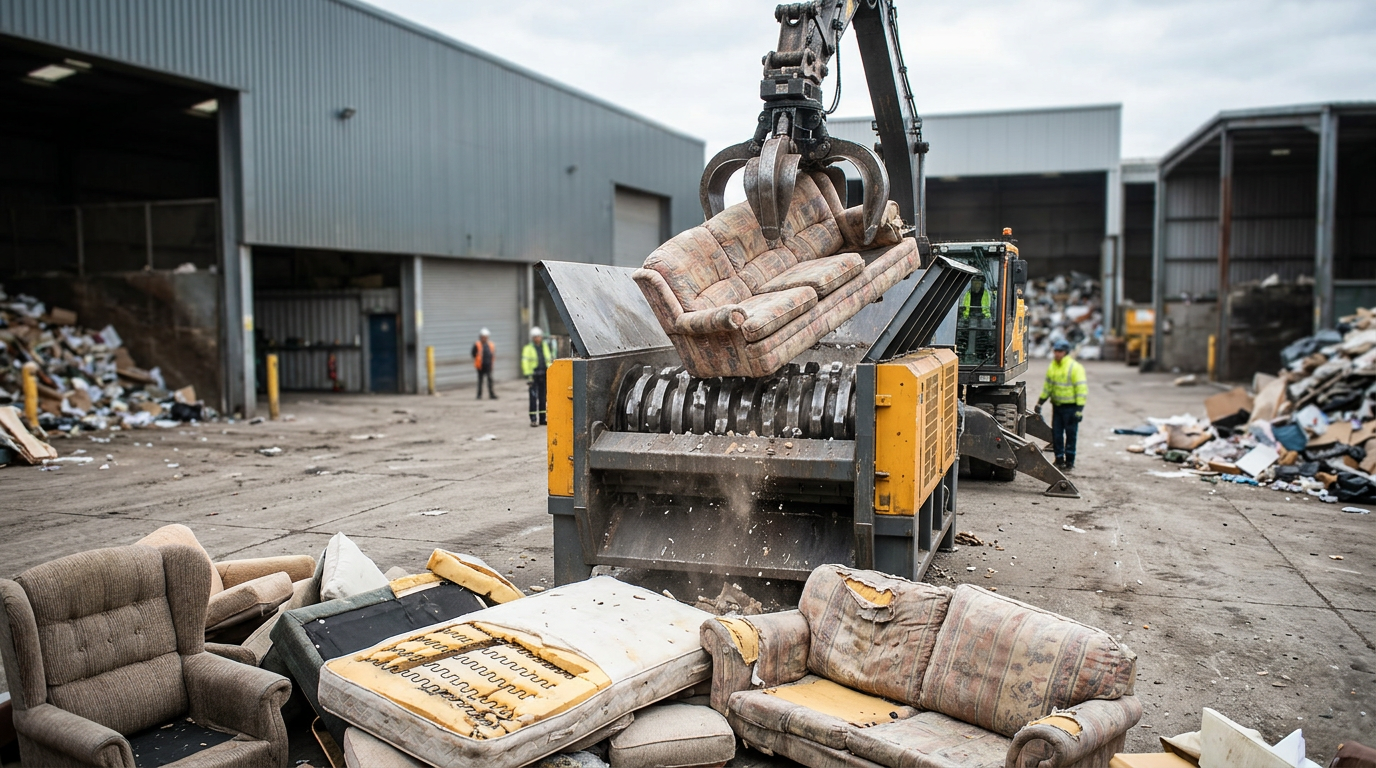
Shredding waste upholstered domestic seating containing POPs: RPS 264. A new regulatory position from the UK Environment Agency, aims to manage the disposal of furniture contaminated with Persistent Organic Pollutants (POPs). This regulation is critical for electronics recyclers and e-waste managers as it sets standards for handling items that could leach harmful chemicals into the environment. Shredding waste upholstered domestic seating containing POPs: RPS 264. Effective June 2026, requires stringent measures to ensure these materials don't contaminate recycling streams.
Last reviewed by Samantha Holloway on 10 June 2026
How Does This Affect Electronics Recycling?
Shredding waste upholstered domestic seating containing POPs: RPS 264 affects electronics recyclers by necessitating better separation of non-
electronic waste. For instance, the regulation mandates that any item mixed with POP-contaminated furniture be processed separately to prevent cross-contamination. As a result, recycling facilities must invest in additional sorting equipment and training, increasing operational costs.
The regulation targets specific types of waste such as upholstered seating. Which can contain flame retardants like polybrominated diphenyl ethers (PBDEs). These chemicals are classified as POPs due to their toxicity and persistence. The requirement for separate handling highlights the importance of identifying and segregating non-electronic items during recycling processes.
According to the WHO, e-waste contains over 1,000 different substances, many of them toxic.
What Are the Financial Implications?
Financial implications arise from increased operational costs associated with implementing RPS 264. Recyclers must allocate funds for additional equipment, staff training, and certification to handle POP-contaminated materials safely. For example, the cost of upgrading sorting machinery could range between £50,000 to £100,000 per facility. the need for specialized disposal methods adds an average 30% overhead to recycling operations.
The financial burden extends beyond initial investments into ongoing compliance and audit expenses. Recyclers face penalties if they fail to adhere strictly to RPS 264 regulations, which could amount to fines up to £150,000 per violation. Therefore, thorough planning and budget allocation are important for maintaining regulatory compliance without incurring unnecessary financial risks.
How Will This Impact the Environment?
Environmentally, Shredding waste upholstered domestic seating containing POPs: RPS 264 aims to reduce pollution caused by improper disposal of POP-contaminated furniture. By mandating proper segregation and disposal methods, the regulation helps prevent harmful chemicals from entering natural ecosystems via landfills or incineration processes.
The global e-waste scenario highlights the importance of such regulations; annually. Over 62 million tonnes of electronic waste are generated worldwide (UN Global E-Waste Monitor 2024). Without stringent controls like RPS 264, there's a higher risk of these pollutants entering recycling streams and causing environmental damage. By ensuring that POP-contaminated furniture doesn't mix with e-waste during processing. Recyclers play a vital role in safeguarding both human health and the environment.
What Are the Key Considerations for Recyclers?
Recyclers must consider several key factors to comply with Shredding waste upholstered domestic seating containing POPs: RPS 264. First, investing in specialized sorting equipment is important to segregate non-electronic items effectively. Additionally, training staff on proper handling and disposal procedures minimizes the risk of contamination.
recyclers should establish partnerships with waste management companies specializing in hazardous materials to ensure safe disposal practices. Compliance with RPS 264 also requires regular audits and certification processes to maintain regulatory standards continuously. By addressing these considerations proactively, recyclers can minimize operational disruptions while adhering to environmental protection mandates.
According to the US EPA, recycling one million laptops saves the energy equivalent of electricity used by 3,657 us homes in a year.
What Should Recyclers Do Now?
Recyclers should start by reviewing their current waste management protocols to identify any gaps relative to Shredding waste upholstered domestic seating containing POPs: RPS 264 requirements. Engaging with industry experts and consulting the UK Environment Agency's guidelines can provide a clearer roadmap for compliance.
recyclers might want to explore funding opportunities through government grants or subsidies designed to support sustainable practices in e-waste management. Investing early in necessary upgrades will mitigate long-term costs associated with non-compliance penalties and operational inefficiencies.
, Shredding waste upholstered domestic seating containing POPs: RPS 264 presents both challenges and opportunities for electronics recyclers. By preparing adequately and adhering to regulatory standards, the industry can contribute positively towards environmental sustainability while ensuring financial stability.
According to the UN Global E-Waste Monitor 2024, only 22.3% of e-waste was properly collected and recycled in 2022.
Sources
- WHO
- US EPA
- UN Global E-Waste Monitor 2024