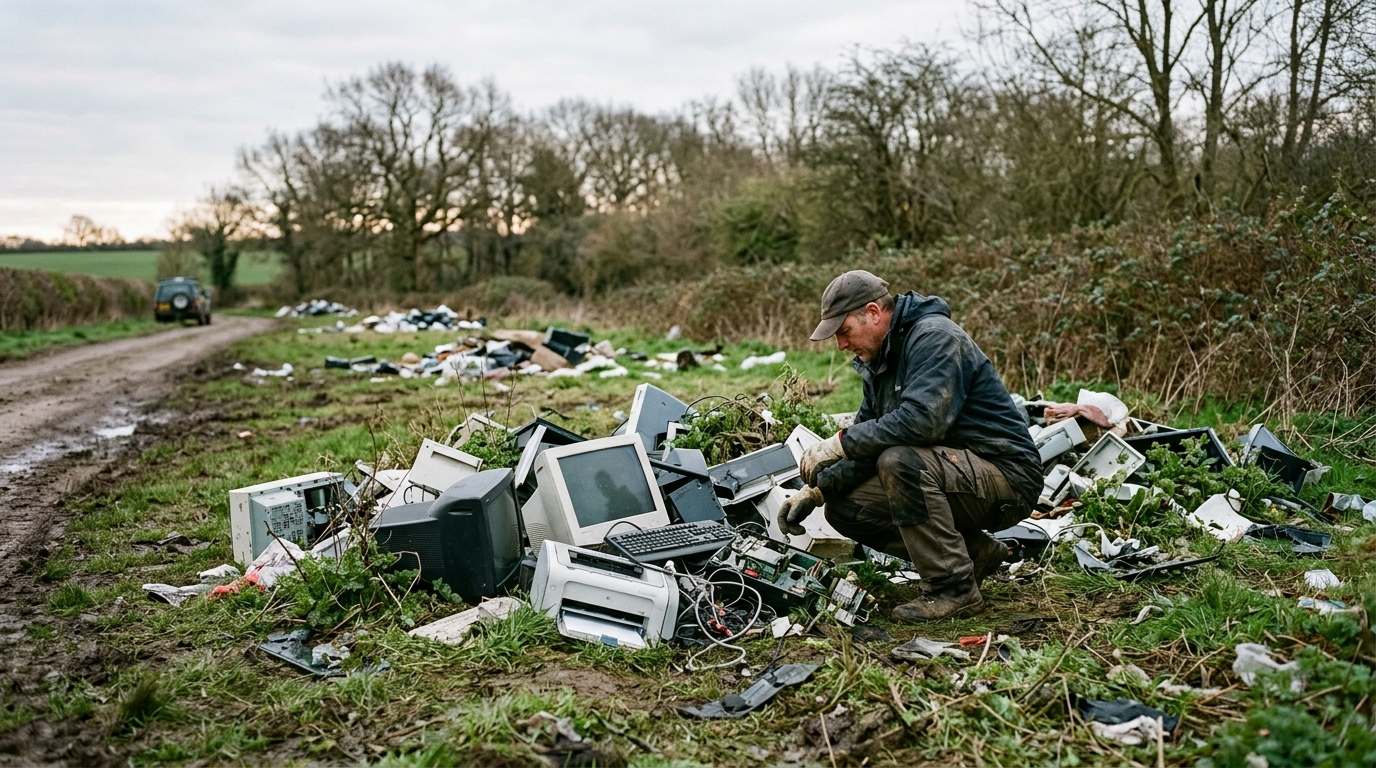
The UK Environment Agency has released heat maps that reveal hotspots of suspected waste crime, including illegal dumping of e-waste. This development is important for electronics recycling as it helps pinpoint areas where rogue gangs are active and enables authorities to target enforcement more effectively.
Last reviewed by Samantha Holloway on 02 September 2026
What Are the Key Takeaways from These Heat Maps?
These heat maps highlight 13 regions in England with the highest levels of suspected waste crime, including illegal dumping. By identifying these hotspots, local authorities can better allocate resources for inspections and prosecutions. This approach is important given that only 22.3% of global e-waste is formally recycled each year (UN Global E-Waste Monitor 2024).
According to the UN Global E-Waste Monitor 2024, The world generated 62 million tonnes of e-waste in 2022, up 82% from 2010.
The heat maps use data from the Environment Agency's Intelligence Unit, which tracks suspicious activity across various sectors, including construction and demolition waste, but also electronics recycling. This intelligence helps to reduce the risks associated with illegal dumping, such as environmental contamination and health hazards.
How Does This Affect Electronics Recycling?
This development affects electronics recycling by providing law enforcement with a tool to combat illegal e-waste disposal more efficiently. By focusing on these hotspots, authorities can intercept and penalize rogue operations that undermine proper recycling efforts. For example, the UK generated 1.3 million tonnes of electronic waste in 2024 (UK DEFRA Environment).
According to the European Parliament, less than 1% of rare earth elements in e-waste are currently recycled.
this initiative supports the overall goal of increasing responsible e-waste management practices across Europe, where the WEEE Directive sets ambitious collection targets for member states. As of September 2026, the EU aims to recycle at least 65% of all electronics placed on the market each year.
What Specific Steps Are Being Taken Against Illegal Dumping?
To combat illegal dumping, the Environment Agency has stepped up surveillance and enforcement in identified hotspots. They're also working closely with local authorities and waste management companies to improve compliance and reporting mechanisms. This collaboration is vital as it ensures that e-waste ends up in certified recycling facilities rather than landfills or abandoned sites.
According to the WEEE Forum, over 5 billion mobile phones were estimated to be sitting unused in drawers worldwide in 2022.
In addition, educational campaigns aimed at raising awareness about the risks of illegal dumping and promoting legitimate recycling methods have been rolled out across these regions. These efforts are important given the growing volume of e-waste: global e-waste production reached 62 million tonnes in 2024 (UN Global E-Waste Monitor 2024).
How Can Individuals and Businesses Play a Role?
Individuals and businesses can support these initiatives by ensuring their electronics waste is disposed of responsibly. For instance, using services certified under the WEEE Directive or adhering to local regulations ensures that e-waste doesn't contribute to illegal dumping sites.
To find legitimate recycling options, consumers should look for facilities that meet international standards like ISO 14001 or those accredited by national bodies such as the UK's Environment Agency. Businesses can also use circular economy models and right-to-repair policies (see right-to-repair) to reduce waste generation in the first place.
What Are Some Practical Tips for Recycling E-Waste?
Practical tips include checking with local councils or trusted electronics recyclers about drop-off locations and collection days. Many regions offer free take-back programs, such as those facilitated by major retailers like Best Buy (US) and Currys PC World (UK).
individuals can donate working devices to charities or refurbish older equipment themselves using guides on urban mining. At electronics recycling, this approach extends the lifecycle of electronics while reducing waste.
Conclusion: What Should You Do Now?
Given these developments, it's important for everyone involved in e-waste management-whether individuals disposing of old phones or businesses handling large volumes-to take proactive steps. Stay informed about local regulations and use certified recycling services to ensure your contributions don't inadvertently support illegal dumping activities. By doing so, you help protect the environment and promote responsible disposal practices.
For more detailed information on specific types of e-waste like batteries ([battery recycling](/guides/how-to-recycle-batteries-safely)) or solar panels ([solar panel recycling](/guides/solar-panel-recycling-complete-guide)), visit ecyclingcentral.com.
Sources
- UN Global E-Waste Monitor 2024
- European Parliament
- WEEE Forum