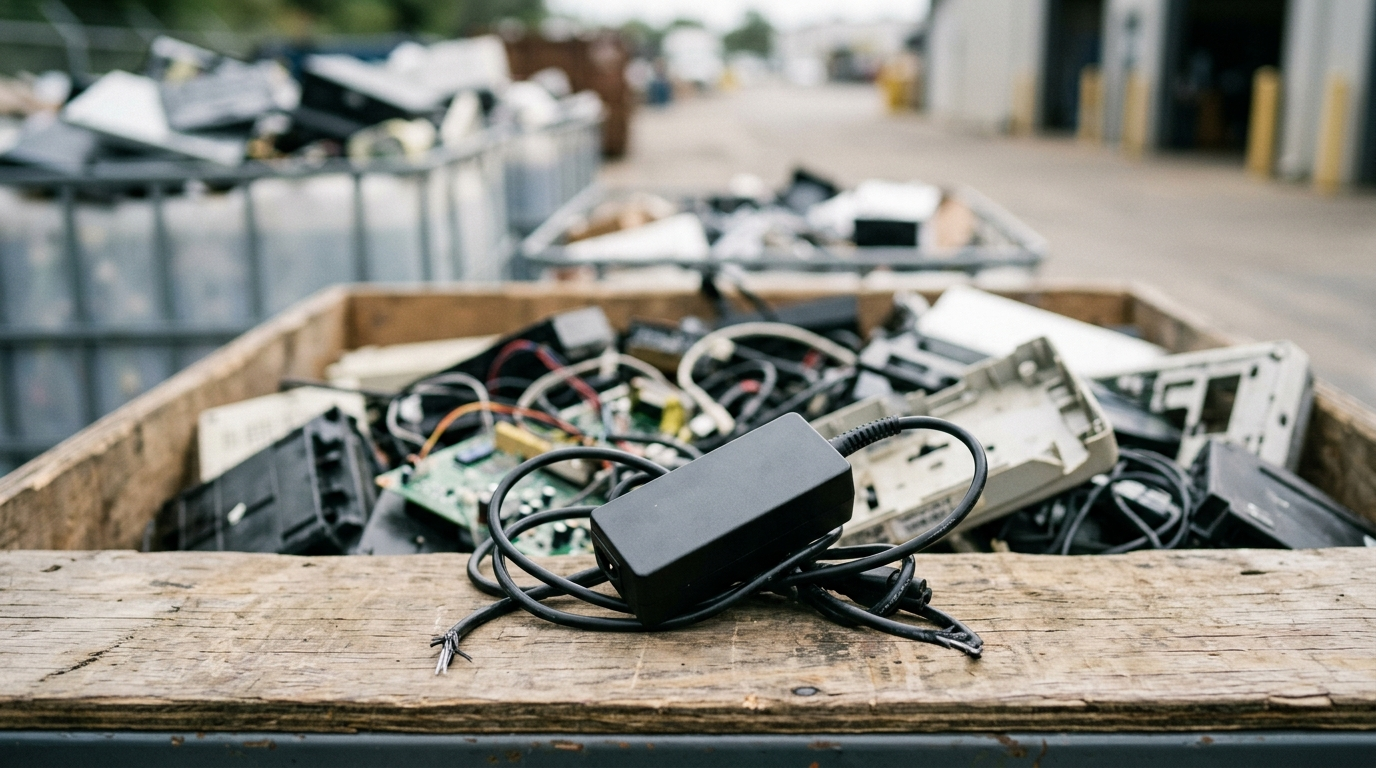
The UK's Product Safety Alerts issued a warning in September 2026 regarding the GEU 45W Laptop Charger sold through Amazon, highlighting safety risks associated with e-waste and electronics recycling practices.
Last reviewed by Samantha Holloway on 19 September 2026
What Happened?
In September 2026, the UK's Product Safety Alerts published a notice about a potential risk involving the GEU 45W Laptop Charger (model 2606-0133) available on Amazon. The charger was found to have issues that could lead to electric shock and fire hazards.
According to the Royal Society of Chemistry, mobile phones contain up to 60 different elements, including critical raw materials.
The alert draws attention to broader concerns around consumer safety and the proper handling of electrical devices during recycling processes. This incident highlights the importance of adhering to strict guidelines when dealing with e-waste, as improper disposal can pose significant risks not only to individuals but also to recycling facilities that handle such items.
Why Does It Matter for Electronics Recycling?
This incident matters because it highlights the potential dangers of improperly handling electronic waste (e-waste). The GEU 45W Laptop Charger's safety issues illustrate how even a small device can have serious consequences if not recycled correctly. According to the UN Global E-Waste Monitor. The world generates over 62 million tonnes of e-waste annually, with only about 22.3% being formally recycled.
According to the BankMyCell depreciation tracker, The average smartphone loses 35-45% of its trade-in value within the first year.
What Are the Risks?
The risks include electric shock and fire hazards due to faulty chargers. These dangers emphasize the need for consumers and recyclers to be vigilant about checking device safety records before disposal or recycling. The EU WEEE Directive sets a collection target of 65% of electronics placed on the market, reflecting stringent standards that must be met to ensure safe handling.
What Should People Do Now?
Consumers should check if they have the affected charger and follow instructions from Product Safety Alerts regarding its proper disposal. Recyclers need to maintain rigorous safety protocols for all electrical items to prevent accidents. For more information on how to recycle batteries safely, visit our guide on [battery recycling](/guides/how-to-recycle-batteries-safely).
By staying informed about recalls and adhering to regulations like the WEEE Directive, everyone can contribute to safer e-waste management practices.
Recycling facilities should also consider training staff on identifying potentially hazardous items and following best practices outlined by organizations such as the Basel Convention. For further guidance on reducing waste and promoting a circular economy in electronics, refer to our circular economy resources.
According to the UNEP, A single tonne of circuit boards contains 40-800 times more gold than a tonne of ore.
This incident serves as a reminder of the importance of proper disposal procedures for all electronic devices to protect both individuals and recycling facilities from potential harm.
Sources
- Royal Society of Chemistry
- BankMyCell depreciation tracker
- UNEP