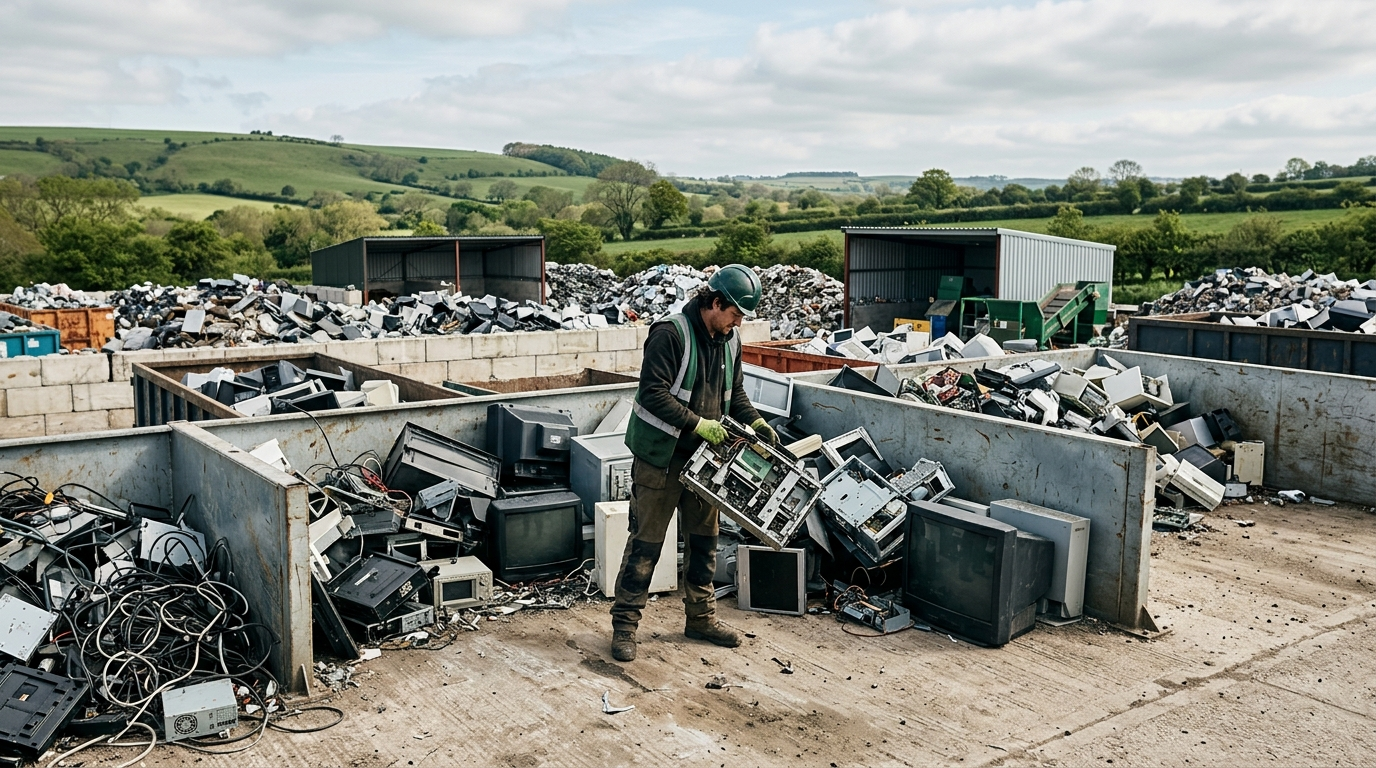
The latest official statistics from the UK Department for Environment, Food and Rural Affairs (DEFRA) reveal that managing waste from households in England resulted in a net carbon impact of 52 million tonnes of CO₂-equivalent emissions in 2025. Of this total, e-waste contributes significantly to these figures, highlighting the urgent need for responsible electronics recycling.
Last reviewed by Samantha Holloway on 27 August 2026
What Do These Statistics Mean for Electronics Recycling?
These statistics mean that managing household waste, including electronics, has a substantial carbon footprint and emphasizes the importance of proper electronics recycling to reduce environmental impact. As of August 2026, local authorities in England are reporting net emissions from e-waste management under the Carbon WARM basis, reflecting increased scrutiny on sustainable practices.
According to the UNEP, A single tonne of circuit boards contains 40-800 times more gold than a tonne of ore.
The global volume of e-waste is projected to reach 74 million tonnes by 2030 (UN Global E-Waste Monitor 2024), with only 22.3% of this waste being formally recycled worldwide in 2024. This gap highlights the critical role that electronics recycling plays in mitigating environmental damage and recovering valuable resources.
How Does This Affect Electronics Recycling?
This data affects electronics recycling by highlighting the need for more efficient and environmentally friendly processes. For instance, recycling one million smartphones can recover up to 35kg of gold, 340kg of silver, and 15kg of palladium, demonstrating significant resource recovery potential (UN Global E-Waste Monitor 2024). Proper e-waste management not only reduces carbon emissions but also maximizes the reuse of precious metals and materials.
According to the WHO, improper e-waste disposal releases toxic substances including lead, mercury, and cadmium into soil and water.
What Are the Key Regulations Impacting Electronics Recycling?
Key regulations like the WEEE Directive in Europe and the Basel Convention globally impact electronics recycling. The EU's WEEE collection target is set at 65% of electronic products placed on the market, driving higher recycling rates and efficiency (EU WEEE Directive). In the UK, adherence to these directives ensures that e-waste is managed responsibly, reducing harmful emissions.
How Much E-Waste Does the US Generate?
The United States generates a significant amount of e-waste annually. According to recent data, the US produces 6.92 million tonnes of electronic waste per year (United Nations University). This figure illustrates the scale of the challenge and highlights the need for improved recycling infrastructure.
What About Batteries in Electronics Recycling?
Batteries are a important component of many electronics devices today, especially lithium-ion batteries used in smartphones, laptops, and electric vehicles. The global lithium-ion battery market is expected to reach 2.5 TWh by 2030 (IDTechEx). Ensuring these batteries are recycled properly can significantly reduce environmental impacts while recovering valuable materials.
According to the UN Global E-Waste Monitor 2024, The world generated 62 million tonnes of e-waste in 2022, up 82% from 2010.
What Can Individuals Do Now?
Individuals can take several steps to improve electronics recycling practices:
- Use Certified Recyclers: Choose recyclers certified under the WEEE Directive or similar regulations.
- Participate in Local Programs: Engage with local government initiatives for e-waste collection and disposal.
- Educate Yourself: Learn about planned obsolescence, urban mining, and the circular economy to make informed decisions.
For further guidance on responsible electronics recycling practices, visit eCycling Central's guide on [right-to-repair](/guides/right-to-repair-what-it-means) and our page on [solar panel recycling](/guides/solar-panel-recycling-complete-guide). These resources provide practical advice for consumers looking to reduce their environmental impact through better e-waste management.
Sources
- UNEP
- WHO
- UN Global E-Waste Monitor 2024