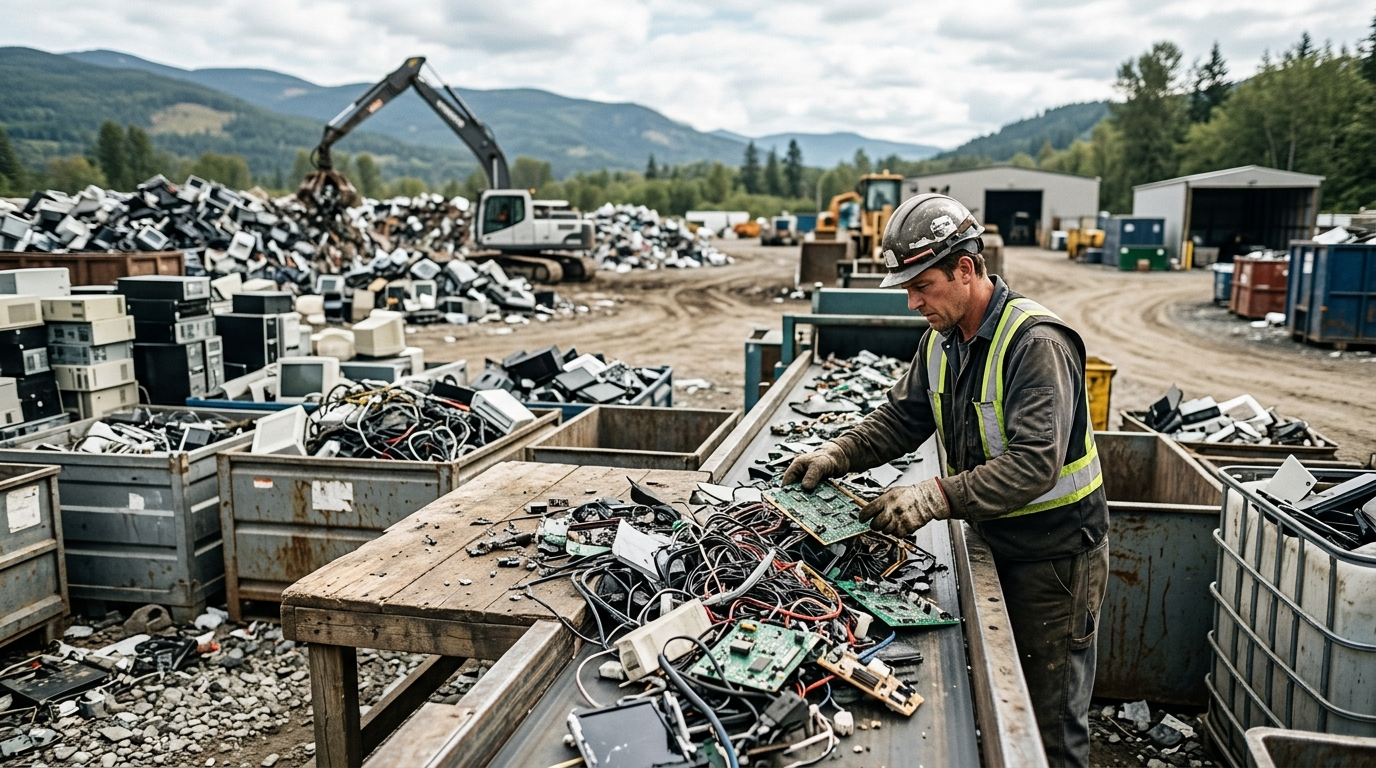
According to SNS Insider's recent report, the Electronic Waste Recycling Market Size is projected to exceed $85.54 billion by 2035. Electronic Waste Recycling Market Size to Exceed $85.54 Billion By 2035 - SNS Insider This prediction highlights the growing importance of sustainable electronics management and highlights the need for more responsible recycling practices worldwide.
Last reviewed by Samantha Holloway on 23 July 2026
What Does This Forecast Mean for E-Waste Management?
This forecast means that there will be a substantial increase in the financial viability of electronic waste recycling, driving investments in infrastructure and technology. With global e-waste projected to reach 62 million tonnes per year by 2024 (UN Global E-Waste Monitor), the market expansion signals an urgent need for better collection, processing, and disposal methods.
According to the UN Global E-Waste Monitor 2024, only 22.3% of e-waste was properly collected and recycled in 2022.
How Does This Affect Electronics Recycling?
The growth indicates that more businesses will enter the recycling sector, increasing competition and driving down costs. This could make recycling services more accessible to consumers and small enterprises, which currently recycle only 22.3% of e-waste globally (UN Global E-Waste Monitor).
What Are the Environmental Impacts of Recycling?
Recycling reduces the need for raw materials and lowers greenhouse gas emissions compared to manufacturing new electronics. For instance, recycling one million smartphones yields around 35kg of gold, 340kg of silver, and 15kg of palladium (United Nations University). These valuable metals can be extracted without depleting natural resources.
How Does Legislation Influence E-Waste Recycling?
Legislation such as the [WEEE Directive](/regulations/weee-directive-eu) in Europe aims to boost e-waste recycling rates by setting collection targets. The directive mandates that member states collect 65% of electronics placed on the market, encouraging better recycling practices and infrastructure development (WEEE Directive EU).
According to the Consumer Technology Association, The average US household has 21 unused electronic devices.
What Are Consumers' Roles in This Market Expansion?
Consumers play a important role by responsibly disposing of their old devices at designated facilities or through certified recyclers. For example, in the U.S., nearly 7 million tonnes of e-waste are generated annually but only about one-third is recycled (US EPA). Increasing consumer awareness and participation can significantly improve recycling rates.
How Can Businesses Benefit from This Market Growth?
Businesses stand to benefit by adopting circular economy principles that extend product lifespans and encourage reuse. Companies like Dell have seen success in take-back programs, which not only reduce waste but also enhance brand reputation among environmentally conscious consumers (Dell Sustainability Report 2023).
What Are the Challenges Ahead for Recycling?
One challenge is ensuring that recycled materials meet quality standards required by manufacturers. At Electronic Waste Recycling Market Size to Exceed $85.54 Billion By 2035 - SNS Insider, additionally, as lithium-ion batteries become more prevalent in electronics, proper recycling methods must be developed to handle their unique hazards and extract valuable metals like cobalt and nickel (Bloomberg NEF Battery Report 2025).
According to the Counterpoint Research, The global refurbished smartphone market was worth $49.3 billion in 2023.
What Can Individuals Do Now?
Individuals can start by checking local regulations for e-waste disposal and using certified recycling services. They should also look into right-to-repair initiatives that allow them to fix their devices rather than replace them, reducing waste generation.
By taking these steps, consumers contribute to the growing trend of sustainable electronics management and help ensure that electronic waste is managed responsibly and efficiently.
Sources
- UN Global E-Waste Monitor 2024
- Consumer Technology Association
- Counterpoint Research