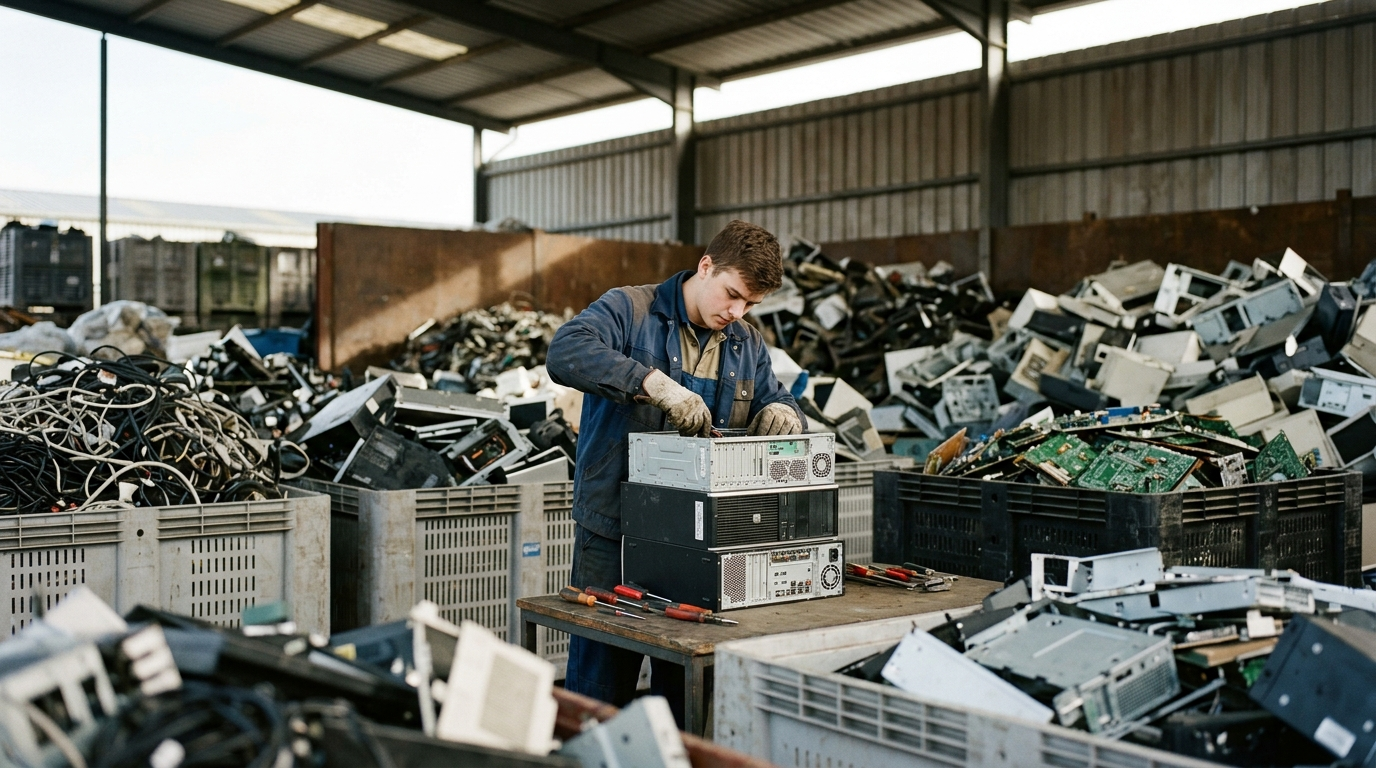
How much e-waste is the world generating in 2026, and how does this impact electronics recycling?
Last reviewed by Samantha Holloway on 07 June 2026
According to Electronic Waste Recycling Market Size, Share and Forecast 2035 - Market Research Future, global electronic waste reached an astounding 62 million tonnes per year as of 2024. This figure highlights a pressing need for more efficient and responsible e-waste management practices globally. With only 22.3% of this waste being formally recycled worldwide, the challenge to improve recycling rates is immense.
The rise in electronic gadgets has led to a dramatic increase in e-waste. For instance, the average smartphone now contains over 60 different elements, making it important to recycle these devices properly to recover valuable materials like gold and silver. A staggering one million phones can contain up to 35 kilograms of gold and 340 kilograms of silver.
According to the BankMyCell depreciation tracker, The average smartphone loses 35-45% of its trade-in value within the first year.
How Does This Affect Electronics Recycling?
The sheer volume of e-waste complicates recycling efforts significantly. For example, the US alone generates approximately 6.92 million tonnes of electronic waste annually, making it one of the largest contributors to global e-waste generation. As more devices become obsolete faster due to planned obsolescence, the challenge for electronics recyclers only grows.
Recycling companies must adapt by investing in new technologies and increasing their processing capacity to handle this surge effectively. This includes implementing better sorting methods and improving material recovery techniques to extract valuable metals from waste streams efficiently. According to Electronic Waste Recycling Market Size, Share and Forecast 2035 - Market Research Future, the market is expected to grow at a compound annual growth rate (CAGR) of 4% through 2035.
According to the UNEP, A single tonne of circuit boards contains 40-800 times more gold than a tonne of ore.
What Are the Legal Implications for E-Waste Management?
Regulations like the EU's WEEE Directive aim to increase e-waste collection and recycling rates. The directive sets targets for member states, such as collecting 65% of electronics placed on the market by weight. Compliance with these regulations is important not just from a legal standpoint but also for environmental sustainability.
For instance, countries that fail to meet their WEEE collection targets may face penalties or fines. In addition, adhering to laws like RoHS (Restriction of Hazardous Substances) ensures that electronic products are free from harmful substances before they enter the waste stream. Such regulations help protect both human health and the environment.
According to the WHO, improper e-waste disposal releases toxic substances including lead, mercury, and cadmium into soil and water.
How Can Consumers Contribute to Responsible E-Waste Recycling?
Consumers play a critical role in reducing e-waste by being more mindful about their device usage and disposal practices. For example, extending product lifespans through repairs rather than replacements can significantly reduce waste generation. In many regions, consumers have rights under the Right to Repair movement, which helps them to fix their own devices or take them to independent repair shops.
educating oneself on proper recycling methods is key. Many communities offer designated e-waste collection days where residents can drop off old electronics safely and responsibly. Consumers should also look for certified recyclers who follow strict environmental standards and are transparent about their practices.
What Should Businesses Do Now?
Businesses need to take proactive steps towards sustainable e-waste management. Implementing an internal policy that encourages recycling and proper disposal of electronic waste is a good start. Companies can also partner with reputable electronics recyclers to ensure compliance with national and international regulations, such as the Basel Convention.
businesses should explore opportunities for product stewardship programs where manufacturers take responsibility for their products throughout their lifecycle, including end-of-life management. This approach not only helps in reducing environmental impacts but also enhances brand reputation among eco-conscious consumers.
, addressing the growing challenge of e-waste requires a collaborative effort from all stakeholders-consumers, businesses, and governments alike. At Electronic Waste Recycling Market Size, Share and Forecast 2035 - Market Research Future, by adopting sustainable practices and supporting policies that promote responsible recycling. We can work towards a cleaner future for our planet. For more information on how to recycle electronics responsibly, check out eCycling Central's guide.
Sources
- BankMyCell depreciation tracker
- UNEP
- WHO