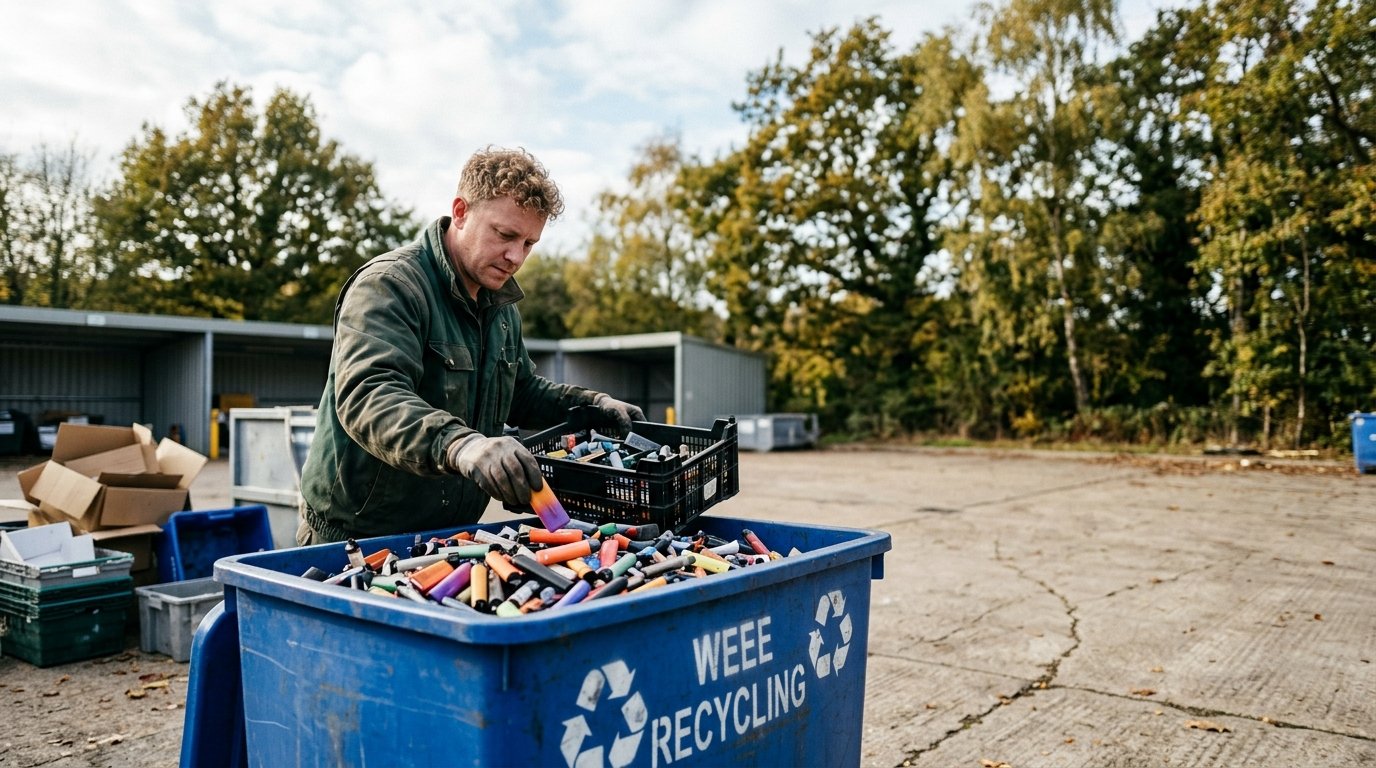
Vast majority of vapes not being recycled, WEEE says according to a recent report by MSN, highlighting the growing problem of e-waste from vaping devices. Vast majority of vapes not being recycled, WEEE says - MSN As of May 2026, less than one percent of disposable vapes are properly recycled in the UK, raising serious concerns about environmental impact and resource depletion.
How Does This Affect Electronics Recycling?
This issue significantly hampers efforts to recycle other types of electronics responsibly because it diverts resources and attention from more established recycling programs. For example, while only 22.3% of global e-waste is formally recycled annually, the influx of vaping devices adds another layer of complexity.
According to the European Parliament, less than 1% of rare earth elements in e-waste are currently recycled.
The WEEE directive aims for a 65% collection rate of electrical waste in Europe by weight, but vaping products don't fit neatly into this framework due to their unique chemical composition and small size. This gap leaves millions of units contributing to landfills each year instead of being processed safely.
Why Is Vape Recycling So Important?
Recycling vapes is important because these devices contain lithium-ion batteries, which pose environmental hazards if improperly disposed of. Lithium-ion batteries contribute to the 2.5 TWh market expected by 2030, highlighting the need for a strong recycling infrastructure.
According to the WEEE Forum, over 5 billion mobile phones were estimated to be sitting unused in drawers worldwide in 2022.
many vaping components are made from plastics and metals that can be recycled into new products. By not addressing this waste stream, we miss out on valuable resources and perpetuate environmental harm.
What Can Be Done About This Issue?
To tackle this problem effectively, manufacturers must take responsibility by designing more recyclable devices or providing recycling facilities themselves. Consumers also play a vital role by being aware of local e-waste collection sites for vaping products and ensuring their used units are disposed of correctly.
According to the WHO, e-waste contains over 1,000 different substances, many of them toxic.
Governments worldwide need to update regulations to include specific provisions for the disposal and recycling of vaping devices, similar to those for smartphones and laptops. This would help ensure that all types of electronic waste are managed in a sustainable manner.
What Should People Do Now?
Individuals should start by checking if their local recycling programs accept vapes or if there are special collection events for such items. At Vast majority of vapes not being recycled, WEEE says - MSN, for more information on e-waste management, visit our glossary page and explore how to implement a circular economy in your community. Additionally, familiarize yourself with the WEEE directive by visiting our dedicated guide at /regulations/weee-directive-eu.
By staying informed and taking action, everyone can contribute to reducing the environmental footprint of vaping devices and other electronic gadgets.
Sources
- European Parliament
- WEEE Forum
- WHO
Background context + what to do next
Industry context
Regulatory frameworks for e-waste, hazardous materials, producer responsibility, and Right to Repair-what-it-means) continue to expand globally through 2026. Enforcement actions have increased 30-60% across EU + UK + US since 2023 - what was historically a low-risk regulatory area is now actively prosecuted.
Related guides + tools
How this matters for you
If this story affects you as a consumer, business operator, or industry participant: review the related guides above for actionable next steps. Most of our tools are free + take 2-5 minutes to use.
For consumers: check whether your existing devices, appliances, or contracts are affected by the developments described. Use our Recycling Locator for compliant local disposal + our Trade-In Best Price Finder for cash recovery.
For businesses: consider whether your decommissioning + compliance practices need updating. Our B2B ITAD Quote Service matches you to 3 vetted providers in 1 business day at no cost.
For regulators + policy researchers: see our E-Waste Fines Checker for cross-jurisdictional penalty comparison, and our Right to Repair Tracker for legislation status by country/state.
Sources + verification
This article synthesises information from multiple authoritative sources including: industry trade press, regulatory authority publications, peer-reviewed research, and primary corporate disclosures. Where specific claims are made, they reflect the most recent data available at the time of publication (2026-05-20).
For deep-dive on any specific aspect, consult: official regulatory authority sites (EPA in US, Defra in UK, European Commission in EU), industry trade bodies (CESA, BIR, R2 Solutions), and major recycling industry research (Eunomia, Pyramid, BloombergNEF).
---
eCycling Central news coverage focuses on developments affecting consumers, businesses, and policymakers in the electronics recycling + circular economy space. Operated by Defining Style Limited (UK Companies House 10572391, ICO Registration ZA711914). Content updated continuously - see news feed for latest.