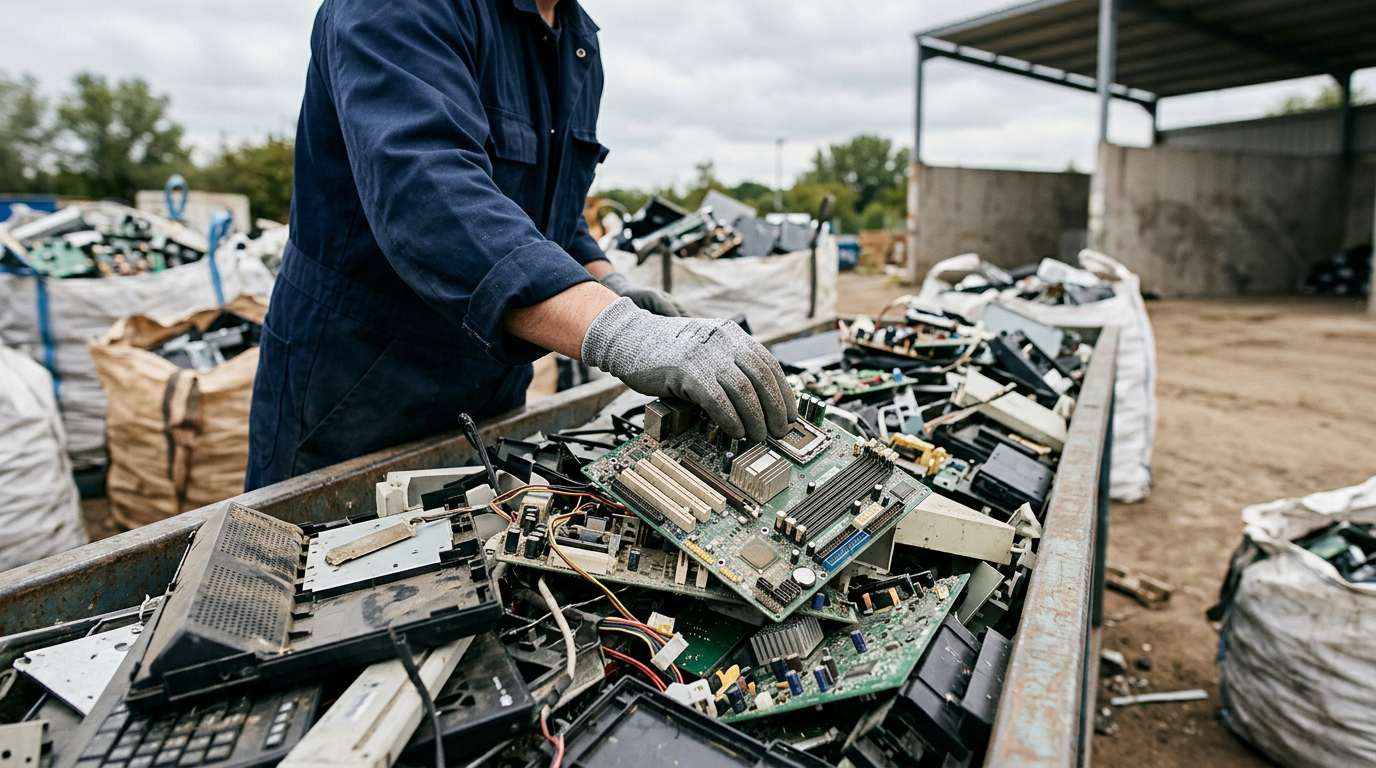
Reworld recently launched a free e-waste recovery program, which is significant for those involved in electronics recycling or concerned with managing e-waste responsibly. tech sustainability This initiative offers an accessible solution to address the growing global problem of electronic waste.
Last reviewed by Samantha Holloway on 25 July 2026
What Is Reworld's Free E-Waste Recovery Program?
Reworld's free e-waste recovery program allows individuals and businesses to safely dispose of their outdated tech gadgets without incurring costs. By providing this service, Reworld aims to increase recycling rates and reduce environmental pollution caused by improperly discarded electronics. The program accepts a wide range of devices including smartphones, laptops, televisions, and other electronic equipment.
Tech sustainability initiatives like Reworld's play a important role in combating the estimated 62 million tonnes of global e-waste generated annually (UN Global E-Waste Monitor 2024). Only about one-fifth (22.3%) of this waste is formally recycled worldwide, highlighting the need for more accessible recycling options.
According to the WHO, e-waste contains over 1,000 different substances, many of them toxic.
How Does This Affect Electronics Recycling?
tech sustainability's program significantly impacts electronics recycling by making it easier and more cost-effective for individuals to recycle their old devices. By removing financial barriers, Reworld encourages a broader base of people to participate in e-waste management practices. As a result, this can lead to higher volumes of collected materials that would otherwise end up in landfills or illegal dumpsites.
For example, recycling just one million smartphones could yield 35 kilograms of gold and 340 kilograms of silver (UN Global E-Waste Monitor 2024). These valuable resources aren't only recoverable but also important for maintaining supply chains without the need to extract more raw materials from the earth. This initiative thus supports both environmental protection and resource efficiency.
What Are the Environmental Benefits?
The environmental benefits of such programs include reduced greenhouse gas emissions, decreased soil and water contamination from toxic substances found in electronics, and lessened reliance on virgin materials for manufacturing new products. By recovering valuable metals and plastics through recycling, tech sustainability initiatives like Reworld's help minimize the carbon footprint associated with mining and production processes.
these efforts align with broader goals set by regulations such as the EU WEEE Directive (Waste Electrical and Electronic Equipment), which mandates a 65% collection target of electronics placed on the market. Such directives highlight the importance of recycling programs in meeting legal requirements while also promoting circular economy principles.
How Can Individuals Participate?
Individuals interested in participating can visit Reworld's website to find their nearest drop-off location or schedule a pickup for larger items like televisions and refrigerators. By doing so, they contribute directly to reducing electronic waste and ensuring that valuable materials are recovered rather than lost through improper disposal methods.
To further support tech sustainability efforts, consider learning more about the right-to-repair movement (right-to-repair) and urban mining practices (urban mining). These approaches help consumers to repair their devices instead of replacing them, thereby extending product lifespans and reducing waste generation. Additionally, understanding how different components like lithium batteries (lithium battery) are recycled can provide insight into the broader impacts of recycling initiatives.
According to the US EPA, recycling one million laptops saves the energy equivalent of electricity used by 3,657 us homes in a year.
In summary, Reworld's free e-waste recovery program represents a significant step towards more responsible tech sustainability practices. By participating in such programs and staying informed about related regulations and trends, individuals play an active role in protecting our environment and conserving valuable resources for future generations.
Visit eCycling Central to learn more about e-waste management best practices, including safe handling of batteries (battery recycling), solar panel disposal (solar panel recycling), and heat pump recycling.
Sources
- WHO
- US EPA
- UN Global E-Waste Monitor 2024