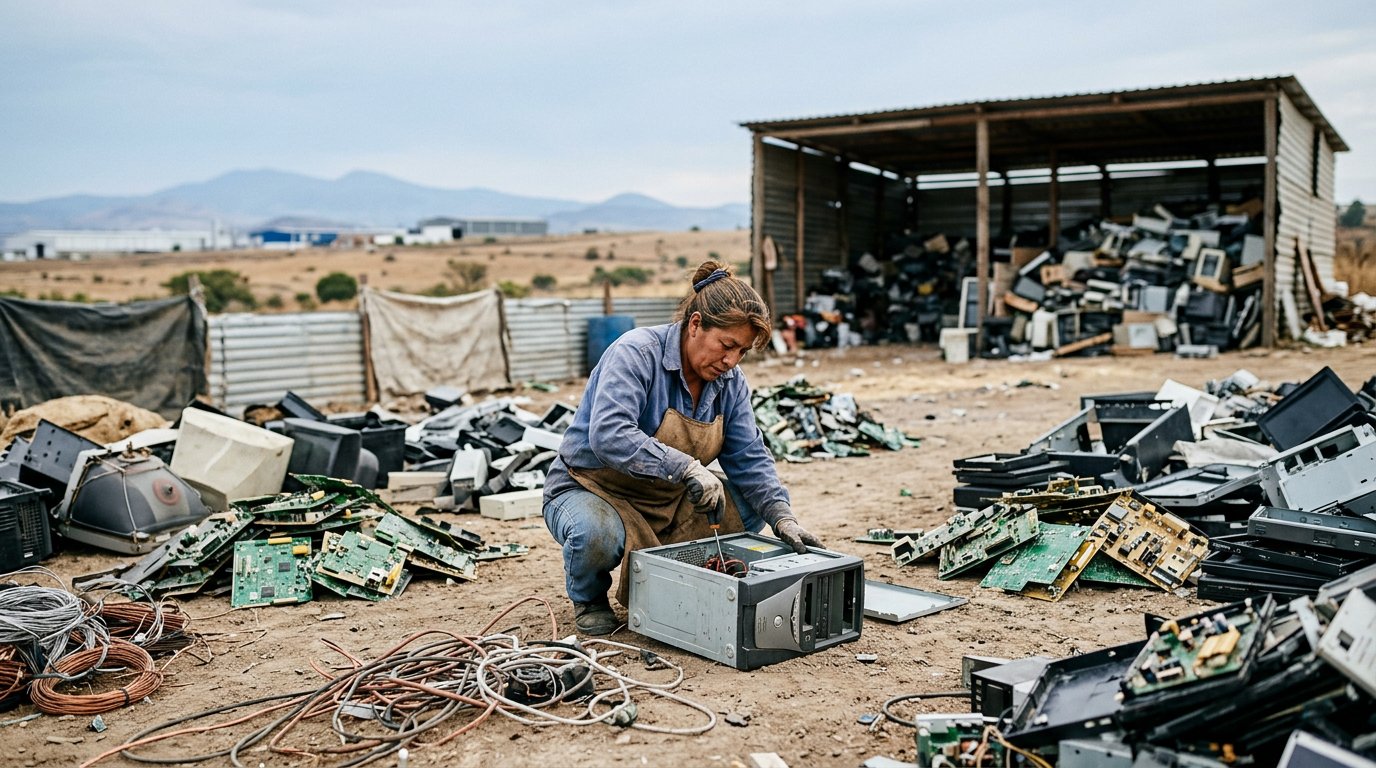
In May 2026, Mexico Business News reported that despite efforts to push a circular economy model in Mexico, the country still faces significant challenges managing e-waste. Mexico Faces Waste Management Gap Despite Circular Economy Push - Mexico Business News This issue is important for electronics recycling because it highlights the ongoing struggle between sustainable practices and practical implementation.
How Does This Affect Electronics Recycling?
Mexico's waste management gap affects electronic recyclers by creating uncertainty about compliance standards and disposal methods. With only 22.3% of global e-waste formally recycled, Mexico's lack of strong infrastructure can lead to informal recycling practices that harm the environment.
The circular economy in Mexico aims to reduce waste and resource use through recycling and reusing materials from old electronics. However, inadequate facilities mean much e-waste ends up in landfills or is exported illegally. This undermines efforts by responsible recyclers who follow strict guidelines like those set out in the Basel Convention on Hazardous Waste.
According to the Shift Project, manufacturing a new smartphone produces 50-80kg of co2 equivalent.
Mexico's circular economy push includes incentives for manufacturers to take back their products at end-of-life and recycle components responsibly. Yet, enforcement and infrastructure lag behind these ambitious goals. For instance, the government has plans to increase recycling rates but lacks the immediate capacity to process 62 million tonnes of annual global e-waste effectively.
What Are the Challenges Faced by Mexico in Managing E-Waste?
Mexico faces challenges such as insufficient funding for waste management systems and a lack of public awareness about proper disposal methods. The country generates millions of tonnes of
electronic waste annually, yet lacks the necessary recycling capacity to handle it sustainably.
In 2026, Mexico's goal is to increase formal e-waste collection by 30% from current levels. However, achieving this target requires significant investment in technology and training for workers in the informal sector who often lack safety equipment and knowledge of proper disposal techniques.
According to the World Economic Forum, e-waste is the fastest-growing waste stream globally.
How Can Consumers and Businesses Support Sustainable Electronics Recycling?
Consumers and businesses can support sustainable electronics recycling by participating in take-back programs offered by manufacturers and retailers. Additionally, they should consider repairing or refurbishing devices instead of discarding them, which aligns with the principles of a circular economy.
For example, consumers can use repair guides from websites like iFixit to extend product life. Businesses can also explore leasing models for electronics rather than purchasing new equipment frequently.
What Steps Should Mexico Take to Bridge Its Waste Management Gap?
To bridge its waste management gap, Mexico should invest in building more recycling facilities and improving collection networks. Implementing stricter regulations on e-waste disposal is important as well. By doing so, Mexico can move closer to meeting the EU's
WEEE Directive goal of 65% collection rate for electronics.
Investment in education campaigns about proper waste disposal also plays a key role. Public awareness helps reduce illegal dumping and ensures that more e-waste reaches formal recycling channels where valuable materials like gold (1 million phones contain 35kg) can be recovered safely.
What Should Recyclers Do Now?
Recyclers should stay informed about regulatory changes in Mexico and other markets to ensure compliance with evolving standards. Engaging with local communities and businesses through outreach programs can also help build a more sustainable recycling ecosystem.
By partnering with international organizations focused on best practices for e-waste management, recyclers can enhance their operations and contribute positively to global efforts towards a circular economy. For instance, they could look into the WEEE Directive (EU) guidelines or engage with initiatives promoted by the Basel Convention.
According to the Apple Environmental Report 2024, apple recovered over 1 tonne of gold from recycled devices in 2023.
For practical guidance on electronics recycling and waste management, visit our glossary definitions of e-waste, [urban mining](/glossary/urban-mining), and related topics. At Mexico Faces Waste Management Gap Despite Circular Economy Push - Mexico Business News, additionally, learn more about sustainable practices in our guides on [right to repair](/guides/right-to-repair-what-it-means) and the importance of adhering to regulations like RoHS (Restriction of Hazardous Substances).
By taking proactive steps now, stakeholders can work together towards a future where electronic waste is managed responsibly and sustainably.
Sources
- Shift Project
- World Economic Forum
- Apple Environmental Report 2024