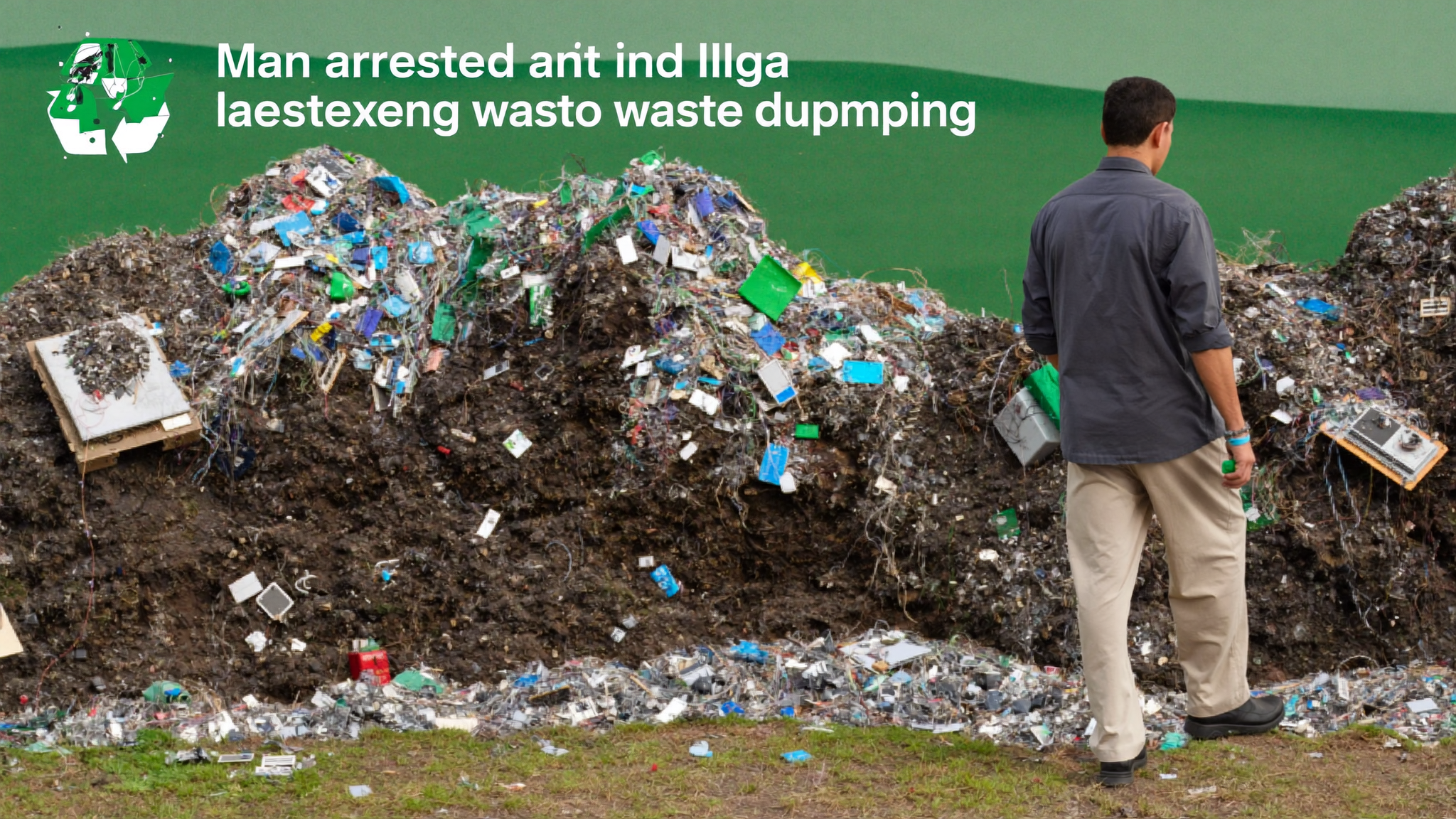
A man was arrested in connection with illegal waste dumping, highlighting the UK Environment Agency's commitment to tackling waste crime and protecting public health and the environment. Man arrested in connection with illegal waste dumping This arrest highlights the importance of proper e-waste disposal and recycling.
What Happened?
The Environment Agency arrested a man in May 2026 for illegally dumping hazardous waste. The agency recovered 15 tonnes of electronic waste, including old TVs, computers, and mobile phones. This action shows that authorities are taking decisive steps to enforce regulations against improper e-waste disposal.
According to the UN Global E-Waste Monitor 2024, The value of raw materials in global e-waste was estimated at $91 billion in 2022.
Why Does It Matter?
This arrest matters because it sends a clear message about the consequences of illegal e-waste dumping. The UK Environment Agency's efforts reflect broader global concerns over proper electronics recycling. According to the UN Global E-Waste Monitor 2024, only 22.3% of e-waste is formally recycled worldwide each year, leaving much room for improvement in how we manage our waste.
How Does This Affect Electronics Recycling?
The arrest serves as a reminder that proper disposal and recycling are important to avoid environmental harm from hazardous materials like lead and mercury found in electronics. In the US alone, 6.92 million tonnes of e-waste are generated annually, emphasizing the scale of the problem and the need for better practices.
What Are the Legal Implications?
Legally, this arrest highlights the strict regulations governing waste disposal under laws like the [WEEE Directive](/regulations/weee-directive-eu) in Europe and similar regulations elsewhere. The UK Environment Agency's actions demonstrate a commitment to enforcing these rules rigorously, ensuring that companies and individuals face significant penalties if they violate them.
According to the Shift Project, manufacturing a new smartphone produces 50-80kg of co2 equivalent.
How Can I Ensure My Electronics Are Recycled Properly?
To ensure your electronics are recycled responsibly, look for certified e-waste recyclers who comply with environmental regulations such as the WEEE Directive or RoHS. These organizations follow strict guidelines to safely manage hazardous materials and extract valuable resources from discarded devices.
What Should Businesses Do Now?
Businesses should implement strong waste management policies that align with regulatory requirements and industry best practices. At Man arrested in connection with illegal waste dumping, this includes setting up collection points for e-waste, educating employees on proper disposal methods, and partnering with certified recycling facilities. According to the WEEE Directive, EU member states must achieve a 65% collection rate of electrical and electronic equipment placed on the market.
What Can Consumers Do?
Consumers can contribute by choosing products from manufacturers committed to sustainable practices, such as adhering to the principles of a circular economy or supporting right-to-repair initiatives. Additionally, consumers should check their local recycling facilities for e-waste drop-off points or use services like those listed on ecyclingcentral.com.
According to the World Economic Forum, e-waste is the fastest-growing waste stream globally.
By taking these steps, both businesses and individuals can help reduce environmental damage from improperly disposed electronics and contribute to more sustainable practices in the tech industry.
Sources
- UN Global E-Waste Monitor 2024
- Shift Project
- World Economic Forum