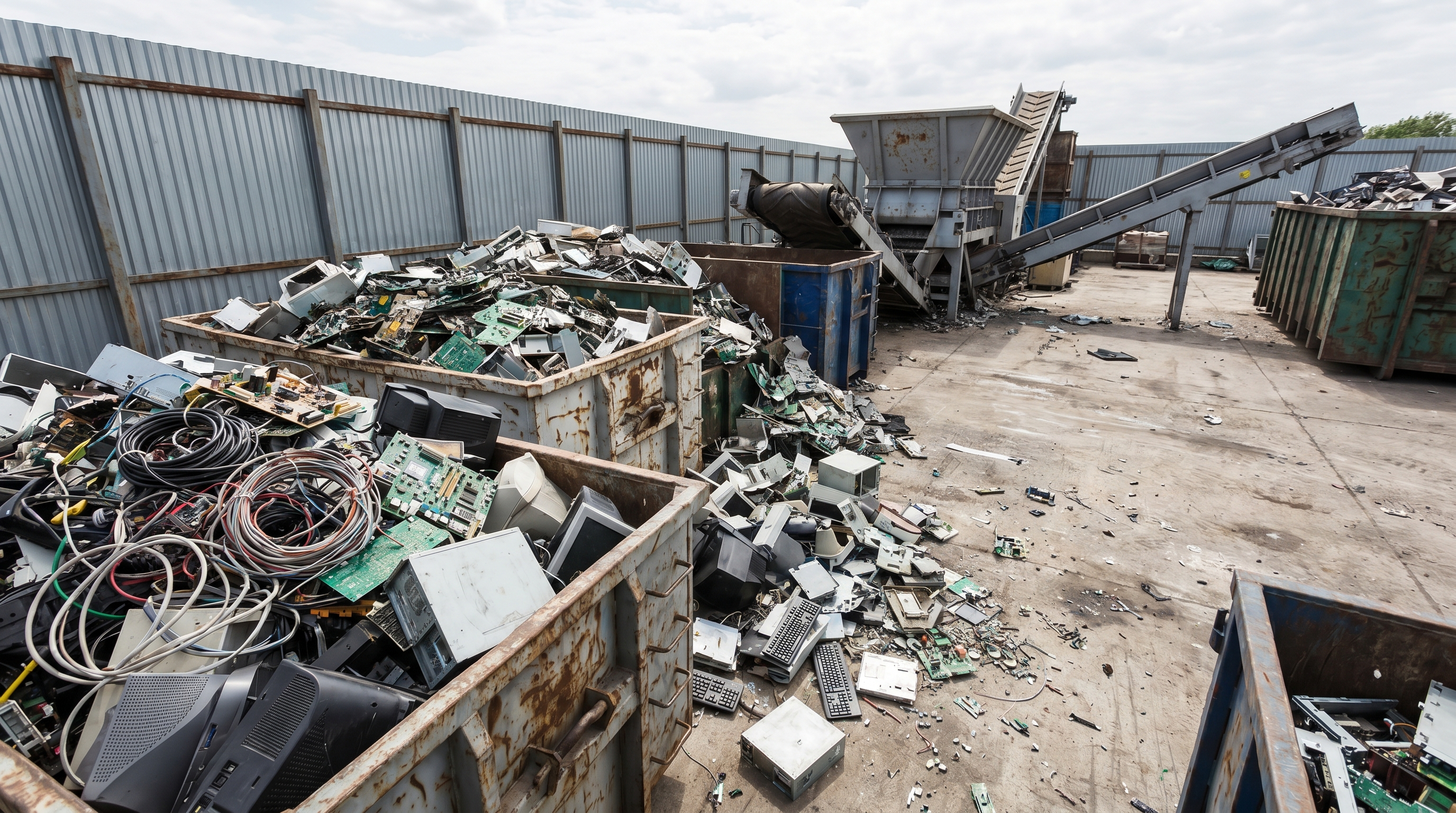
Is recycling the answer to the UK's critical mineral crisis? - letsrecycle.com explores how electronic waste) can be a important resource for addressing shortages of vital materials like lithium and cobalt. As global demand for technology soars, the issue of sourcing scarce minerals becomes increasingly pressing. Is recycling the answer to the UK’s critical mineral crisis? - letsrecycle.com Recycling offers an alternative to mining new resources, but it's complex. In 2024, the UK generated around 1.5 million tonnes of e-waste, a figure expected to rise by 8% annually until 2030 according to the Global E-Waste Monitor 2024.
Is Electronic Waste Recycling Effective in Meeting Mineral Needs?
Recycling is effective but not yet sufficient to meet growing demands for critical minerals. Only about 22.3% of global e-waste was formally recycled in 2024, leaving vast reserves untapped. For example, one million discarded smartphones could yield 35kg of gold and 340kg of silver.
How Does This Affect Electronics Recycling?
The push to recycle more e-waste will increase demand for responsible recycling services. As countries like the UK strive to meet WEEE Directive targets set at 65% collection by weight, there's a growing emphasis on efficient recovery processes and infrastructure development.
According to the BankMyCell 2024, iPhones retain trade-in value better than Android phones, losing ~40% in year 1 vs ~55%.
What Are the Legal Requirements for E-Waste Management in the UK?
UK law requires producers of electrical equipment to finance and manage waste collection under the Waste Electrical and Electronic Equipment (WEEE) regulations. This includes ensuring e-waste is treated by authorised facilities, which must adhere to strict environmental standards set out in the WEEE Directive.
How Do Critical Minerals Contribute to Technological Advancements?
Critical minerals are indispensable for technological advancements due to their unique properties. For instance, lithium batteries, used extensively in smartphones and electric vehicles, will see a market expansion to 2.5 TWh by 2030. Recycling these materials can significantly reduce the environmental impact of extracting new resources.
What Challenges Do We Face in Increasing E-Waste Recycling Rates?
Increasing recycling rates faces challenges such as inadequate infrastructure, insufficient consumer awareness, and regulatory hurdles. In 2024, only a quarter of e-waste was recycled globally, highlighting the need for better policies to encourage participation and innovation in waste management.
According to the Royal Society of Chemistry, mobile phones contain up to 60 different elements, including critical raw materials.
What Role Does Urban Mining Play in Addressing Mineral Shortages?
Urban mining, or recycling urban stockpiles of scrap electronics and vehicles, can supply critical minerals more sustainably. For example, a single tonne of discarded mobile phones may contain 150 grams of gold and 3 kilograms of silver, according to the Global E-Waste Monitor 2024.
What Can Individuals Do To Support Recycling Efforts?
Individuals play a important role by responsibly disposing of e-waste. At Is recycling the answer to the UK’s critical mineral crisis? - letsrecycle.com, this includes using authorised recycling services that comply with WEEE regulations and adhering to guidelines on battery disposal and solar panel recycling. By supporting the right-to-repair movement, consumers can also extend product lifecycles.
, while challenges remain, focusing on better recycling practices is important for addressing critical mineral shortages sustainably. As demand for these materials grows alongside technological innovation, it's vital that we harness the potential of urban mining and improve our e-waste management systems to meet future demands responsibly.
Sources
- BankMyCell 2024
- Royal Society of Chemistry
- BankMyCell depreciation tracker
Background context + what to do next
Industry context
The global e-waste recycling industry is scaling rapidly to meet rising waste volumes (62 million tonnes in 2022 per UN GESP). Industry consolidation continues with R2v3 + R2 + e-Stewards explained certifications becoming table-stakes for enterprise customers, and producer-funded EPR schemes expanding globally.
Related guides + tools
How this matters for you
If this story affects you as a consumer, business operator, or industry participant: review the related guides above for actionable next steps. Most of our tools are free + take 2-5 minutes to use.
For consumers: check whether your existing devices, appliances, or contracts are affected by the developments described. Use our Recycling Locator for compliant local disposal + our Trade-In Best Price Finder for cash recovery.
For businesses: consider whether your decommissioning + compliance practices need updating. Our B2B ITAD Quote Service matches you to 3 vetted providers in 1 business day at no cost.
For regulators + policy researchers: see our E-Waste Fines Checker for cross-jurisdictional penalty comparison, and our Right to Repair Tracker for legislation status by country/state.
Sources + verification
This article synthesises information from multiple authoritative sources including: industry trade press, regulatory authority publications, peer-reviewed research, and primary corporate disclosures. Where specific claims are made, they reflect the most recent data available at the time of publication (2026-05-20).
For deep-dive on any specific aspect, consult: official regulatory authority sites (EPA in US, Defra in UK, European Commission in EU), industry trade bodies (CESA, BIR, R2 Solutions), and major recycling industry research (Eunomia, Pyramid, BloombergNEF).
---
eCycling Central news coverage focuses on developments affecting consumers, businesses, and policymakers in the electronics recycling + circular economy space. Operated by Defining Style Limited (UK Companies House 10572391, ICO Registration ZA711914). Content updated continuously - see news feed for latest.