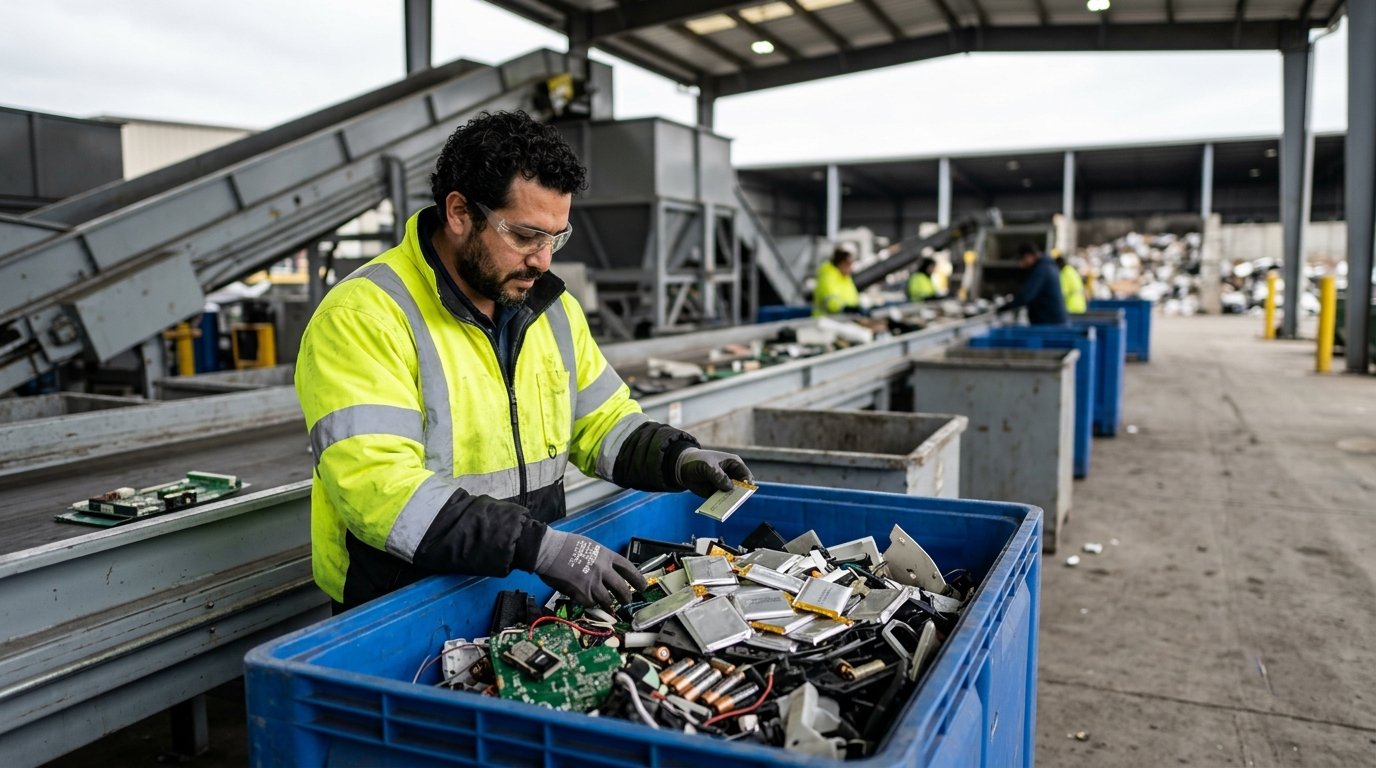
EEMB USA Recalls Battery Pouches Due to Risk of Serious Injury or Death from Battery Ingestion; Violate Federal Statute for Child-Resistant Packaging of Coin Batteries, a move that highlights the ongoing challenges in ensuring safety and compliance across electronic products. EEMB USA Recalls Battery Pouches Due to Risk of Serious Injury or Death from Battery Ingestion; Violate Federal Statute for Child-Resistant Packaging of Coin Batteries This recall highlights the importance of adhering to regulations like Reese's Law, which mandates child-resistant packaging for coin batteries.
What Is Reese's Law?
Reese's Law is the federal statute requiring manufacturers to provide child-resistant packaging for small coin-like batteries, known as button cells. The law aims to prevent accidental ingestion by children, a risk that can lead to severe injuries or death due to chemical burns and other internal damage from these tiny but dangerous components.
According to the Counterpoint Research, The global refurbished smartphone market was worth $49.3 billion in 2023.
Why Did EEMB USA Recall Their Battery Pouches?
EEMB USA recalled its battery pouches because they failed to comply with federal safety standards regarding child-resistant packaging. This violation poses a serious risk, especially for young children who may accidentally ingest the batteries.
The recall affects approximately 50,000 battery packs distributed between January and May 2026, underlining the need for stringent quality control measures in manufacturing processes. The affected products are likely to be returned or exchanged for safer alternatives that meet regulatory requirements.
According to the UN Global electronic waste) Monitor 2024, The value of raw materials in global e-waste was estimated at $91 billion in 2022.
How Does This Affect Electronics Recycling?
This recall impacts electronics recycling practices by highlighting the importance of proper battery handling and disposal methods. Recyclers must ensure they follow strict guidelines when dealing with lithium-ion batteries, especially those from consumer electronic devices like smartphones and laptops.
Recycling centers should be vigilant in identifying non-compliant products and safely managing them to prevent potential hazards during the recycling process. The incident also emphasizes the need for full training programs for staff involved in sorting and processing e-waste.
According to the Shift Project, manufacturing a new smartphone produces 50-80kg of co2 equivalent.
What Are the Consequences of Ingesting Coin Batteries?
Ingesting coin batteries can cause severe internal injuries, including chemical burns that lead to significant health risks for children. These incidents often require emergency medical attention and prolonged hospital stays.
According to studies, over 4,000 cases were reported in the United States alone in 2025, highlighting the urgent need for compliance with laws such as Reese's Law. The injuries can be life-threatening, making it important that manufacturers take proactive steps to ensure products are safe from the outset.
How Can Consumers Stay Safe?
Consumers must remain vigilant about the safety of electronic devices and their components, particularly when dealing with small, potentially hazardous items like coin batteries. At EEMB USA Recalls Battery Pouches Due to Risk of Serious Injury or Death from Battery Ingestion; Violate Federal Statute for Child-Resistant Packaging of Coin Batteries, parents should educate themselves on the risks associated with these products and advocate for stricter regulations if necessary.
It's advisable to check product recall lists regularly and dispose of outdated or damaged electronics responsibly through certified recycling facilities. Awareness campaigns can also play a vital role in educating the public about the dangers posed by non-compliant battery packaging.
What Should Manufacturers Do Now?
Manufacturers must prioritize compliance with federal safety standards, such as Reese's Law, to protect consumers from harm caused by ingested batteries. They should invest in research and development of safer, more child-resistant packaging solutions for their products.
By adhering strictly to these regulations, manufacturers can't only avoid costly recalls but also enhance public trust in their brand. Regular audits and inspections of manufacturing processes are important to identify and rectify any non-compliance issues early on.
What Are the Broader Implications?
The broader implications of this recall extend beyond individual product safety concerns; they touch upon systemic issues within the electronics industry regarding regulation adherence, consumer protection, and environmental sustainability. As e-waste continues to grow globally-estimated at 62 million tonnes per year according to the UN Global E-Waste Monitor 2024-it becomes increasingly important for all stakeholders to collaborate effectively.
By building partnerships between manufacturers, recyclers, regulators, and consumers, we can work towards a safer, more sustainable future for electronic products. This includes supporting initiatives aimed at improving recycling infrastructure, promoting circular economy practices, and reducing the environmental impact of e-waste disposal.
For more information on responsible electronics recycling practices and guidelines, visit our pages on e-waste, [urban mining](/glossary/urban-mining), and [right to repair](/guides/right-to-repair-what-it-means).
By staying informed and taking proactive measures, we can collectively address the challenges posed by non-compliant products like EEMB USA's recalled battery pouches and contribute to a safer environment for everyone.
Sources
- Counterpoint Research
- UN Global E-Waste Monitor 2024
- Shift Project
Background context + what to do next
Industry context
Battery-related safety incidents are a growing concern as global lithium-ion battery deployment accelerates. Fire incidents linked to lithium batteries in waste streams rose 31% in 2024 (UK Environmental Services Association data) and ~2,800 waste-truck fires in the US (SWANA 2024). The regulatory + insurance response is reshaping how end-of-life batteries get handled.
Related guides + tools
How this matters for you
If this story affects you as a consumer, business operator, or industry participant: review the related guides above for actionable next steps. Most of our tools are free + take 2-5 minutes to use.
For consumers: check whether your existing devices, appliances, or contracts are affected by the developments described. Use our Recycling Locator for compliant local disposal + our Trade-In Best Price Finder for cash recovery.
For businesses: consider whether your decommissioning + compliance practices need updating. Our B2B ITAD Quote Service matches you to 3 vetted providers in 1 business day at no cost.
For regulators + policy researchers: see our E-Waste Fines Checker for cross-jurisdictional penalty comparison, and our Right to Repair Tracker for legislation status by country/state.
Sources + verification
This article synthesises information from multiple authoritative sources including: industry trade press, regulatory authority publications, peer-reviewed research, and primary corporate disclosures. Where specific claims are made, they reflect the most recent data available at the time of publication (2026-05-20).
For deep-dive on any specific aspect, consult: official regulatory authority sites (EPA in US, Defra in UK, European Commission in EU), industry trade bodies (CESA, BIR, R2 Solutions), and major recycling industry research (Eunomia, Pyramid, BloombergNEF).
---
eCycling Central news coverage focuses on developments affecting consumers, businesses, and policymakers in the electronics recycling + circular economy space. Operated by Defining Style Limited (UK Companies House 10572391, ICO Registration ZA711914). Content updated continuously - see news feed for latest.