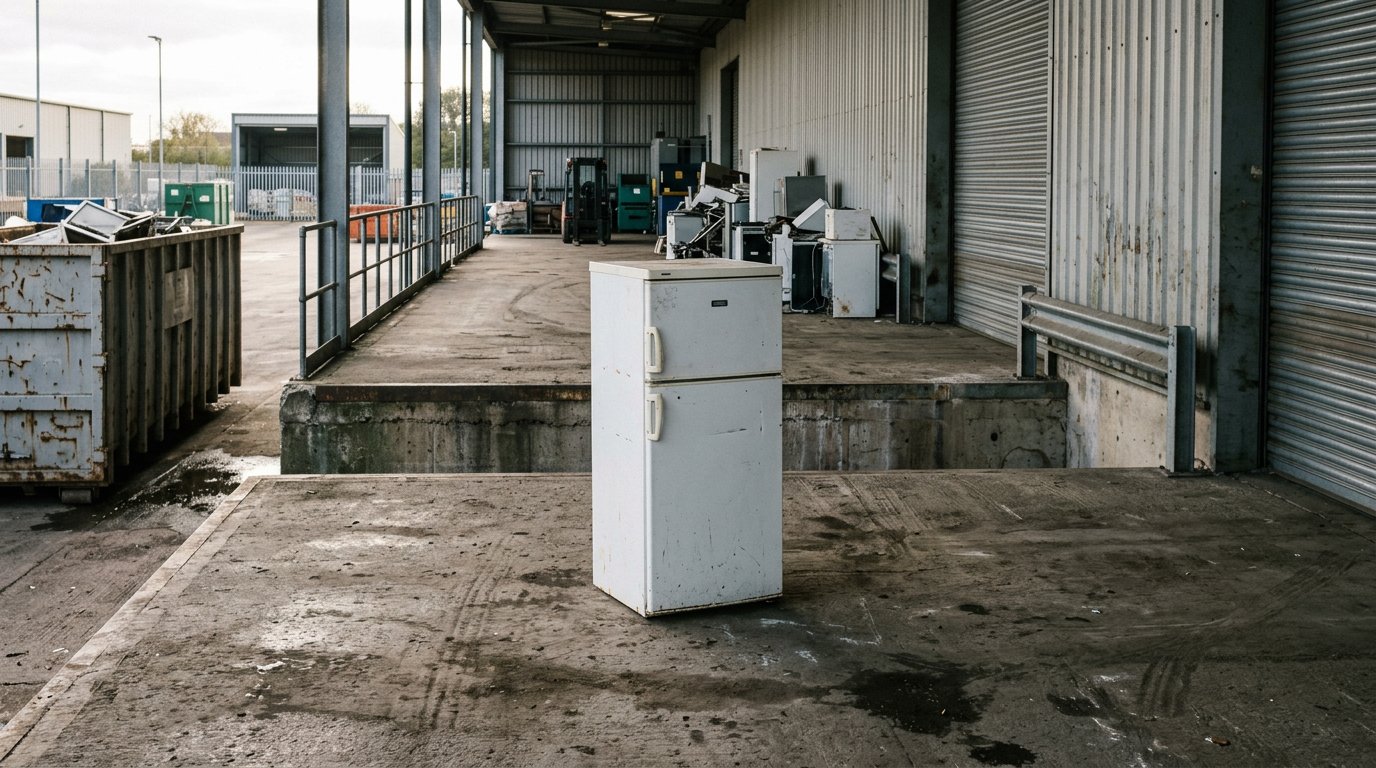
How to Recycle a Zanussi Domestic Refrigerator (2026) is essential knowledge for any homeowner looking to responsibly dispose of an outdated appliance. This guide explains the process required by F-Gas regulations, ensuring that hazardous materials are handled safely and sustainably.
The Zanussi Domestic refrigerator (2026) uses R600a (isobutane), a refrigerant with a charge of 30-65g. Unlike older models, which used R134a (HFC) before 2015, R600a has a lower global warming potential of just 3, making it an environmentally friendlier choice despite the need for proper recycling procedures.
take-back:** when buying a replacement, ask the retailer about old-for-new collection. UK retailers like Currys, John Lewis, and AO are obliged under WEEE to take an old unit when delivering a new one
- Local-authority bulky-waste collection: most UK councils, US municipalities, and EU local authorities run bulky-waste collection that includes white goods - check whether yours requires a booking and whether there is a fee
What it costs
Typical disposal cost for a Zanussi domestic refrigerator runs $30-80 collection + handling. Variation comes from:
- Whether it is a take-back-with-purchase (often free)
- Whether the local authority charges per collection (£0-£50 in UK, $20-$80 in US)
- Whether the unit needs special handling (very large commercial fridges or units with damaged cabinets cost more)
Material recovery
After refrigerant capture, a Zanussi domestic refrigerator is broken down into:
- Steel cabinet (60-80% by weight) - melted and reused
- Aluminium evaporator and condenser coils (5-12%)
- Copper tubing (2-5%) - high recovery value at LME spot prices
- ABS / polystyrene insulation foam - typically 5-15%, may contain blowing agents requiring controlled disposal
- Plastic interior parts - mixed-grade recycled where possible
A typical 200L domestic fridge contains roughly 40 kg of recoverable steel, 3 kg of aluminium, and 1.2 kg of copper.
Sources
- Zanussi sustainability page:
- EU F-Gas Regulation 517/2014
- UK F-Gas Regulations 2015 (SI 2015/310)
- US AIM Act 2020 (HFC phase-down)
- IPCC Sixth Assessment Report (AR6) - GWP coefficients
- F-Gas certified handler required for refrigerant capture; landfill disposal banned under WEEE Directive (EU) and most US states
Frequently Asked Questions
Can I put a Zanussi domestic refrigerator in my regular bin?
No. Zanussi units contain refrigerant (R600a (isobutane) for modern models, R134a (HFC) for older units) which must be captured by an F-Gas certified handler before the cabinet is broken down. Placing the unit in regular waste is a regulatory offence in the EU, UK, and US states with WEEE-equivalent laws.
Does Zanussi offer free recycling?
Zanussi runs a sustainability and take-back programme - see [https://www.zanussi.co.uk/sustainability/](https://www.zanussi.co.uk/sustainability/). The programme details (free drop-off, paid collection, retailer-only) vary by country. When buying a replacement, the simplest route is to ask the retailer about old-for-new collection.
What refrigerant does my Zanussi domestic refrigerator use?
Most Zanussi domestic refrigerators manufactured after 2018 use R600a (isobutane) (GWP 3). Older units (pre-2015) use R134a (HFC) (GWP 1430). The exact refrigerant type is printed on the data plate on the back of the unit alongside the model number.
How much does it cost to dispose of a Zanussi domestic refrigerator?
Typical cost is $30-80 collection + handling. The cheapest route is take-back with purchase of a replacement, which is often free. Standalone disposal through a council booking ranges from no charge in some jurisdictions to £50 / $80 in others.