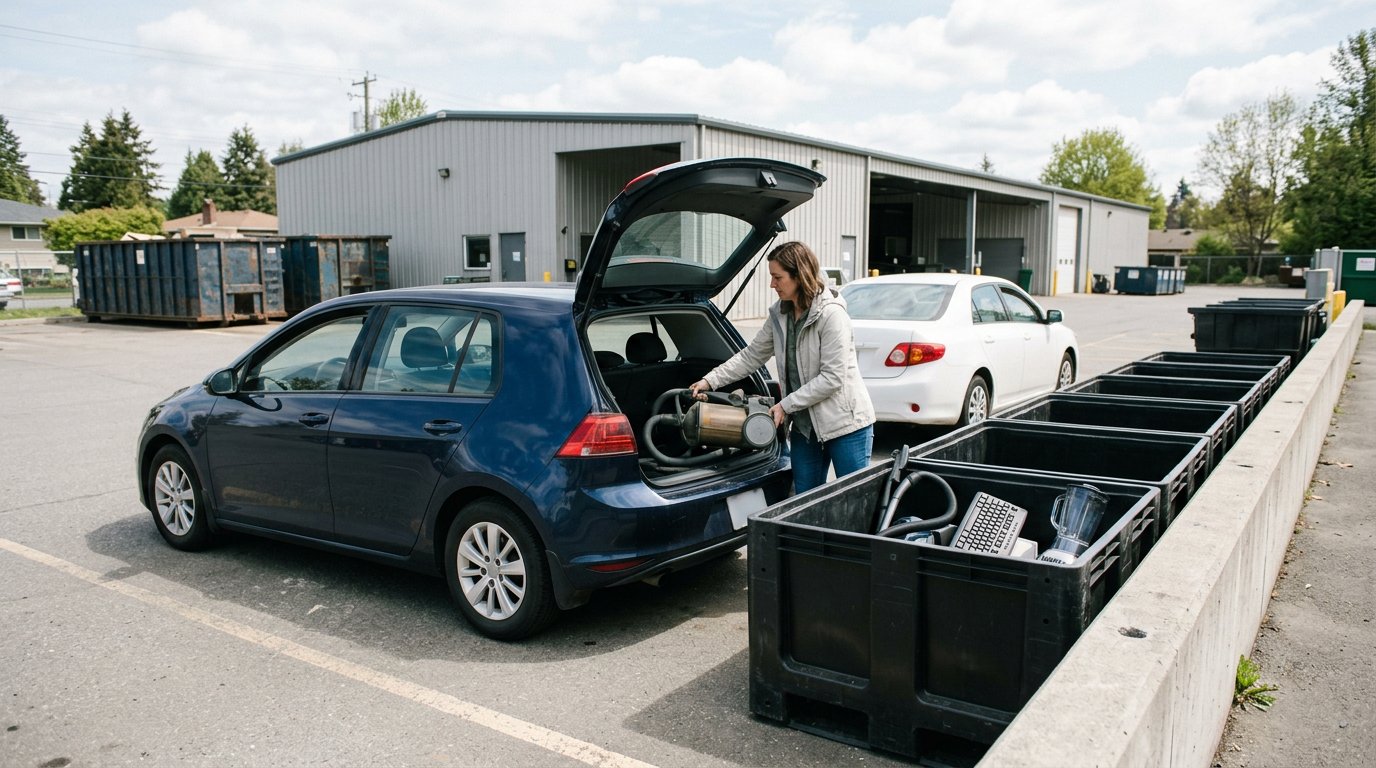
A vacuum cleaner is small electrical waste, which means it has a free disposal route almost everywhere and should never go in a household bin. Cordless models need one extra step first, because the battery has to come out.
Where to take an old vacuum
A municipal electrical recycling point. Every civic amenity site takes small appliances free. This is the simplest route for a corded machine.
Brand take-back. Several vacuum manufacturers operate their own recycling or trade-in schemes, particularly on cordless ranges, and some offer a discount against a new machine. Check the manufacturer's site before assuming there is nothing.
A scrap metal dealer, for older machines with a metal body. Most modern vacuums are largely plastic and are worth little as scrap.
Donation or resale, if it works. A vacuum that has lost suction is very often a blocked hose, a full filter or a split seal rather than a dead motor. Charities take working machines and there is a healthy secondhand market for the better brands.
Cordless models: remove the battery first
A lithium battery must not go through a general waste or scrap stream, because crushed cells start fires and they do so regularly in collection vehicles and sorting halls. Take the battery out and put it through a battery recycling point, then recycle the body as electrical waste. If the battery is swollen, hot or damaged, say so when you hand it over rather than posting it or putting it in a bin.
What it costs
| Route | Typical cost |
|---|
| Municipal electrical recycling point | Free |
| Brand take-back or trade-in | Free, sometimes a discount |
| Battery recycling point | Free |
| Junk removal service | Highest, priced per load |
Before you replace it
Three faults account for most vacuums that get thrown away: a blockage in the hose or floor head, a filter that has never been washed, and a perished seal letting air bypass the suction path. All three are cheap to fix and take minutes to check. Motor failure is much less common than it is assumed to be.
Related guides
Frequently Asked Questions
Where can I dispose of a vacuum for free near me?
Most US cities offer free vacuum disposal through bulky-waste pickup days (schedule via your city's 311 line). Best Buy, Home Depot and Lowe's also accept many appliances free, especially with a replacement purchase.
How much does vacuum disposal cost?
Free with most retailer take-back programs and municipal bulky-waste pickup. Standalone services run $40-$120. Manufacturer mail-back is usually free with a prepaid shipping label.
Will the city pick up my old vacuum?
Yes — every US city operates at least quarterly bulky-waste pickup that accepts appliances. Schedule via your city's 311 line. Most are free; some charge $25 for items containing refrigerant or hazardous materials.
Can I donate an old vacuum?
Yes if it's working. Habitat for Humanity ReStore, Goodwill, Salvation Army and local shelters accept working appliances. Donations are tax-deductible if you itemise. Get a receipt at drop-off.
Is it legal to throw a vacuum in the trash?
In most US states it's restricted — appliances containing motors, refrigerant or batteries cannot enter regular landfill. Use municipal bulky-waste pickup, retailer take-back, or certified e-waste recyclers.