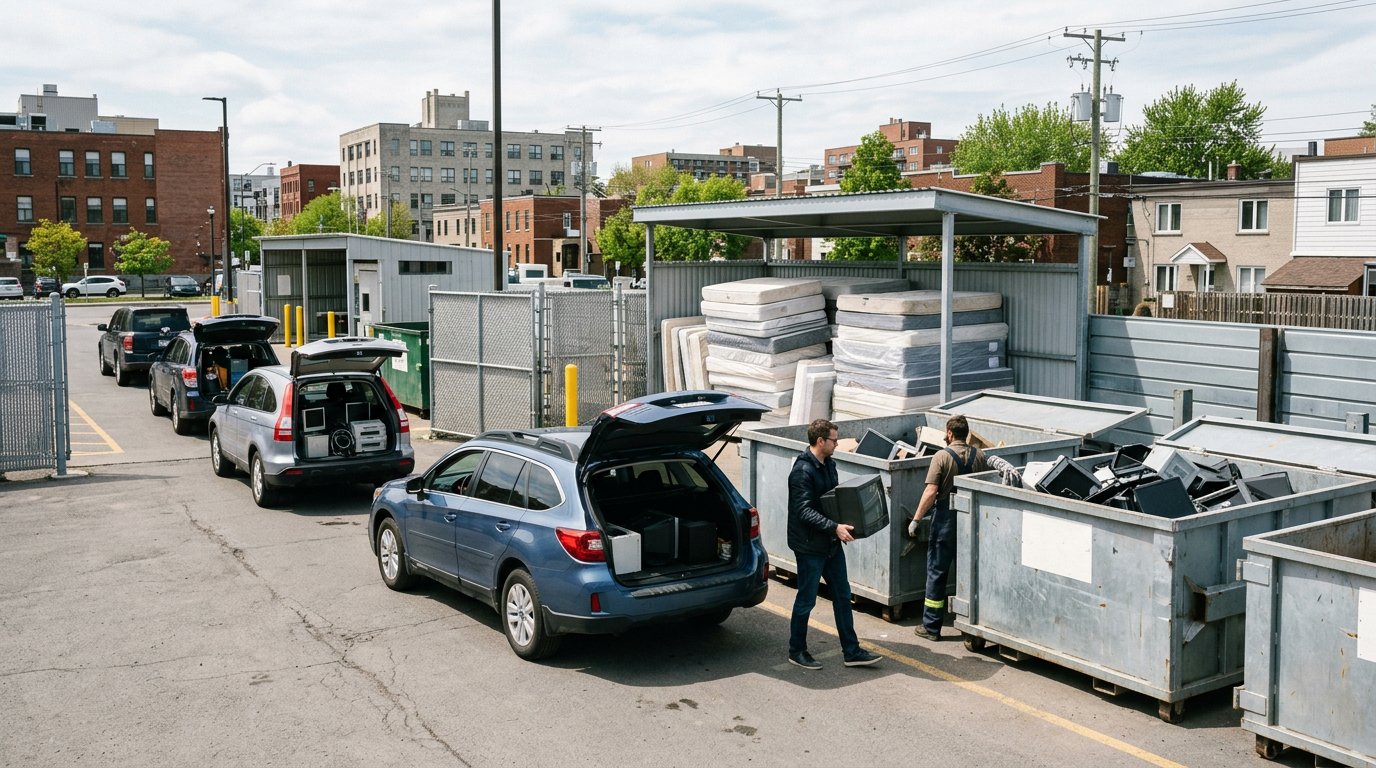
A mattress is one of the harder household items to get rid of, because it is bulky, banned from some landfills, and refused by most charities once it has been slept on. There are four routes that actually work, and which applies depends mostly on the state you live in.
Where to take an old mattress
A state mattress recycling programme, if you have one. A handful of states run a recycling scheme funded by a fee added to every new mattress sold. Because the fee is collected at purchase, drop-off at a participating site is free to the resident, and some areas also offer free collection. The programme is run by the mattress industry rather than by retailers, and it publishes its own drop-off locator.
Haul-away when a new mattress is delivered. Mattress and furniture retailers commonly remove the old mattress when they deliver the replacement, either free or for a modest fee added to the order. This has to be arranged when you place the order, not on the day, because the delivery crew needs to know in advance.
Municipal bulky waste collection. Most cities collect large items either on scheduled days or by appointment. Some wrap the mattress in plastic before collection to control bed bugs, and a few require you to do that yourself. Check whether your city charges per item and whether there is a free quarterly collection.
A mattress recycler directly. Independent recyclers strip the mattress into steel, foam, fibre and timber. They usually charge per mattress, and the price is lower if you deliver rather than ask for collection.
What it costs
| Route | Typical cost |
|---|
| State programme drop-off, where one exists | Free, funded by the fee paid at purchase |
| Retailer haul-away with a new delivery | Free to modest, arranged with the order |
| Municipal bulky pickup | Free to moderate, sometimes capped per year |
| Recycler drop-off | Charged per mattress, less than collection |
| Junk removal service | Highest, priced per load |
What will not take a mattress
Electronics and home improvement chains do not accept mattresses. Their take-back programmes cover electronics, appliances and batteries. Charity shops will almost always refuse a used mattress on hygiene grounds, and in many areas they are not legally able to resell one without a fire label intact. Fly-tipping a mattress is an offence everywhere and is one of the most commonly prosecuted, because the item is easy to trace back.
Before you throw it out
A sagging mattress under warranty may be a claim rather than a disposal. Most warranties cover sag beyond a stated depth, measured unweighted, and run for years. It is worth measuring before you pay someone to take it away.
Related guides